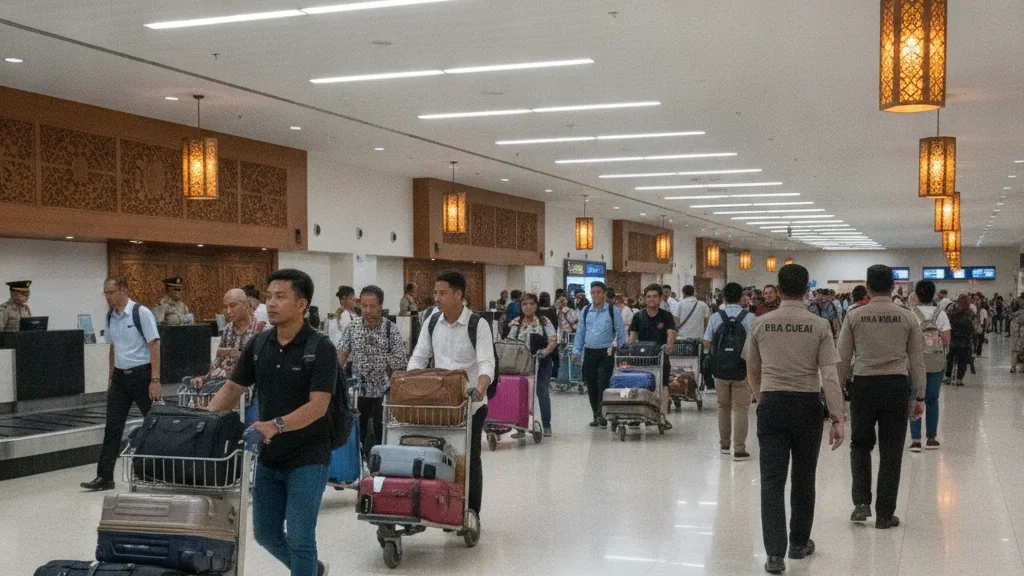

Bali is generally a safe destination, and the vast majority of interactions with locals are genuine. But a small number of recurring scams target tourists, particularly in Kuta, Legian, and around popular temples. Most are low-stakes, low-violence situations — the goal is your money, not your safety. Knowing the mechanics of each one in advance makes them easy to avoid.
Money Exchange Scams
The Street-Side Money Changer
Stores with large "MONEY CHANGER" signs offering rates significantly better than official rates (e.g., 16,500 IDR/USD when the real rate is 15,800) use several techniques to return less money than the rate implies. The most common: fast counting, distracting conversation, folding bills so two stick together, and deliberate miscounts when you hand back the bundle to re-count.
Avoid: Use only Central Koperasi (BMC) money changers, identified by the green and white sign and the fixed-rate board. Bank ATMs give rates within 1–1.5% of the interbank rate with a flat fee of IDR 30,000–50,000 per withdrawal. The "better rate" at dodgy street changers is not worth the risk.
The Short Change at Warungs
Less common but real: receiving change in IDR 1,000 notes when IDR 10,000 notes are owed. The notes look similar to someone unfamiliar with Indonesian currency. Count change before leaving.
Warning
IDR 100,000 and IDR 10,000 notes look superficially similar to new arrivals (both are reddish). IDR 50,000 (blue) and IDR 5,000 (brown/grey) are also worth learning on day one. Confusion about denominations is the root of most short-change incidents — they are not always deliberate. Spend 5 minutes with your first withdrawal sorting through the notes so you know what you have.
Transport Scams
Taxi Meter "Broken"
Drivers who claim their meter is broken will then quote a fixed price, usually 2–4x what the metered ride would cost. The correct response is to find a different taxi (Blue Bird taxis are reliable, metered, and widely available in Denpasar and Kuta) or use Grab or Gojek (the Indonesian ride-share apps). Scooter rental eliminates taxi dependency for most daily travel.
Airport Transfer Overcharging
Inside the airport arrivals hall, touts will approach with "fixed price taxi" offers. The official taxi counter (PRAJA) is at the far end of the arrivals hall and has fixed rates displayed on a board: Kuta is around IDR 80,000, Seminyak IDR 120,000, Ubud IDR 350,000. Touts outside approach with 2–3x these rates.
The Friendly Driver Who Takes You to a Shop First
A driver agrees to take you somewhere for an unusually low price, then "needs to stop for petrol" or "has a friend nearby" and pulls into a souvenir shop or silver shop where he earns commission for bringing you. The polite but firm response: "I only want to go directly to my destination. Please take me there now." If he continues, end the ride and book a Grab.
Temple and Cultural Site Scams
The Unsolicited Guide
A person in traditional dress approaches at a temple entrance, offers to "show you around" or explains that a ceremony is starting inside and he'll take you to the best spot. He is not an official guide. After 20 minutes of walking and commentary, he requests payment of IDR 100,000–500,000. There is no obligation to pay someone who attached themselves to you without prior price agreement. If you want a guide, ask the official ticket counter for a recommended guide with a price agreed beforehand.
The Temple Entry Donation
Outside some temples, a person stands at the gate with a donation book showing large donations from previous visitors. They imply that entry requires a "donation" and suggest IDR 100,000–500,000. This is not official. The legitimate entry fee (if any) is always at a ticket booth with a printed price board. Donations to temples are genuine and appreciated but should be placed in the donation boxes inside, not at the gate.
The "Ceremony Is On, No Entry Allowed" Redirect
At busy temples (Tanah Lot, sometimes Uluwatu), someone tells you the temple is closed for a ceremony and offers to take you to a "better" or "hidden" temple nearby. The goal is to take you to a shop or a relative's business. The temple may genuinely be closed, but the redirect is the scam — ask at the official ticket counter if the site is open.
Accommodation and Booking Scams
The Bait-and-Switch Villa
Particularly common with villas booked outside of Airbnb/Booking.com (e.g., via Instagram). The listed villa is "unavailable" on arrival and you're offered a different property, often inferior. Book villas through platforms with verified reviews and clear cancellation policies, or use a reputable Bali villa agency (Airbnb Luxe or specialist agents with confirmed properties).
Fake Booking Websites
Search engine ads for Bali villas sometimes lead to websites that look legitimate but are not. Signs of a scam site: no HTTPS, requests for full payment via bank transfer to an Indonesian account, no verified reviews, and a price well below comparable properties. Use established booking platforms or pay by credit card, not transfer.
Street and Market Scams
The Bracelet Scam
A seller ties a bracelet on your wrist "as a gift," then demands payment of IDR 50,000–150,000 to remove it. The item has been physically placed on you. The correct response is to immediately, firmly say you don't want it, remove it yourself, and hand it back. Do not allow someone to tie anything on your wrist unless you have agreed to a price first.
The Overpriced Art Gallery
In Ubud's tourist zone, galleries display paintings with prices starting at USD 200–400 for works produced in batches by workshop painters. These are not bad in themselves — Balinese painting is a real tradition — but paying full price without bargaining is unusual. Most tourist-area galleries expect 30–40% bargaining on listed price. For genuine work by specific artists, visit artists' studios directly in Penestanan or Peliatan.
Tip
The most consistent scam-prevention strategy in Bali: agree on prices before any service begins. Before getting in a taxi, confirm the price. Before accepting any help or guide service, agree on the fee. Before allowing anyone to place anything on your body, say "no thank you." These three habits eliminate 90% of scam situations.
Drug Scams
This is the highest-stakes category. In Kuta and to a lesser extent Seminyak, drug offers come from street sellers who work with police informants. The seller offers, you accept, the police arrive immediately and demand a large bribe (IDR 3,000,000–10,000,000) to avoid formal arrest. Do not buy drugs in Bali. Indonesia's drug laws are severe, and the combination of entrapment scams and genuine enforcement means the legal and financial risk is enormous.
For general safety advice beyond scams, see the solo female travel guide and the health and medical guide.
Ready to plan your Bali trip?
Get free, personal advice via WhatsApp. We reply in about 10 minutes.
Message us on WhatsApp