
Bali is one of the most popular family holiday destinations in the Asia-Pacific region for good reason: the Balinese culture is warm toward children, villa accommodation means private pools without extra cost, food is varied enough that even picky eaters find something they love, and there are enough active experiences (surfing, cooking classes, rice terrace walks, monkey encounters) that older kids are genuinely engaged rather than tolerated. The trick is staying away from the party areas (Kuta, Seminyak nightlife strip, Canggu beach clubs) and building each day around your children's energy levels — which in tropical heat are roughly half what they are at home.
Who this itinerary suits
This 7-day plan works best for families with children aged roughly 4–14. Toddlers and babies can certainly travel Bali but require a different approach — the pace here assumes children who can walk moderate distances and follow basic instructions in cultural settings. Teenagers (15+) will find this itinerary a little structured and may prefer inserting surf lessons or more free beach time. WhatsApp us for a teenager-specific adjustment.
Transport strategy
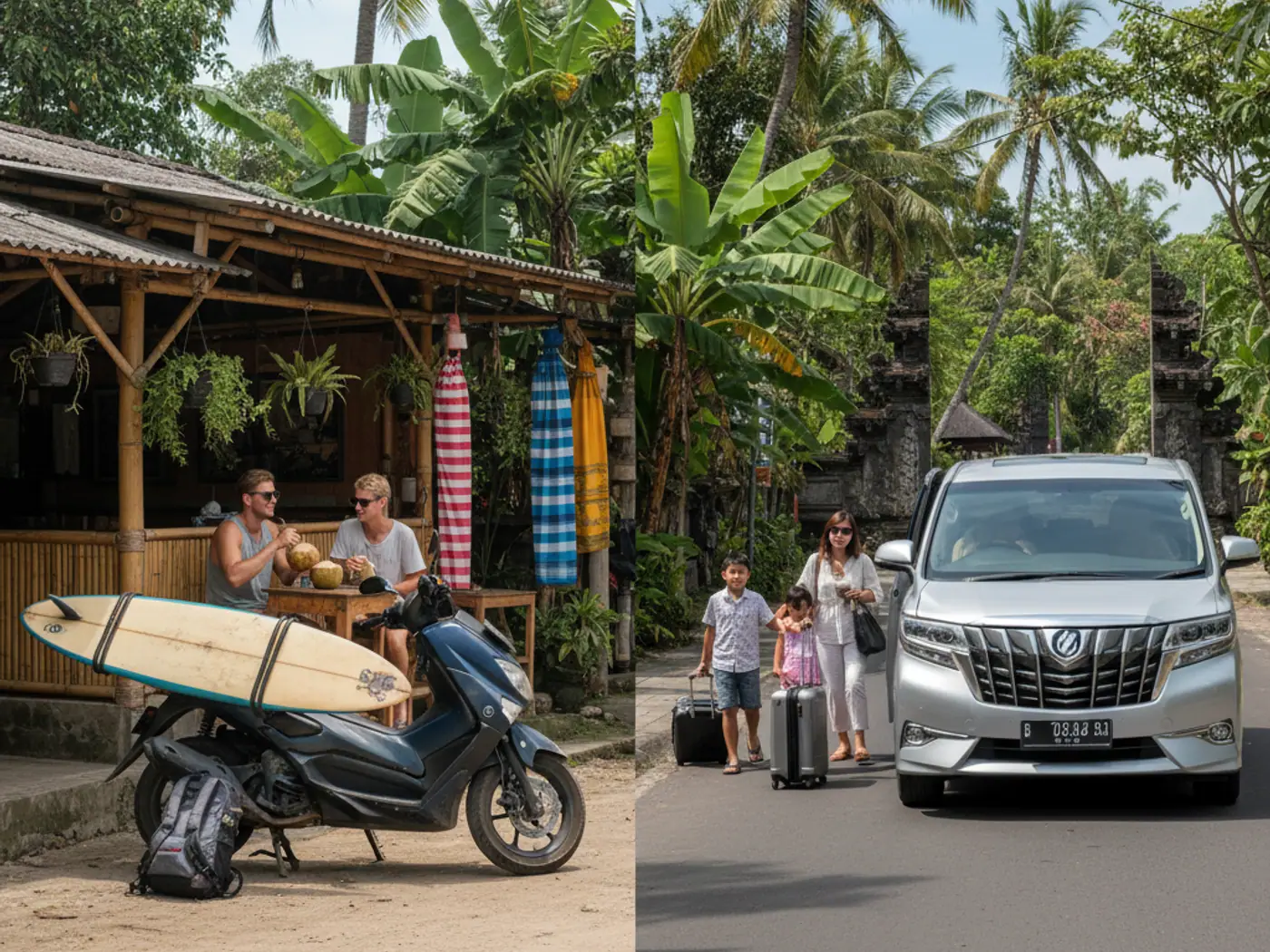
Private driver for all inter-area transfers and activity days. Non-negotiable with children — the unpredictability of public transport and the difficulty of getting young children into and out of Grab cars on busy roads makes a hired driver the only sensible choice. A family driver will also have car seats on request (specify when booking). Budget Rp 600,000–800,000 per full driver day. Within your base areas, walking is practical in Sanur and Ubud. Avoid scooters with children under 12 — the risk is not worth it.
Accommodation strategy
Base 1: Sanur (Days 1–4). Bali’s calmest resort area — flat, walkable, swimming-safe beaches and a 4km seafront promenade that is perfect for cycling with children (bikes available everywhere). Sanur is also the departure point for Nusa Penida and Nusa Lembongan ferries. Base 2: Ubud (Days 5–7). Choose a villa or family guesthouse slightly outside the centre in Penestanan or Lodtunduh — rice paddy views, quieter, easier parking for your driver. A private villa with pool in Sanur costs $80–200/night for a 3-bedroom; in Ubud similar range. Hotels with family rooms are cheaper ($50–120) but a private pool villa is strongly recommended for a family week.
Day 1 — Arrive Sanur
Morning/afternoon arrival: Driver from airport to Sanur is 20–30 minutes (Rp 200,000–250,000). Sanur is the closest quality beach area to the airport — important if children are exhausted from travel. Check in to your villa and let everyone swim in the private pool for the afternoon. Low-key evening: walk the seafront promenade to find a beachside warung for dinner. Children particularly enjoy Stiff Chilli or Warung Mak Beng (famous fried fish, extremely popular with Indonesian families).
Overnight: Sanur
Day 2 — Sanur beach and cycling
Morning: Sanur Beach is one of the few calm-water, safe-swimming beaches in Bali. The lagoon at the north end near the Inna Grand Bali Beach hotel has particularly gentle water — suitable for small children and non-swimmers. Hire beach chairs and a shade umbrella (Rp 50,000–100,000). Children love the shallow clear water here.
Afternoon: Rent bicycles (available from most beach vendors, Rp 30,000–50,000/hour) and cycle the seafront promenade. It is flat, shaded in parts, and runs 4km past traditional fishing boats, warungs and local volleyball games. Ice cream stop at Massimo (Italian-run gelato that has been in Sanur for 30+ years).
Evening: Sunset at the main beach promenade — it faces east, not west, so the sunset is actually a softly lit pink sky rather than a direct sundown. Dinner at a seafront restaurant. Children’s menu available at most international-facing restaurants in Sanur.
Overnight: Sanur
Day 3 — Nusa Lembongan day trip
Morning (07:30): Fast boat from Sanur harbour to Nusa Lembongan (30 minutes, Rp 175,000 each way adult, children usually half price). Lembongan is much calmer and safer than Nusa Penida for families — no extreme cliff walks, manageable roads, and great snorkelling at Mushroom Bay and the Yellow Bridge crossing to Nusa Ceningan.
On the island: Hire a scooter driver (ojek) or walk from the harbour. Devil’s Tear viewpoint (dramatic wave action on rocks, safe viewing platform). Snorkel at Mushroom Bay — crystal clear water, reef fish, occasional turtles. Warung lunch at the beachfront stalls.
Return: 15:30–16:00 boat back to Sanur. Arrive by 17:00. Quick pool swim and dinner back at your villa or a nearby warung.
Overnight: Sanur
Day 4 — Batik and culture day
Morning: Batik painting workshop — many cultural centres in Sanur and Denpasar offer family-friendly batik sessions where children design and paint their own fabric (Rp 150,000–250,000 per person, takes 2–3 hours, they keep their creation). Older children find this genuinely absorbing; younger ones love the colours and mess.
Afternoon: Bali Bird Park in Gianyar (40 min north of Sanur, entrance $25 adult, $12.50 child) — 250 species including the rare Bali Starling, feeding sessions and bird shows. Alternatively, Bali Zoo (slightly closer, similar pricing) with pygmy hippos, giraffes and a tiger. Both are professionally run and genuinely enjoyable for children under 12.
Evening: Back in Sanur, walk the night market along Jalan Danau Tamblingan (small food stalls selling satay, corn, pisang goreng). Children love this more than any restaurant.
Overnight: Sanur
Day 5 — Transfer to Ubud via Mas and Celuk
Morning: Driver day from Sanur to Ubud (1 hour direct, or 2 hours with stops). Recommended route: stop at Celuk (silver jewellery village — artisans working in open workshops, children enjoy watching the craft), then Mas (wood carving village). These are genuine working craft villages, not tourist traps — you can buy direct from the artisan at fair prices.
Afternoon: Arrive Ubud. Check in. Sacred Monkey Forest 16:00–17:30 (Rp 80,000 adult, Rp 60,000 child) — children aged 5+ usually love the monkeys initially and manage the interaction safely with adult supervision. Hold bags tightly and don’t show food. The temples inside the forest are atmospheric.
Evening: Dinner on Jalan Dewi Sita. Kafe or Sage are family-friendly with reliable Western and Indonesian options for children who are still adjusting to spicy food.
Overnight: Ubud
Day 6 — Ubud culture, rice terraces, family cooking class
Morning (07:00): Tegallalang Rice Terraces early. Young children enjoy the walk down through the terraces — most well-surfaced paths are stroller-manageable but can be steep. The view from the top is the iconic one; going halfway down adds context. Back by 09:00.
Mid-morning: Cooking class at Paon Bali or Lobong Culinary (family-friendly, accepts children aged 7+). You start at a market, children choose vegetables and learn their names, then cook 4–5 Balinese dishes together. You eat what you cooked for lunch. This is consistently the highest-rated activity for families visiting Ubud (Rp 400,000–600,000 per person, 4–5 hours).
Afternoon: Free in Ubud. Pool afternoon at your villa, or a short walk to Campuhan Ridge. Older children and teenagers can rent bicycles and explore the village roads independently.
Evening: Traditional Legong or Barong dance performance — many venues in Ubud centre offer evening performances (Rp 100,000 adult, Rp 50,000 child, 7+ years for attention span). The colourful costumes and gamelan music hold children’s attention for about 45 minutes.
Overnight: Ubud
Day 7 — Elephant park or waterfall, then home
Morning: Mason Elephant Park near Taro (30 min north of Ubud) is one of the few ethically operated elephant sanctuaries in Bali — rescue elephants, no riding, interaction and feeding with guidance (Rp 750,000 adult, Rp 500,000 child, book online). This is worth the premium and children aged 4–14 find it extraordinary. Alternatively, Tegenungan Waterfall (10 min south of Ubud, Rp 20,000) — a wide, tall waterfall with a swimming area at the base. Bring swimwear. Children love the spray and the walk down.
Afternoon: Driver to airport (Ubud to airport is 1–1.5h depending on traffic). Allow plenty of time — Bali airport is large and family check-in queues at peak times are long.
Overnight: Fly home
Budget breakdown (family of 4, 2 adults + 2 children)
- Villa accommodation (7 nights, private pool, family of 4): $700–1,200
- Food and drink (warungs, family restaurants, 1 nicer dinner): $350–500
- Private driver (full week, all transfers and activity days): $300–420
- Activities (Lembongan ferry, Bird Park/Zoo, cooking class, batik, elephant park, Kecak/dance): $250–350
- SIM card, incidentals, tips, beach toys: $80–120
- Total: approximately $1,680–2,590 for a family of 4
Family packing list for Bali
- Children’s reef-safe sunscreen SPF50 (apply every 2 hours in the tropics)
- 2–3 sets of swimwear per child (things dry fast but not instantly in humidity)
- DEET insect repellent (dengue mosquitoes are active in daytime; apply mornings)
- Children’s paracetamol and ibuprofen (available in Bali but easier to bring yours)
- Oral rehydration sachets (for stomach bugs, which can hit children faster)
- Light rain poncho per child (afternoon rain showers are brief but soaking)
- Sarong per child (for temple visits — compulsory, and children enjoy choosing colours)
- Waterproof sandals (Tevas or similar) for waterfall visits and boat trips
- Snacks from home for flight and first day (familiar comfort food helps on arrival)
Best time for a family trip to Bali
July and August align with northern hemisphere and Australian school holidays — expect higher prices and fuller beaches but reliable dry weather. June and September offer dry weather with lower prices. April–May is excellent: school term in Australia but European school holidays begin, weather is dry, and resort areas are quieter. Avoid January–February with young children — the wet season brings strong afternoon rain and higher Nusa Lembongan swell that makes the boat crossing rough.
Common family trip mistakes in Bali
- Basing in Kuta or Seminyak: These areas work for adults but the party strip, traffic and lack of safe swimming beach make them wrong for young families. Sanur is the correct base for families.
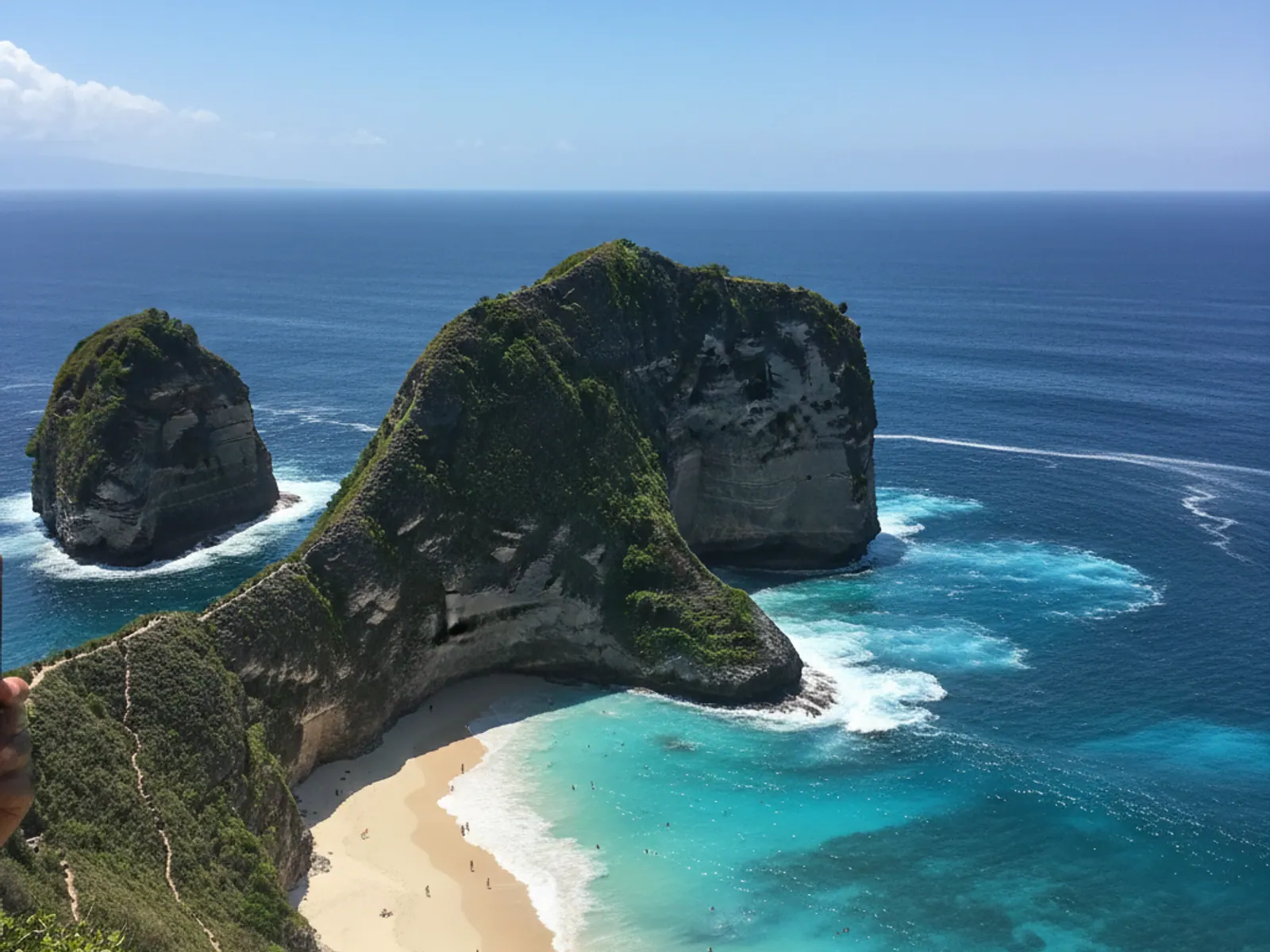
- Trying to do Nusa Penida with young children: The Penida roads are extremely rough, the heat at Kelingking is brutal, and the day is 12+ hours. Nusa Lembongan is the family-appropriate island alternative.
- Not adjusting to Bali time: Children (and adults) often wake up very early after crossing time zones. Use this — the best things in Bali (Tegallalang, beach before 09:00) are at dawn. Adjust bedtimes accordingly.
- Drinking tap water: Always bottled or filtered. Children are more susceptible to waterborne illness. Most villas provide complimentary filtered water — use it for teeth brushing too.
Frequently asked questions
Is Bali safe for young children?
Yes, with sensible precautions. The main risks are traffic (scooters — don’t ride them with children), sun exposure, contaminated water and food hygiene at street stalls. A private pool villa eliminates the need to worry about public pool hygiene. Stick to cooked food, bottled water and reputable restaurants for the first few days.
What age is Bali suitable for?
Bali is suitable from infancy, but the experience improves significantly from around 4 years old when children can engage with the cultural activities, animals and nature walks. The 7–12 age range is arguably the best for Bali family trips — old enough to remember it, young enough to be amazed by the monkeys and elephants.
Are car seats available in Bali?
Not by default. Bali drivers rarely have car seats, and Balinese traffic culture does not require them. If your children need a car seat, bring a travel model (lightweight foldable versions work well) or specifically request a driver who has one — ask your accommodation or WhatsApp us for drivers who can accommodate.
Is the food safe for children in Bali?
At mid-range restaurants and villas, yes. At street warungs, apply the usual tropical caution: avoid raw vegetables washed in tap water, undercooked meat, and fresh juice from unknown hygiene sources. Most Balinese children’s menus include nasi goreng (fried rice), mie goreng (fried noodles) and ayam goreng (fried chicken) — all well-cooked and almost universally liked by visiting children.
Can we do Ubud without the monkey forest?
Yes, and you might prefer to. The Monkey Forest is great but crowded, and macaque bites occasionally happen. Perfectly safe with supervision but some younger children find the monkeys overwhelming. The Rice Terraces, Cooking Class and Bird Park are equally memorable alternatives for children who are nervous around primates.
Can you help us plan a family trip?
Absolutely — family trip planning is one of our most common requests. WhatsApp us with your children’s ages, your travel dates and your budget and we will customise this itinerary or build you a completely new one. We reply fast and it is completely free.