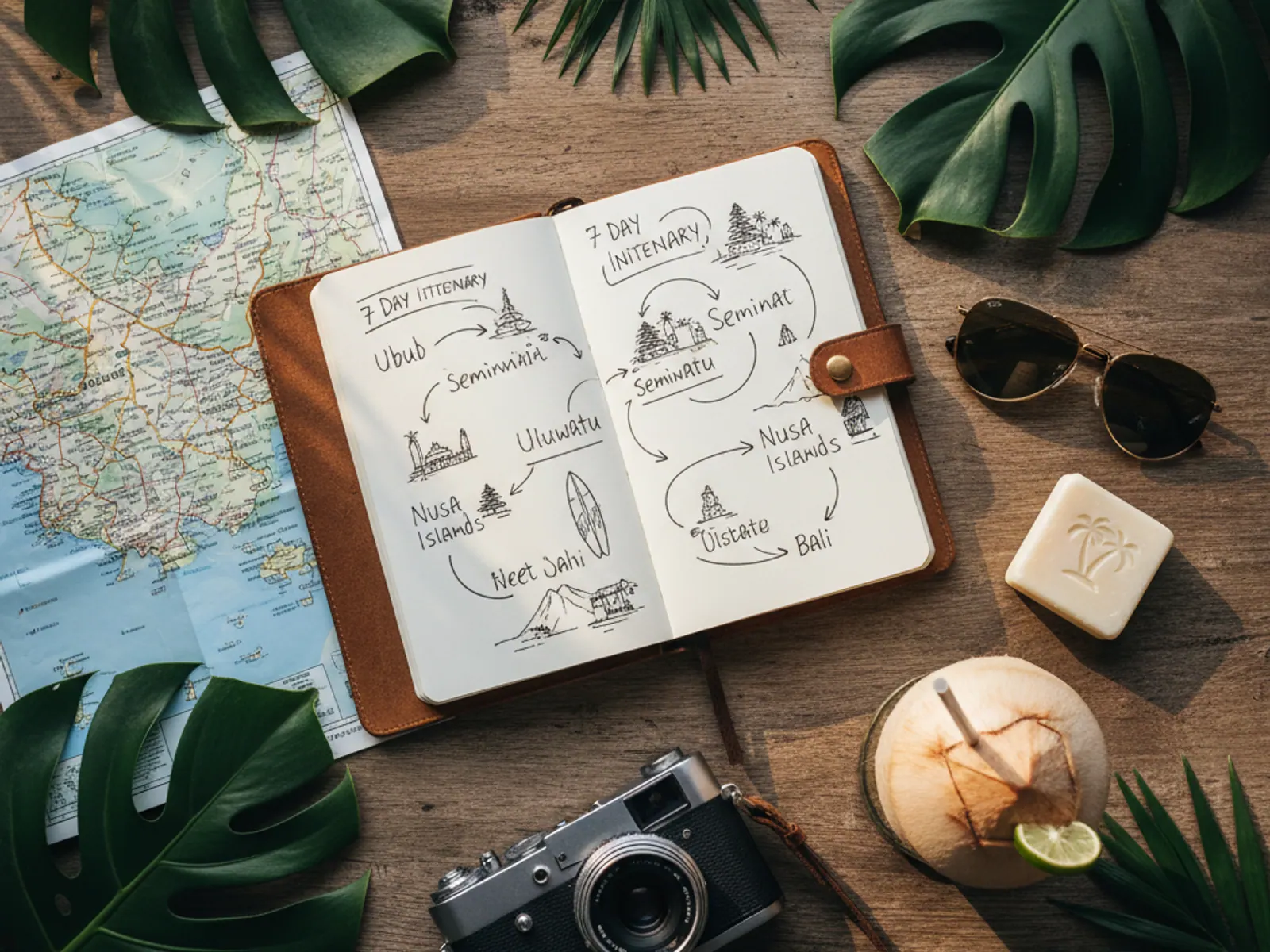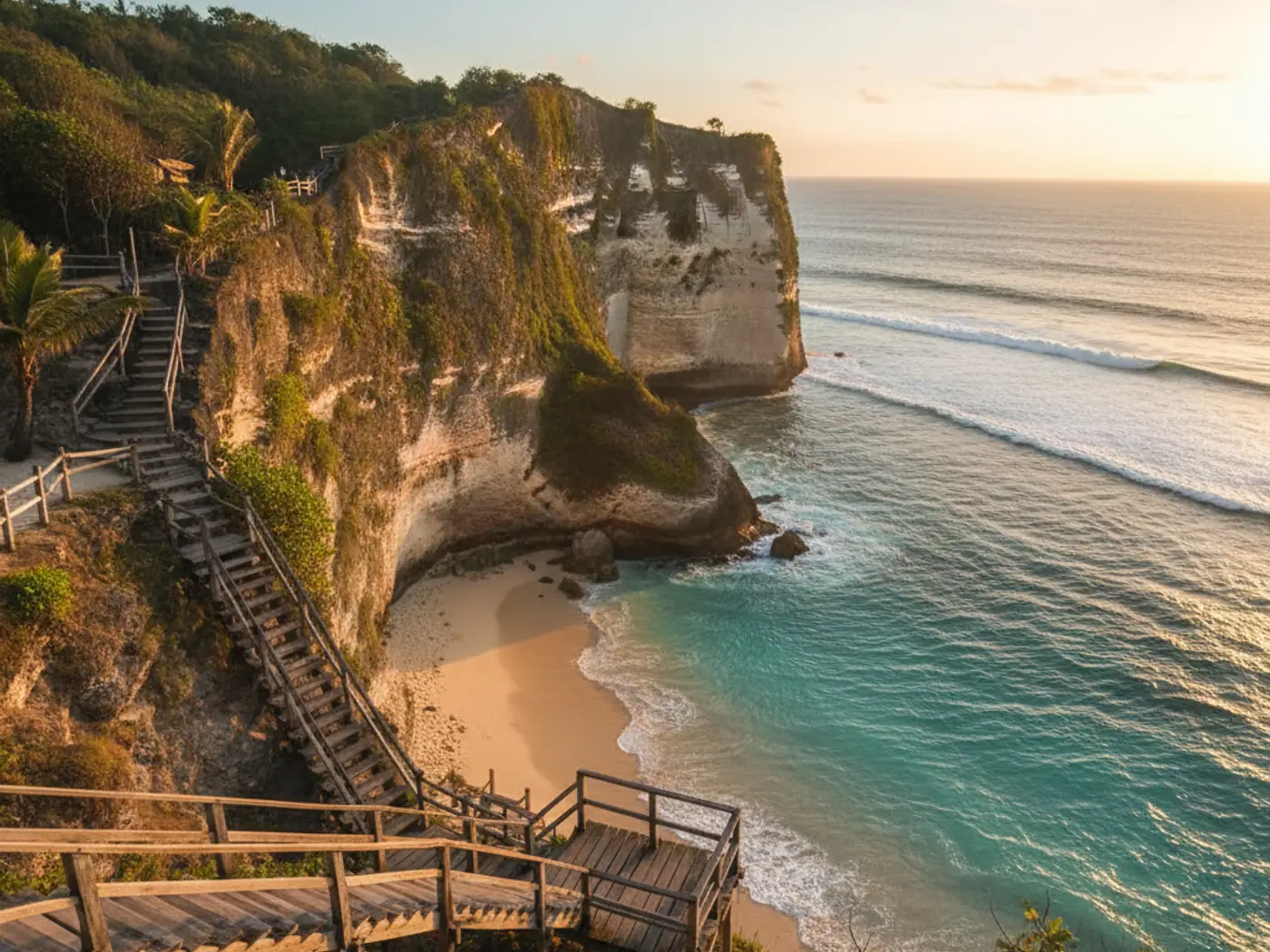
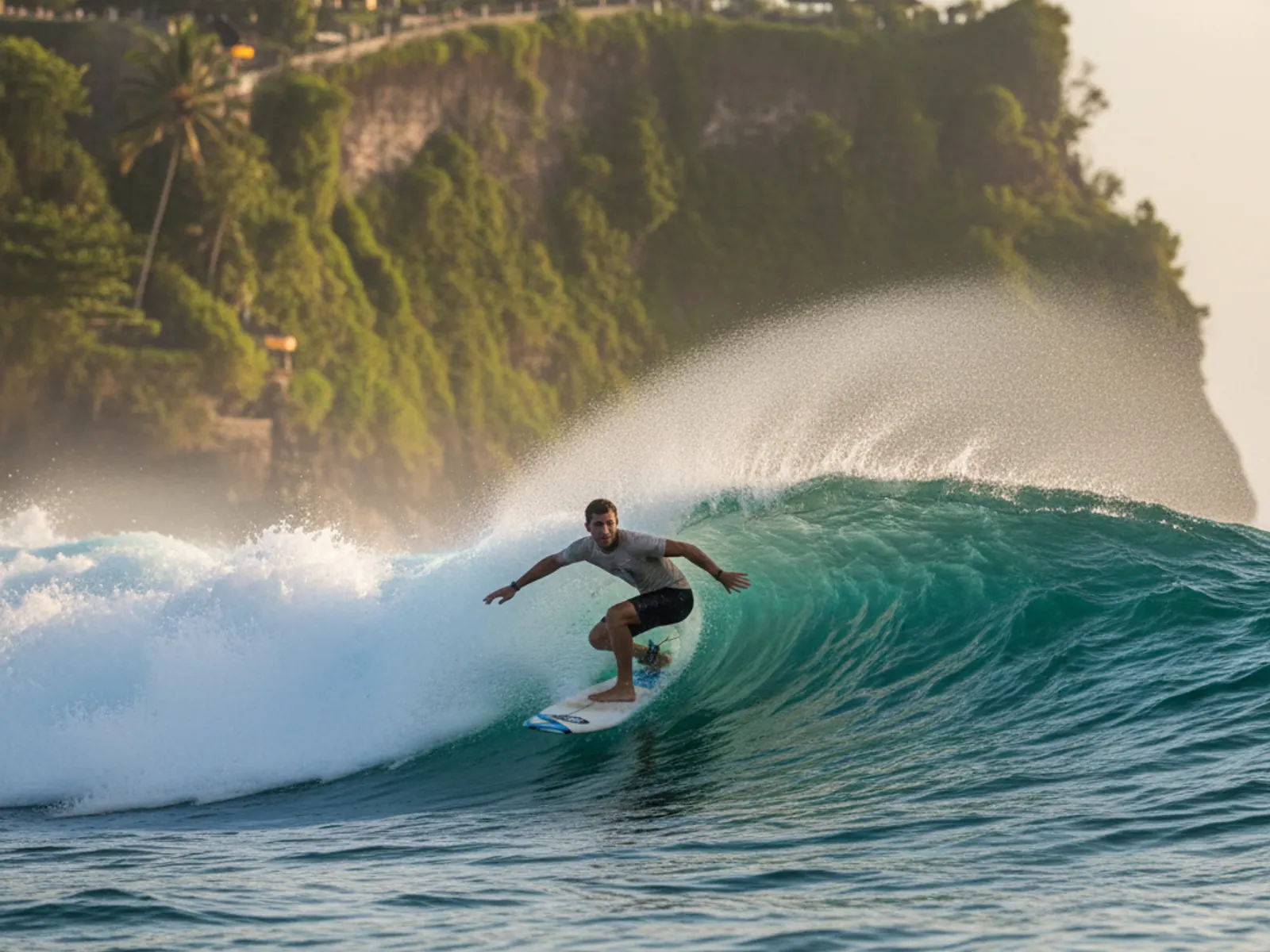
Bali is one of the world’s definitive surf destinations. The southwest coast from Medewi down to Uluwatu catches the long-period south and southwest swells generated in the Indian Ocean. The east coast picks up trade-wind chop and morning offshore conditions. In between, Canggu’s beach breaks are consistent year-round. For 10 days, a dedicated surfer can sample five to eight distinct breaks, improve across multiple surf styles, and still have time for a sunset at Single Fin and a morning at a waterfall. This itinerary is calibrated for intermediate to advanced surfers (solo standing up and progressing turns) but includes notes for beginners throughout. The swell window is April through October, peaking in June through August.
Bali surf breaks overview
Uluwatu: Bali’s most famous wave. A long left-hand reef break running from the cave entrance across three sections — Outside Corner, Racetrack and Temples. Works best at 4–8 feet on a SW swell with a light NE offshore. Intermediate surfers can paddle out on smaller days (2–4ft); beyond that it requires strong paddling and knowledge of the rip exit through the cave. Not suitable for beginners.
Padang Padang: A short, powerful hollow barrel below the Uluwatu cliff road. Best at 4–8 feet, offshore in the morning. The take-off is critical — you need to drop steeply and immediately project into the barrel. Rated one of Asia’s best barrels. Advanced surfers only at overhead+.
Batu Bolong (Canggu): A right and left beach break in front of the temple. Consistent year-round, forgiving on smaller days (2–4ft), can get powerful at 5–6ft. The best beginner-to-intermediate break in south Bali. Gets crowded. Works on all swells.
Echo Beach (Canggu): A heavier left-hander 1km north of Batu Bolong. Works on a medium south swell at 4–6ft, offshore NE morning winds. Less crowded than Batu Bolong, more consequence. Intermediate+.
Medewi: A long left-hand point on the west coast, 2.5 hours from Canggu. The longest ride on the island — a small swell day gives 200–300m rides from the point to the inside section. Works best at 2–6ft. Very crowded in peak season despite the distance.
Keramas: An east-coast right-hander that hosts the Komune Bali pro events. Works on trade-wind swell (March–October), offshore in the afternoon when the east coast sea breeze kicks in. Fast, punchy wall — intermediate to advanced.
Nusa Lembongan: Shipwrecks (right-hander outside the harbour) and Lacerations (a serious left-hand reef) are Lembongan’s two main breaks. Both are advanced-only at overhead+. The boat ride from Sanur adds logistics but gives you smaller crowds than any south Bali break.
Transport strategy for surfers
Scooter first. A scooter with a board carrier (tali — the octopus strap arrangement Balinese surfers use, available for Rp 20,000 at any surf shop) carries a shortboard or fish without issue. Longboards go on a driver or car. For remote break days (Medewi, Keramas, Nusa Lembongan), hire a private driver or take the fast boat. Board dings happen on the road — bring Solarez UV ding repair or buy it in Canggu for Rp 100,000.
Accommodation strategy for surfers
Base 1: Uluwatu area (Nights 1–4). The closest accommodation to Padang Padang and Uluwatu breaks — guesthouses in Pecatu, Bingin and Balangan from $15–50/night. Choose your base based on the break you are most interested in. Base 2: Canggu (Nights 5–7). Berawa and Batu Bolong area puts you within walking distance of 2 breaks. Base 3: East coast (Nights 8–9). Keramas or Gianyar guesthouses for east swell mornings. Base 4: Optional Lembongan overnight (Night 10) for the ferry-and-surf ending.
Days 1–2 — Arrive, assess swell, Uluwatu
Day 1 arrival: Driver from airport to Uluwatu accommodation (30–45 min). Get in the water that afternoon if the tide and swell cooperate. Single Fin terrace is the best vantage point for reading the Uluwatu break before paddling out — sit for 20 minutes, watch the wave, identify the lineup and exit. Dinner at Om Uluwatu.
Day 2 morning session: Dawn patrol at Uluwatu. The 07:00–09:00 window before the sea breeze fills in is the cleanest water time. Access via the steps through the cave (free at dawn, Rp 20,000 during temple opening hours). If overhead+ and heavy, surf Bingin instead — a shorter, shallower left that rewards progressive surfing at lower tide. Afternoon rest, ding check, dinner. Second session at Uluwatu 16:00–17:30 if swell is clean.
Day 3 — Padang Padang and surf coach session
Morning: Padang Padang at 06:30. This break needs a specific tide — check the tide chart the night before (most surf shops have printed tables). Low to mid tide is best. Intermediate surfers: surf the inside section which breaks at 2–3ft and allows practice of the hollow barrel feel without the consequence of the main take-off zone. Advanced surfers: position at the main peak and commit to the drop. One good Padang Padang barrel is worth the whole trip.
Afternoon: Book a surf coaching session with a local surf school or private coach (Rp 500,000–800,000 for a 2-hour one-on-one video analysis session). Several Uluwatu-based coaches work with intermediate to advanced surfers specifically on turn progression and barrel riding. Video feedback in the afternoon of a Padang session is extraordinarily useful.
Day 4 — Explore Bukit breaks: Balangan and Impossibles
Morning: Balangan Beach, 10 min north of Uluwatu on your scooter. A long left-hander that is less crowded than Uluwatu and more forgiving on its outside sections. Works best at 3–6ft on south swell. The beach below has the best warung seating of any Bukit break — wooden platforms over the reef with cold drinks and a direct view of the lineup.
Afternoon: Impossibles — the multiple-peak right-hander between Padang and Bingin. On a good day, three sections connect for a 150m ride. Best at 4–6ft. The crowds here are mostly intermediate surfers progressing; less territorial than Uluwatu. End the day at a sunset session at Bingin, which stays rideable even when Uluwatu closes out at big swell.
Day 5 — Transfer to Canggu, Batu Bolong
Morning: Check out Uluwatu. Driver or scooter north to Canggu (45 min). Check in to guesthouse near Batu Bolong. Afternoon session at Batu Bolong — assess the beach break, identify the best channel and peak. Canggu beach breaks are dynamic; the sandbars shift seasonally. A productive afternoon here often means positioning 50m from the main crowd at a secondary peak.
Evening: Canggu surf culture evening: beer at Old Man’s, watch the sunset session from the seawall, dinner at a warung. The Canggu surf community is large and international — most surf-themed cafes and guesthouses have notice boards for boat trips, coaching, and board sales.
Day 6 — Medewi west coast day trip
Morning (early): Driver departure 06:30 for Medewi (2.5h west along the coastal road). Arrive at Medewi point by 09:00 — the early tide window is best. A classic Indo point break: the wave forms on a boulder point and peels for 200m+ across the inside bay on a good swell. Best at 3–6ft with a direct W or SW swell direction. The wave is mellow enough for intermediate surfers to get long rides but has a punchy inside section that rewards progressive surfing.
Afternoon: Second session or rest at the beachside warung. Drive back to Canggu arriving 16:00–17:00. Optional Batu Bolong sunset session if you have energy. The Medewi day is tiring due to the drive — allow a recovery evening.
Day 7 — Canggu: Echo Beach and optional yoga rest day
Morning: Dawn patrol at Echo Beach. Echo works on the same SW swell that drives Batu Bolong but the lefts here are more powerful and longer. The peak is off the rocks at the north end of the beach — position behind the rocks to avoid the paddle-battle zone and wait for the set waves. Best at 4–6ft.
Afternoon: This is the built-in rest day in the surf trip. Surf the body hard for 6 days straight and you need a half-day of soft tissue recovery. Morning yoga at Canggu’s The Practice or Power of Now Oasis (both have surf-targeted classes for mobility and shoulder health, Rp 150,000 drop-in). Afternoon: board repair, wax reapplication, review your surf coach video from Day 3.
Day 8 — Transfer to east coast, Keramas
Morning: Driver east to Keramas (1h from Canggu). Check swell forecast the night before — Keramas needs a strong SE trade-wind swell to work properly. Arrives from the east and breaks as a fast right-hander. It gets offshore from the afternoon sea breeze, so morning sessions are typically windier but less crowded. Komune Resort has spectator decks and a beach club; non-guests can use the beach area. The break itself is a public reef.
Afternoon session: The classic Keramas time is 14:00–17:00 when the east-coast sea breeze turns perfectly offshore and the afternoon trade fills in. Fast, top-to-bottom walls ideal for progressive surfing. Dinner at a local warung in Gianyar.
Overnight: East coast guesthouse or Gianyar
Day 9 — Nusa Lembongan surf day
Morning (06:30): Driver to Sanur (45 min from east coast). Fast boat 07:30 to Nusa Lembongan (30 min, Rp 175,000). Check in to a guesthouse or surf camp near Shipwrecks break. Shipwrecks is a long right-hander over a shallow reef that hosts some of Lembongan’s best surf — best at 3–6ft on a south swell, light easterly offshore. Less crowded than any Uluwatu break of comparable quality.
Afternoon: Lacerations, the left-hander on the south side of the island, works on bigger swells. Advanced surfers with a guide (ask at any Lembongan surf shop) can assess which break is working on the day. The island itself is beautiful — no cars, no motorbikes, bicycle everywhere, excellent seafood. Stay overnight or take the last fast boat back to Sanur at 17:00.
Overnight: Nusa Lembongan or Sanur (depending on return boat)
Day 10 — Final surf session and fly home
Morning: Return to whichever break meant the most to you over the 10 days. For most on this itinerary: one last Uluwatu dawn patrol or a final Batu Bolong session. The last morning in the water in Bali always feels different — you know the lineup, you know the rips, the wave reads naturally. Savour it.
Afternoon: Board bag packed, driver to airport. Allow 2.5 hours before an international flight — surfboard check-in (even bagged) can take longer than standard baggage at Denpasar airport during peak times.
Surfboard logistics
Bring your own vs rent in Bali: Bringing your own boards is ideal but Bali is one of the best places in the world to rent or buy quality second-hand boards. Board rentals cost Rp 80,000–200,000/day depending on board type. Second-hand boards from local shapers and surf shops (Canggu has excellent options) cost $80–200 for a used shortboard or fish. Many surfers buy a board for $100, surf it for 10 days, and sell it back for $70. Net cost: $30 for 10 days of your own board.
Airline board fees: Most airlines charge $40–100 each way for a surfboard bag. Fly carry-on only for everything else and keep the board bag weight under 15kg to avoid excess charges. Boards up to 6'8” in a shortboard bag typically pass as standard oversized sports equipment on Garuda, AirAsia and Jetstar.
Repairs: Bali has excellent ding repair shops in Canggu (Bali Board Factory, Deus Ex Machina) and Uluwatu (several near the cave entrance). A clean lam job on a minor ding costs Rp 100,000–200,000 and is usually ready same day.
Budget breakdown (per person, 10 days)
- Accommodation (10 nights, surf guesthouses): $150–280
- Food (warungs + occasional sit-down): $120–180
- Scooter rental (8 days) + private driver (Medewi day, Amed transfer): $130–180
- Nusa Lembongan ferry (return): $22
- Activities (surf coach session, yoga class, optional dive or temple visit): $60–100
- Board rental if needed (or buying/selling budget): $30–80
- SIM, wax, Solarez, tips, Bintangs: $40–60
- Total: approximately $552–902 per person
What to pack for a surf trip to Bali
- Shortboard and/or fish (or plan to rent/buy in Bali)
- Board bag with padding (avoid cheap bags — reef dings through thin foam are common)
- Wetsuit if travelling in May–July when water temperature drops to 25°C at dawn (most surfers do not bother, but cold-sensitive surfers appreciate a 2mm shorty)
- Reef booties for Padang Padang, Lacerations and Keramas (shallow reef, booties prevent cuts)
- Traction pad and wax (warm water wax — Sticky Bumps Warm or Sex Wax Cool-Warm)
- Rashguard (reef protection and sun)
- Zinc sunscreen for nose and lips (5 hours of tropical sun daily)
- Ibuprofen (shoulder and back soreness after 10 days of paddling is normal)
- Octopus strap (tali) for carrying board on scooter — buy in Bali for Rp 20,000
Best time for a Bali surf trip
April through October is the primary surf season. The south and southwest swells generated in the Roaring Forties track directly into Uluwatu, Padang Padang and the Bukit Peninsula. June through August receives the largest, most consistent swells (often 6–10ft at Uluwatu) with light offshore winds in the morning. May and September are excellent shoulder months — swell is 4–8ft, crowds are 30% smaller than peak, and accommodation is cheaper. October remains good for smaller fun waves. The east coast (Keramas) works year-round on trade-wind swells but is best April–October when the southeast trade is consistent. November through March is the wet season — south swell drops significantly but Canggu beach breaks remain fun and some north coast breaks (Pererenan, Padma) pick up rare northwest swells.
Common mistakes on a Bali surf trip
- Going straight to Uluwatu on day one: Uluwatu is a shallow reef break with significant hold-down risk on bigger days. Assess the wave from Single Fin for 20 minutes first. If it looks heavy, surf Canggu for two days and come back to Uluwatu when you understand the channel and your fitness is calibrated to the warm water.
- Not checking the tide: Most Balinese reef breaks are highly tide-sensitive. Padang Padang at high tide is a closeout; at low tide it is a barrel. Keramas at low tide is sharky and extremely shallow. Download Magic Seaweed or Tide Chart Bali app before you fly.
- Surfing alone at remote breaks: Uluwatu, Padang Padang and Lacerations are not beginner-to-intermediate breaks for solo surfers. Paddle out with at least one other person or join a crew you meet through your guesthouse.
- Ignoring the rip at Uluwatu: The exit from Uluwatu is via the channel rip through the cave. If you miss it, you end up on the inside section. Know the exit before you paddle out — watch where locals come in.
Frequently asked questions
Is Bali good for intermediate surfers?
Bali is excellent for intermediate surfers who are surfing unbroken green waves confidently and working on turns. Canggu’s beach breaks, Balangan, small-day Medewi, and outside Shipwrecks on Lembongan all offer ideal intermediate conditions. The Bukit reefs (Uluwatu, Padang Padang) require strong paddling and reef experience — attempt them on small days first.
Can beginners do this surf trip?
Most of this itinerary is intermediate+. Beginners should stay in Canggu (Batu Bolong, Kuta) for the full trip and consider adding Medewi on a small-swell day. Beginner surf lessons are excellent value in Canggu — 5 days of guided lessons with an instructor will progress you faster than any other approach.
Are there surf schools that work with intermediate surfers?
Yes. Several coaches in Uluwatu and Canggu work specifically on progression beyond beginner level — video analysis, tube-riding theory, turn coaching. Prices are Rp 500,000–1,000,000 per 2-hour coached session. Ask your guesthouse for recommendations. Avoid generic surf school group lessons if you are past beginner level — they waste your time in the whitewash.
What board should I bring to Bali?
A step-up shortboard or performance fish (6'0”–6'4” for an average-size surfer) suits most of the breaks on this itinerary. Bring two boards if possible — a shorter, higher-rocker board for Uluwatu/Padang (hollow waves) and a fish or mid-length for Medewi and Canggu (longer, more mellow). Longboards are impractical at most Bukit breaks.
Is travel insurance needed for a surf trip?
Essential. Specify ‘surfing’ as a covered activity when purchasing. Reef cuts, broken wrist from a heavy wipeout, and hold-downs requiring emergency treatment are the most common claims. Medical evacuation cover is important if you plan to surf remote breaks. World Nomads and Safety Wing both cover recreational surfing as standard.
Can you help me plan a custom surf itinerary?
Yes. WhatsApp us with your surf level, travel dates and which breaks interest you. We can connect you with local coaches, recommend guesthouses within walking distance of specific breaks, and give you real-time swell advice during your trip. Free service.