
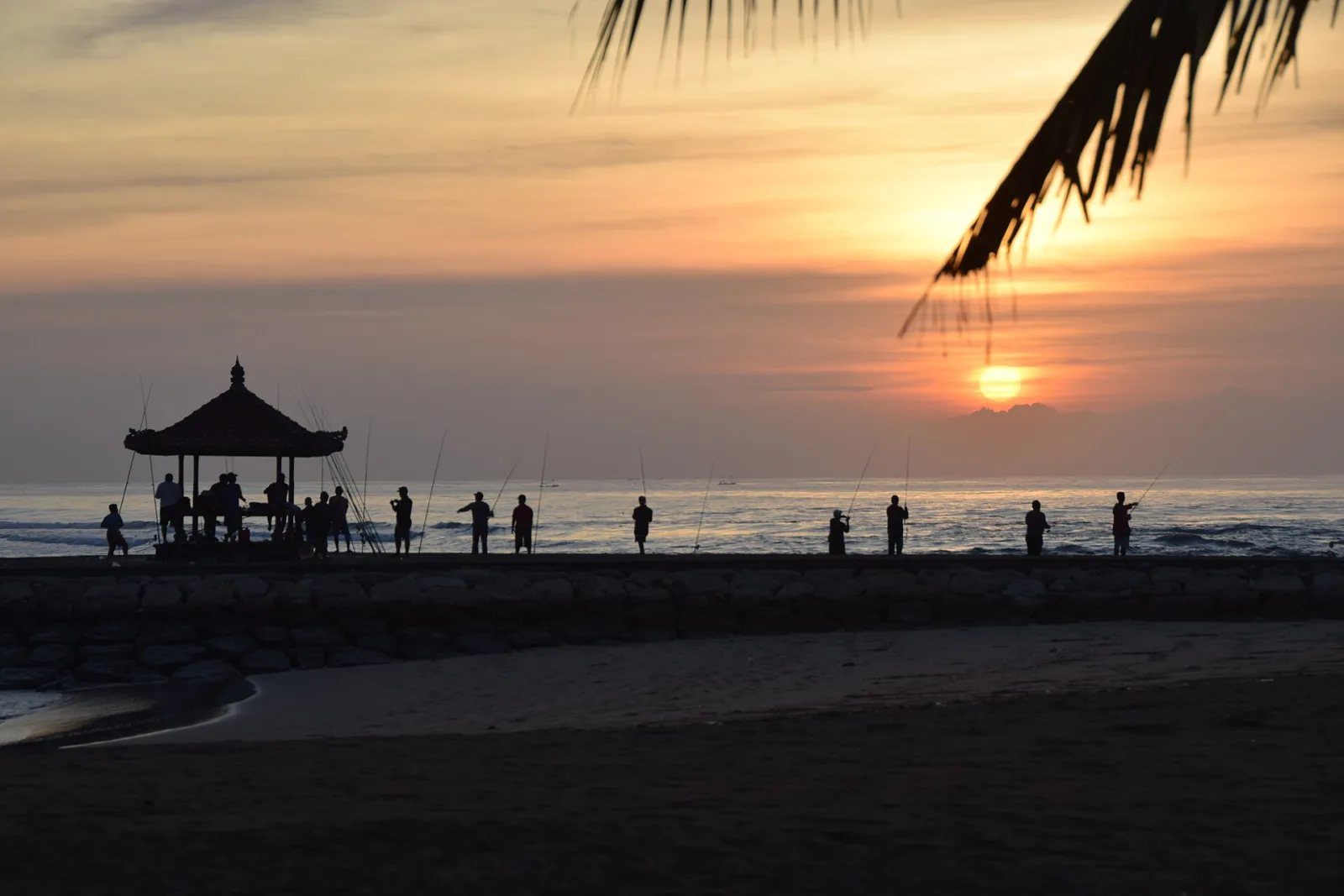
Nusa Dua Beach — Full Guide for Tourists
Manicured resort beach with calm lagoon-like water, white sand, and international hotel frontage — polished, family-friendly, and controlled.
About Nusa Dua Beach
Nusa Dua occupies the eastern side of the Bukit Peninsula, south of Denpasar and directly adjacent to the airport. The area was developed by the Indonesian government in the 1970s as a planned luxury tourism zone — a decision that set it apart architecturally and operationally from the organic sprawl of Kuta and Seminyak. The beach itself runs for several kilometres, divided into sections fronted by major international hotel brands including Mulia, St. Regis, Hilton, Westin, and Club Med. The water here is protected by a reef that sits several hundred metres offshore, creating an enormous calm lagoon with minimal wave action. This makes Nusa Dua the primary choice for families with young children, watersport operators, and anyone seeking predictable swimming conditions. Water activities on offer include parasailing, jet skiing, banana boats, and stand-up paddleboarding. The BTDC (Bali Tourism Development Corporation) zone is clean, patrol-managed, and car-free in sections. Outside the hotel fences, the Bali Collection shopping complex provides restaurants, cafés, and retail. The beach lacks the social energy of Seminyak or the surf atmosphere of Uluwatu — it is a resort destination rather than a discovery beach. For first-time family visitors or those attending MICE events at the Bali Nusa Dua Convention Centre, it is ideal. For travellers seeking local character or surf, they should look elsewhere.
Best Time to Visit
Tide
Swimming is safe at all tides due to the offshore reef. Watersports operate from approximately 09:00 to 17:00.
Season
Year-round due to the calm lagoon. May to September is drier and preferred. The APEC and G20 Bali summits were held here — large events can increase crowds seasonally.
Crowd Level
Moderate — the beach is long enough to absorb resort guests without feeling overcrowded, though the watersport zone near Club Med can be busy in peak months.
How to Get There
From Denpasar (Ngurah Rai Airport)
11 km · 20 to 30 minutes
Nusa Dua is the closest major beach destination to the airport. Metered taxi or Grab costs approximately IDR 80,000–120,000. Blue Bird taxis are reliable.
From Canggu
38 km · 50 to 70 minutes
Via Bypass Ngurah Rai. Traffic on Bypass is heavy in the afternoon. Leave before 15:00 or after 19:00 to avoid the worst congestion.
From Ubud
43 km · 60 to 75 minutes
Via Bypass heading south. A private driver is the most practical option from Ubud. Scooter is possible but not recommended given the highway sections.
What to Do
- Parasailing and jet skiing — operators on the beach in front of Club Med and Hilton areas
- Snorkelling the edge of the reef lagoon — visibility is good in calm conditions, coral heads visible from the sand bar
- Stand-up paddleboarding on the glassy lagoon in the early morning
- Walk the full length of the beach path from the Mulia to Benoa harbour end — approximately 4 km
- Visit Bali Collection for restaurants and shopping, accessible by free shuttle cart within the BTDC zone
Surf Conditions
Wave Type
Protected reef break outside the lagoon is not surfable from the beach. Surfing is not the activity here.
Break Style / Notes
The reef that protects Nusa Dua is itself a dive site accessible by boat from Benoa harbour nearby.
Level
Not a surf beach
Peak Season / Swell
Not applicable — this beach is chosen specifically because it has no significant surf
Nearby Cafes & Warungs
- Bumbu Bali Restaurant — celebrated Balinese cuisine restaurant near the Nusa Dua roundabout, run by Chef Heinz von Holzen, long-considered the definitive Balinese dining experience
- The Arwana at The Mulia — open-air ocean view dining within the Mulia Resort, highly regarded for seafood and Sunday brunch
- Seasalt at Conrad Bali — beachfront tables with Indonesian and international dishes, accessible to non-hotel guests for lunch
Where to Stay
What to Bring
- Reef-safe sunscreen — the lagoon has coral and the sand is exposed to full sun all day
- Cash for beach watersport operators who often do not accept card
- Water shoes for reef snorkelling
- Light cover-up — the resort zone has restaurants and indoor spaces requiring non-swimwear
- Any medication or formula for young children, as the hotel shops charge premium prices
Safety & Scams
- The lagoon is very calm but watersport equipment traffic in the central zone means swimmers should stay to the designated swimming sections
- Jet ski operators require a brief safety briefing — confirm this is given before paying
- Outside the BTDC gates, traffic on the main Nusa Dua road is fast — use pedestrian crossings
Frequently Asked Questions
Is Nusa Dua beach public or only for hotel guests?
The beach below the high tide line is public in Indonesia. However, sunbeds and facilities on the beach in front of hotels are reserved for guests. The public beach walk runs the full length.
Can non-guests access the beach?
Yes. Walk to the beach from the Bali Collection area or enter via the public access paths. You will not have lounge chair service but the beach and water are fully accessible.
Is Nusa Dua good for families?
It is the best beach in Bali for families with young children. The calm lagoon, absence of surf, clean managed beach, and large resort amenities make it purpose-built for families.
How far is Nusa Dua from the airport?
Around 11 km, approximately 20 to 30 minutes by taxi. It is the closest major resort beach to Ngurah Rai International Airport.
Are there budget dining options near Nusa Dua?
Within the BTDC zone, prices are resort-level. The local town of Bualu, just outside the gate, has warungs and local restaurants at normal Bali prices.
Can I surf at Nusa Dua?
Not from this beach. The lagoon has no surfable waves. The nearest surf is at Uluwatu (25 min) or Padang Padang (20 min) on the Bukit Peninsula's west and south coast.
Plan your Nusa Dua Beach day with us
Free, personal advice via WhatsApp. We reply in about 10 minutes.
Message us on WhatsAppRelated Beaches
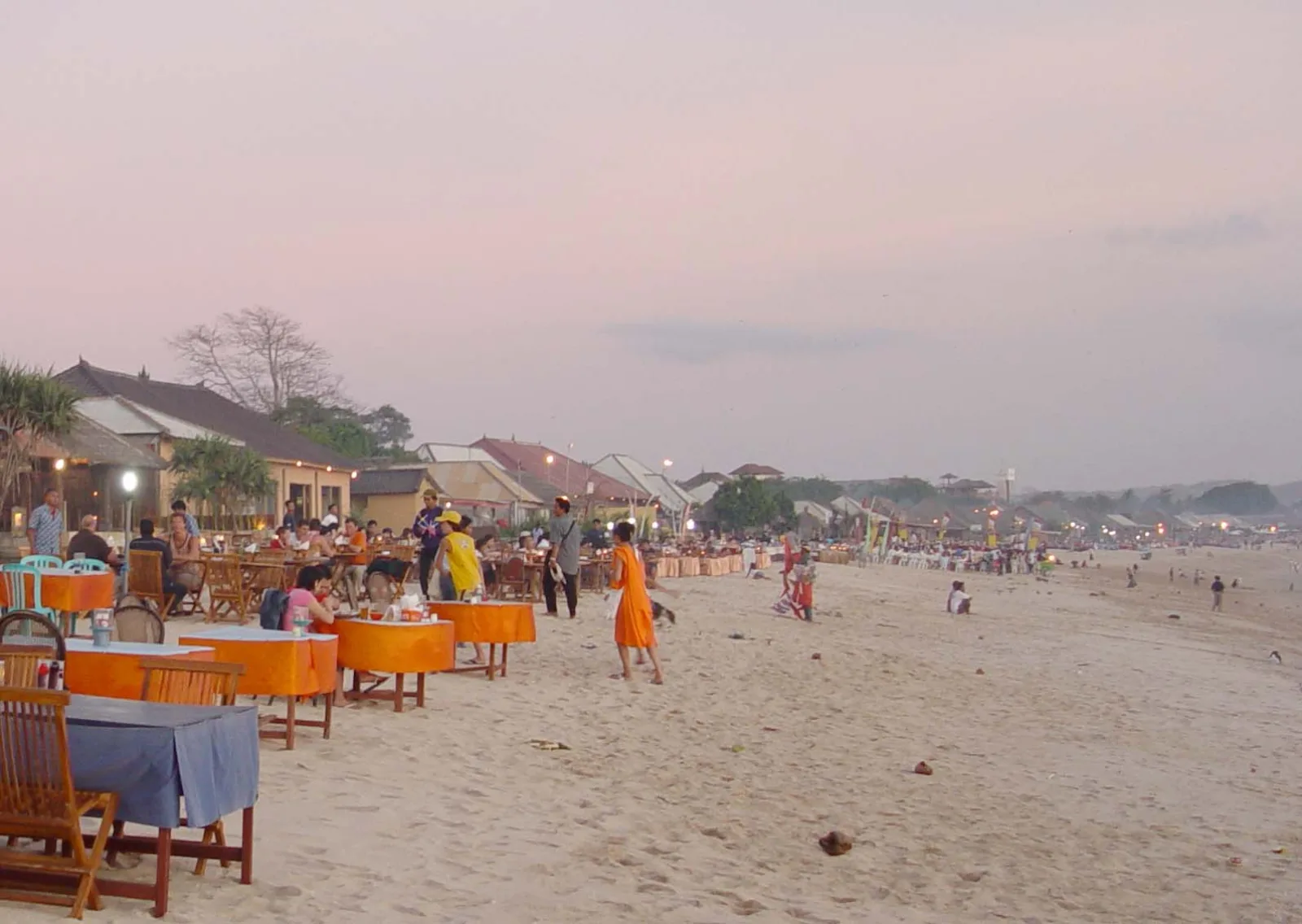
Jimbaran Bay
family / seafood / sunset
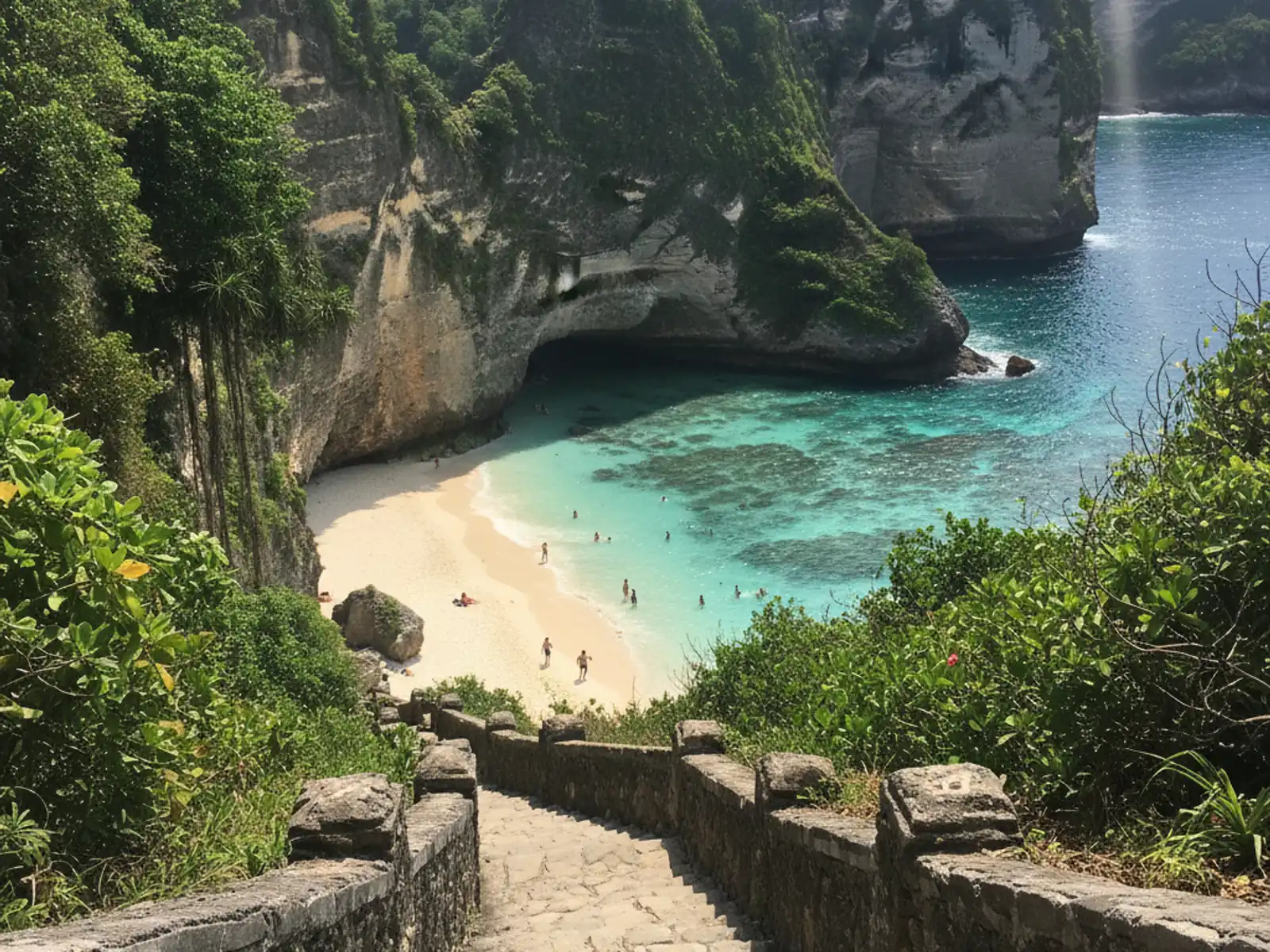
Green Bowl Beach
Hidden pocket beach at the bottom of 300 steep steps on the Bukit cliffs — pristine, secluded, and home to a famous barrelling right.
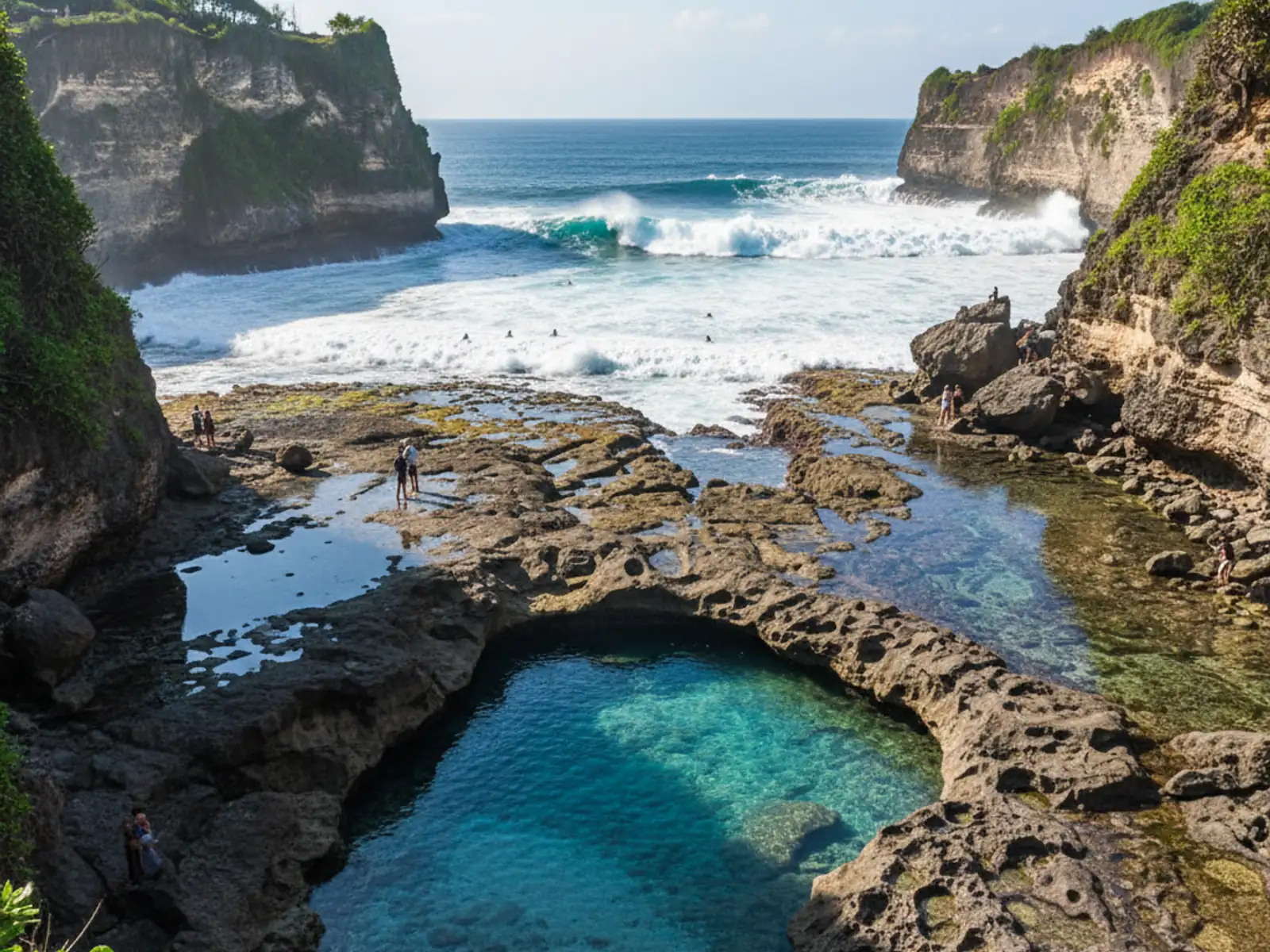
Blue Point Beach
The famous cliff-base surf and sundown beach at Uluwatu — approached through a cave, overlooked by warung terraces, and legendary among the global surfing community.