Indonesian Rupiah (IDR) is the currency and cash is king for most transactions in Bali. Understanding the denominations, knowing where to exchange without getting ripped off, and knowing which ATMs take your card without excessive fees makes a material difference to your daily budget. Here is everything you need to know.
Understanding IDR Denominations
- IDR 100,000 note (red/maroon): the standard large note, approximately USD 6.20
- IDR 50,000 note (blue): approximately USD 3.10
- IDR 20,000 note (green): approximately USD 1.25
- IDR 10,000 note (purple): approximately USD 0.62
- IDR 5,000 note (brown): approximately USD 0.31
- IDR 2,000 and IDR 1,000 notes: light grey, rarely seen outside of change
- Coins: IDR 1,000, IDR 500, IDR 200 — used but often declined by vendors; some shops round to IDR 1,000
The IDR 100,000 note and the IDR 10,000 note look superficially similar to newcomers (both have a reddish element). Learn to distinguish them by size (IDR 100,000 is larger) and the number printed.
ATMs: Which to Use
ATMs are abundant throughout south Bali and Ubud. Fee structures vary:
- BCA ATMs: IDR 30,000 per withdrawal fee, widely available, reliable. Accept Visa, Mastercard, Maestro. Preferred by most expats and long-term visitors.
- Mandiri ATMs: IDR 30,000–40,000 per withdrawal. Wide availability, especially in malls.
- BNI ATMs: IDR 25,000–35,000 per withdrawal. Slightly less common but usually functional with international cards.
- CIMB Niaga and Permata ATMs: Some do not charge their own fee — but your home bank's international withdrawal fee still applies regardless.
- ATM Bersama network (white-label ATMs in shops/warungs): IDR 50,000–75,000 per withdrawal. Avoid.
- HSBC and Citibank ATMs: Zero local fee, but rare and mostly in Denpasar.
Warning
Many ATMs in Bali will present a "Dynamic Currency Conversion" (DCC) option: a screen asking whether you want to be charged in IDR or in your home currency. Always choose IDR. Choosing your home currency locks in an exchange rate applied by the ATM operator (typically 5–7% worse than the interbank rate). This is how ATMs in tourist areas make additional money off visitors who choose "your home currency" thinking it's safer.
Currency Exchange
- Central Koperasi (BMC) money changers: identified by green and white signage. Fixed rates displayed on a board. No hidden fees, no manipulation. The safest place to exchange. Located on Jl. Legian (Kuta), Jl. Sunset Road, and central Ubud.
- Banks: BCA, Mandiri, BRI branches exchange major currencies at rates within 1–2% of interbank. Requires waiting in queue; passport required. Good for large amounts (USD 200+).
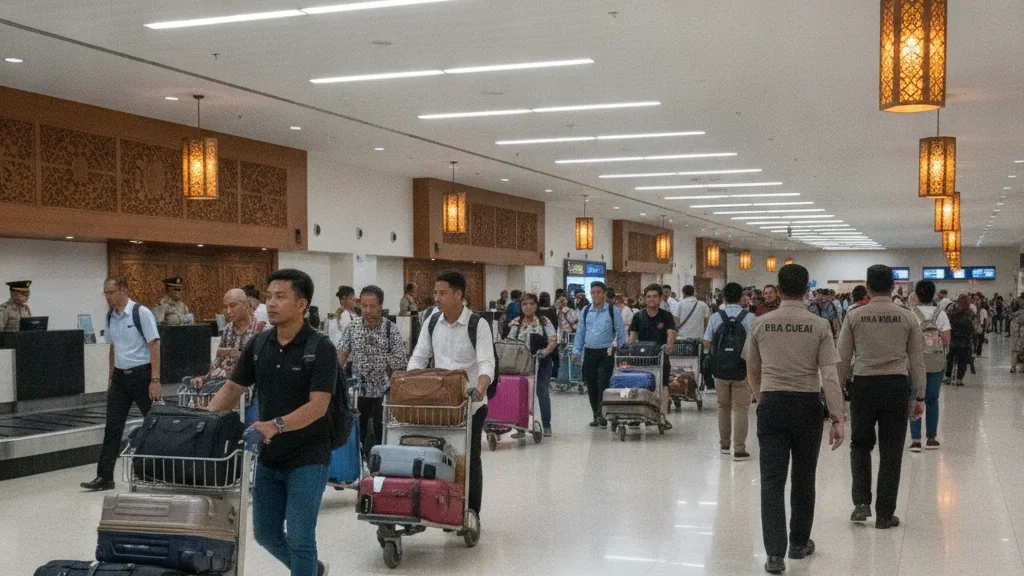
- Airport exchange counters: rates are typically 8–12% worse than street rates. Exchange only what you need for the first few hours (IDR 200,000–300,000 for taxi and food), then use an ATM or BMC changer.
- USD vs EUR vs AUD: USD is the most widely accepted foreign currency for exchange and often gets the best rate. EUR is second. AUD is widely accepted in south Bali due to Australian tourism volume.
How Much Cash to Carry
- Budget traveller (1 day): IDR 300,000–500,000 covers accommodation + meals + transport + 1 activity
- Mid-range traveller (1 day): IDR 500,000–900,000
- Recommended ATM withdrawal: IDR 1,000,000–3,000,000 at a time to minimise per-transaction fees
- Maximum ATM withdrawal at most Bali ATMs: IDR 2,000,000–3,000,000 per transaction
Tipping Culture
Tipping is not part of traditional Balinese culture — it is a tourist-economy addition. Guidance on what is and isn't expected:
- Warungs and local restaurants: Tipping is not expected. Rounding up IDR 5,000–10,000 on a small bill is appreciated but not required.
- Mid-range and upscale restaurants: A 10% service charge is usually already included in the bill (check for "service charge" in the total). No additional tip necessary unless service was exceptional — if you tip on top of a service charge, it likely goes to the restaurant, not the server.
- Spa services: Tipping IDR 20,000–50,000 per therapist after a massage is common and appreciated.
- Private drivers: IDR 50,000–100,000 tip for a full day (IDR 500,000–700,000) is appreciated and common among tourists.
- Surf instructors and guides: IDR 30,000–80,000 tip after a 2-hour lesson.
- Hotel housekeeping: IDR 10,000–20,000 per night left in the room with a small note is appreciated.
- Gojek/Grab drivers: The app allows in-app tipping of IDR 5,000–20,000 on completion.
Tip
Carry at least IDR 100,000–150,000 in small notes (IDR 10,000 and IDR 20,000) at all times. Temple entrance fees, parking, small warungs, and market vendors often cannot or will not break IDR 100,000 notes. Having small change prevents the awkward "no change" situation at every second small transaction.
For a complete daily budget breakdown in IDR, see the budget travel guide. For money exchange at the airport and initial cash needs, the visa and arrival guide covers the airport layout.
Ready to plan your Bali trip?
Get free, personal advice via WhatsApp. We reply in about 10 minutes.
Message us on WhatsApp