
Nyepi is Bali's New Year according to the Saka calendar — a 24-hour period of complete silence, darkness, and stillness observed island-wide. For tourists it is simultaneously the most disorienting and most memorable day possible to experience in Bali. This guide explains exactly what happens, what is and isn't permitted, and whether it's worth planning your trip around.
What Nyepi Actually Is
Nyepi falls on the day after the new moon in the Saka calendar year — usually in March, sometimes late February or early April. The date changes every year and is not fixed on the Gregorian calendar. In 2025 it fell on March 29; in 2026 on March 19.
The Balinese observe four rules on Nyepi:
- Amati Geni — no fire or light
- Amati Karya — no work
- Amati Lelungan — no travel or movement outside the home
- Amati Lelanguan — no entertainment or pleasure
These rules apply to Hindus by religious obligation. Tourists staying in Bali are also subject to them by practical enforcement — the Pecalang (traditional Balinese security) patrol the streets and will politely turn you back if you attempt to walk outside your hotel or villa complex. The airport closes for 24 hours. The internet on Telkomsel is throttled (other carriers vary). No vehicles move on public roads except emergency services.
What Happens the Night Before: Ogoh-Ogoh
The night before Nyepi (called Pengerupukan) features the most spectacular street processions in Bali. Each banjar (village ward) constructs a massive papier-mâché demon effigy called an Ogoh-Ogoh over several months. These can be 5–10 metres tall, lit from inside, and carried through the streets on bamboo platforms by groups of 50–100 young men.
- Processions begin around 6–7 pm in village streets
- The main processions converge on town centres by 8–9 pm
- The Ogoh-Ogoh are then symbolically burned or demolished at crossroads
- This represents the cleansing of negative spirits before the new year
- Ubud, Denpasar, Kuta, and Seminyak all have large processions
Watching the Ogoh-Ogoh parade is one of the most extraordinary things a tourist can witness in Bali. There are no tickets and no official viewing areas — you stand along the street, the procession passes within arm's reach, and the music (gamelan percussion, drums, clashing cymbals) is overwhelming. Arrive on any main street by 7 pm and you will encounter a procession.
Tip
Stand on the side of the street the procession is coming from so you see the Ogoh-Ogoh face-on as it approaches. Bring a phone or camera, not a DSLR with flash — flash photography aimed at the effigy carriers is considered bad form. Video works well. Children are welcome and it's completely safe to watch.
The Day Itself: What Tourists Can and Cannot Do
You Cannot Do
- Leave your hotel, villa, or accommodation compound
- Walk on public streets
- Drive or use any motorised transport
- Use the beach
- Make noise audible outside your compound
- Keep exterior lights on after dark
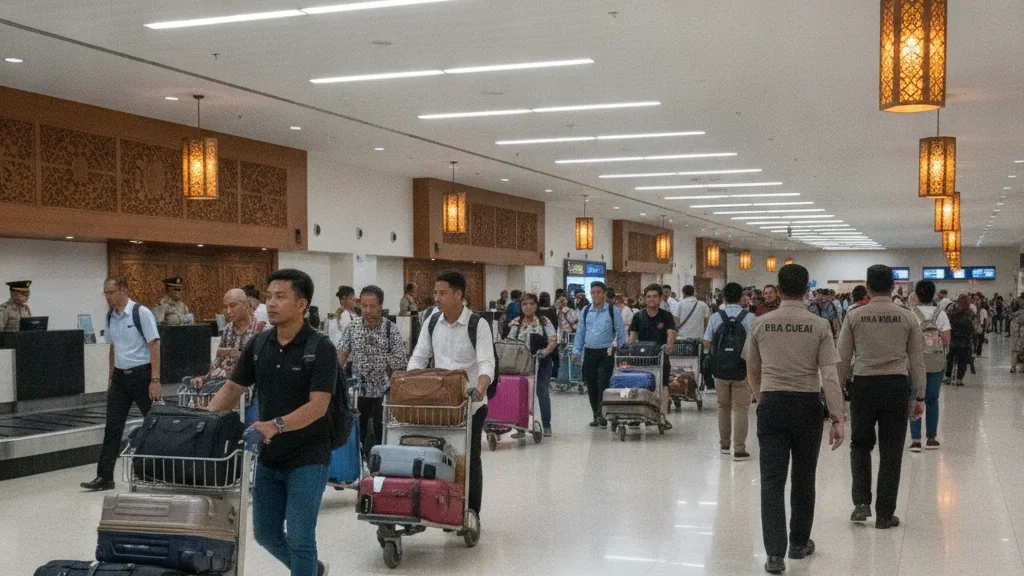
- Fly (Ngurah Rai Airport is closed from 6 am to 6 am the following day)
You Can Do
- Move freely inside your hotel/villa grounds
- Use hotel facilities (pool, spa, restaurant) if the hotel operates them
- Use your phone or laptop (internet works, though may be slow on Telkomsel)
- Read, sleep, watch content on devices
- Eat — hotels and villas prepare food in advance
Where to Stay During Nyepi
Hotels with internal restaurants and pools make Nyepi manageable and pleasant. Staying in a small guesthouse or homestay with no on-site facilities is uncomfortable — you'll be confined to your room with no food service.
- Best option: a private villa with your own pool and kitchen stocked the day before
- Second best: a hotel with 24h room service, a pool, and a restaurant that stays open for in-room dining
- Avoid: budget guesthouses (warung) with no onsite facilities, homestays run by families who are observing Nyepi strictly
Book Nyepi-period accommodation 3–4 months in advance. Hotels raise prices slightly around this date due to demand from people specifically coming to experience it.
Is Nyepi Worth Planning Your Trip Around?
Yes, if you appreciate the experience of being somewhere truly unusual. No other city or island in the world goes completely dark and silent for 24 hours. Lying in a villa with no road noise, no lights on the horizon, and a genuinely dark and star-filled sky over Bali is remarkable. The Ogoh-Ogoh parades alone are worth the trip timing.
No, if you're on a short trip and the 24-hour shutdown eats into your activity time. On a 7-day itinerary, losing one full day to enforced stillness is significant. If your dates are flexible, arriving 2 days before Nyepi and leaving 2 days after gives you the full experience plus recovery time.
Warning
Do not attempt to travel on Nyepi day. The Pecalang are authorised to turn back any pedestrian or vehicle and will do so firmly. The airport closure is absolute — if you have a flight on Nyepi day, you will miss it. Airlines in Indonesia are aware of this; check your booking dates against the Nyepi date for your year of travel before buying tickets. This applies even to connecting flights arriving from outside Bali.
Practical Details
- Stock food and water the day before — shops close in the afternoon before Nyepi
- Charge all your devices before 6 am on Nyepi morning (some hotels cut power to exterior areas)
- If staying at a villa, confirm the villa manager will stock the kitchen the day before
- Candles are used in some hotels for ambience but exterior lighting is turned off completely
- Emergency services (medical, police, fire) do operate — hotels have protocols for contacting them
For more context on Balinese ceremony and Hindu calendar, see the Galungan and Kuningan guide. For the cultural context of Bali's religion more broadly, the first-time visitor guide covers the basics.
Ready to plan your Bali trip?
Get free, personal advice via WhatsApp. We reply in about 10 minutes.
Message us on WhatsApp