
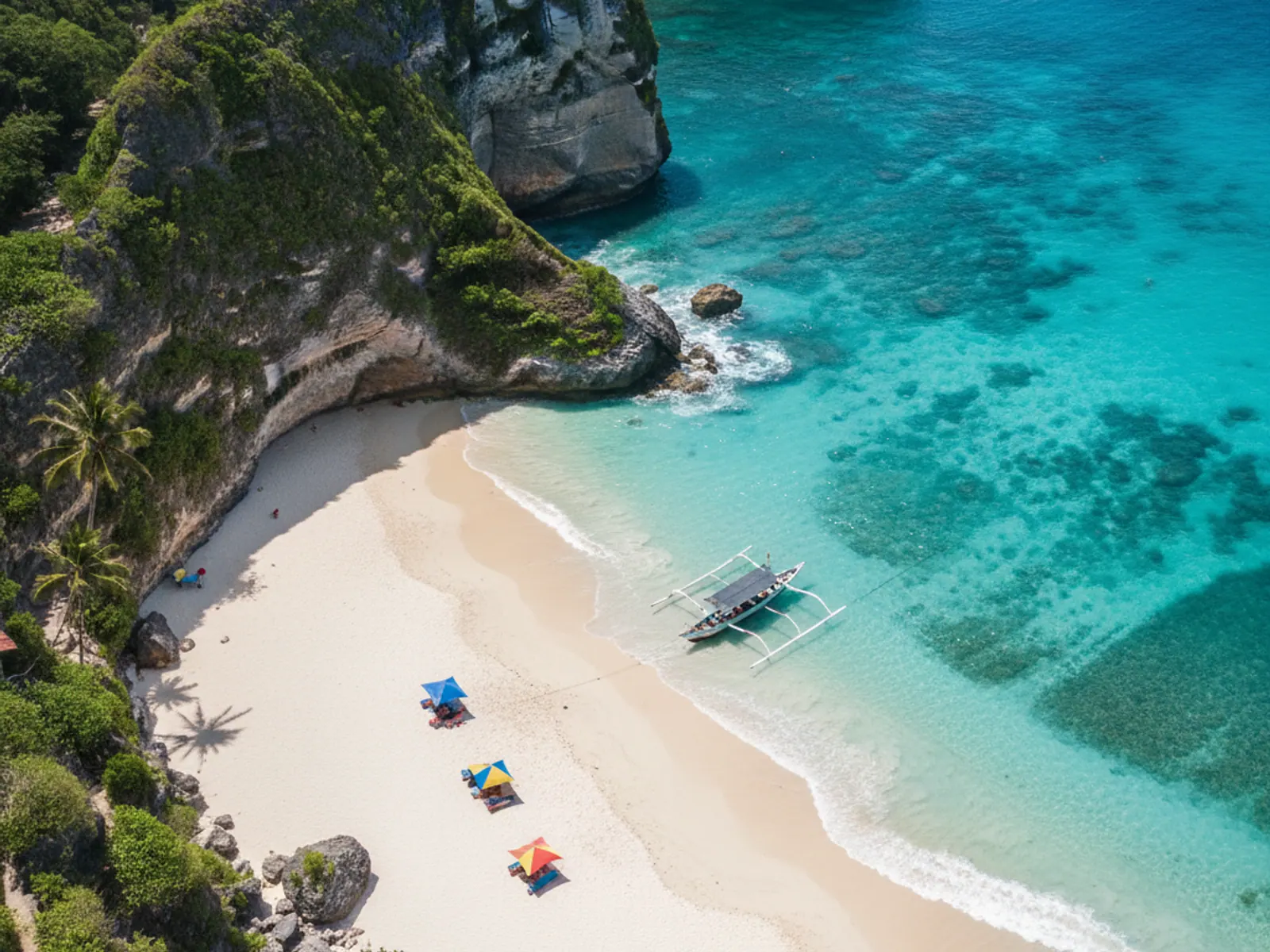
Every travel blog says 'the best time to visit Bali is the dry season, May to October.' This is true as a general principle but ignores what you are actually going to do. The best month for a surfer (June) is different from the best month for a budget traveller (January), a diver (August), a photographer (February), or someone escaping the European summer (September). This guide cuts through the generic advice and matches the best timing to your specific priorities.
TL;DR
- First-time visitor wanting sun and variety: May or September.
- Surfing west coast (Uluwatu, Canggu): June–August for offshore winds and clean swell.
- Budget travel: January–March (cheapest accommodation, fewest tourists, lush scenery).
- Diving / snorkelling: April–November (best visibility). Mola-mola sighting: August–October.
- Avoiding crowds: November or March–April (after wet season finishes).
- Photography (rice terraces, waterfalls, temples): November–February (dramatic light, green paddies).
Best Time for First-Time Visitors
If this is your first time in Bali and you want reliable weather, good energy and an active scene without being overwhelmed by crowds:
May (very strong choice): The dry season begins in earnest, crowds are moderate, prices are reasonable, and the island has an unhurried energy before the June rush. Rice terraces still show some green from the wet season. Excellent month for doing everything — surf, temples, Ubud, day trips — without booking fights for restaurant tables.
September (our top pick): The dry season is winding down but rarely shows it before late October. European school holidays have ended, Australian school holidays wrap up in mid-September. Accommodation prices drop 20–30% from August. Uluwatu and Canggu surf is still consistent. Everything is accessible without the peak-season stress.
June: Excellent weather, but crowds starting to build from the second half. The surf is excellent. A solid choice if you book early.
Best Time for Surfing
West coast surf (Canggu, Seminyak, Kuta, Uluwatu, Padang Padang): May–October. The dry season brings consistent southeast trade winds that create offshore (clean) conditions on the west-facing breaks. Swell arrives from the south — the best combination for surf quality.
Peak surf months: June and July. Consistent southwest swell, offshore winds most mornings, waves 1.5–3m+ at Uluwatu and Padang Padang.
Beginner surf (Kuta, Legian, Batu Bolong in Canggu): Year-round. These breaks work in smaller swell conditions that are always present. Dry season morning conditions are best — onshore winds develop by midday even in dry season.
East coast surf (Nusa Penida, Amed, Padang Bai): November–March. The wet season reverses the swell and wind direction, creating better conditions on east-facing breaks.
Best Time for Diving and Snorkelling
Overall best diving period: April–November. Water visibility is highest in dry season. Dive sites around Amed, Tulamben (USAT Liberty wreck), Menjangan Island (northwest tip of Bali) and Nusa Penida are at their clearest.
Mola-mola (oceanic sunfish) sightings: August–October. Nusa Penida's cleaning stations (Crystal Bay, Gamat Bay) are where cold upwellings attract mola-mola to the surface. This is a bucket-list underwater encounter for divers. Water temperature drops to 18–22°C during this period — bring a 5mm wetsuit.
Manta rays: Year-round at Manta Point (Nusa Penida) and Nusa Lembongan, but more consistent May–October when swell is manageable for dive boat access.
Year-round diving: Tulamben's USAT Liberty wreck is diveable in any month. Visibility drops to 10–15m in wet season but the wreck is easily navigable. Night dives are unaffected by season.
Best Time for Budget Travel
The cheapest months to visit Bali, in order:
- January–February: Post-NYE drop. Fewest tourists. Lowest accommodation prices. 20–30% cheaper than July–August for equivalent rooms. Afternoons are wet-season rainy but mornings are clear. If your itinerary is morning-heavy, this is the best budget window.
- March: Rain starts easing, prices remain low. A strong budget pick if you want improving weather at off-peak cost.
- November: Crowd drop-off is sharp from the first week of November. Weather is transitioning to wet season but still has many clear days. Prices fall significantly from September–October.
Accommodation price index (approximate):
- Jan–Feb: index 70 (lowest)
- March–April: index 80
- May: index 85
- June: index 100
- July–August: index 130–150 (peak)
- September: index 100
- October: index 90
- November: index 80
- December (NYE week): index 150+
Best Time to Avoid Crowds
The quietest periods in Bali (fewest tourists, most availability, most relaxed vibe):
- November and March: Between peak and dry seasons. Crowd levels are at their lowest outside of major local Indonesian holidays.
- February: Practically deserted compared to peak. Even Kuta's beaches are manageable.
- Weekdays over weekends: Bali receives significant domestic Indonesian tourism on weekends. If you can time activities on weekdays, popular spots like Tegallalang rice terrace, Tirta Empul, and Sekumpul waterfall are noticeably less crowded.
- Early mornings: The most powerful crowd management tool regardless of season. Tirta Empul at 7 AM vs 10 AM is a completely different experience.
Best Time for Photography and Scenery
For photographers and travellers who care deeply about Bali's visual landscape:
- Rice terraces (Tegallalang, Jatiluwih, Sidemen): November–February for intense green. By May–June, the paddies cycle through harvest and replanting — still beautiful but different.
- Waterfalls (Sekumpul, Munduk, Nungnung): Maximum flow December–February. January waterfalls can be overwhelming in scale. Trail access is muddier but the spectacle is extraordinary.
- Temple ceremonies: Random throughout the year, but Galungan (Balinese Hindu holiday, occurs every 210 days on the Balinese calendar) decorates every village temple with tall bamboo penjor poles. Spectacular for photography. Check Galungan dates before booking.
- Sunsets: Tanah Lot and Uluwatu sunsets are year-round. June–August sunsets are the clearest (dry air, no haze). Wet season can produce dramatic pink and purple skies after afternoon rain.
6 Frequently Asked Questions
- Can I visit Bali with children in any season?
- Yes. Family travel works well in dry season (May–October). July–August aligns with school holidays and the island is set up for family tourism. Wet season works too — afternoon downpours become an adventure with kids and afternoon rainy hours align with nap time.
- When is Bali most expensive?
- July–August and the Christmas–New Year period (December 24–January 5) are the two price peaks. Popular villas and hotels can cost 40–60% more than low season.
- Is Nyepi worth timing a visit around?
- Nyepi (Bali's Day of Silence, usually March) is a genuinely extraordinary experience — the island goes completely dark and silent for 24 hours. But: you cannot leave your accommodation, the airport closes, and you need to plan carefully. The day before Nyepi (Pengrupukan) features the spectacular ogoh-ogoh parade — giant demon effigies paraded through the streets. That night alone is worth timing a trip around.
- Is October still dry enough to visit?
- Usually yes — most of October is still reliably dry or only has light showers. It is a great month: fewer crowds than peak season, prices moderate, the island is less hectic. The last week of October can see the first proper wet-season showers in some years.
- Are Indonesian public holidays worth knowing about?
- Lebaran (Eid al-Fitr) causes a domestic tourism surge that fills Bali's budget accommodation. The date varies yearly (Islamic calendar). Domestic travellers book all mid-range family villas. If your dates coincide with Lebaran, book well in advance. International tourists are less affected since the accommodation overlap is mostly in the budget-to-mid segment.
- What is the absolute worst time to visit Bali?
- There is no "worst" — Bali works year-round. If pressed: December 31–January 2 (NYE prices are highest, beaches are packed, many restaurants are fully booked). But even then, if you plan around it, Bali delivers.