Cycling tours in Bali — what they are
Bali cycling tours come in two main formats. The most popular is the downhill guided ride from the Kintamani highlands: you are driven up to approximately 1,500 metres elevation, mount a bicycle, and spend 4–5 hours freewheeling downhill through Balinese villages, rice paddies, temple gardens and jungle tracks before reaching the coast near Ubud. This format requires almost no cycling fitness — it is gravity-assisted the entire way.
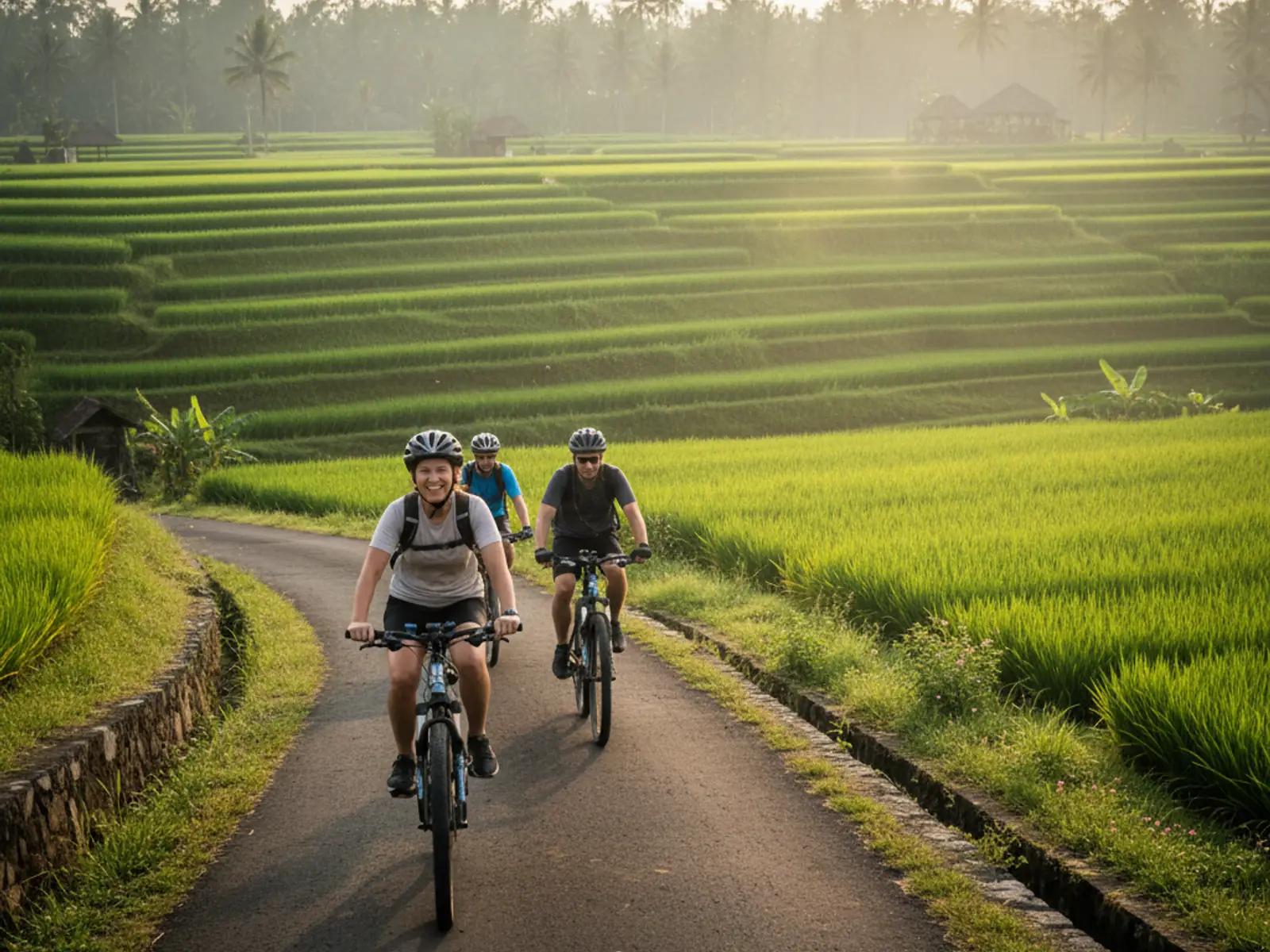
The second format is the countryside cycling tour — a guided pedalling experience on flat or gently rolling terrain through the Ubud rice terrace lanes, the Sidemen Valley, the Canggu beach roads or the back roads of Gianyar. These require more effort and are suited to cyclists who want a genuine workout alongside the cultural experience.
Both formats are guided — a local guide leads the route, provides cultural commentary, stops at points of interest (temples, offering-making households, traditional weaving workshops) and organises breakfast or lunch at a family warung. Group sizes are typically 6–12 people, with smaller groups giving more flexibility on pace and stops.
The bikes used on downhill tours are typically mountain bikes or hybrid bikes with front suspension and hydraulic disc brakes — suited to the mixed terrain of volcanic gravel tracks, rural asphalt and occasional steep sections. Helmets are always included. The pace on downhill tours is relaxed — most operators aim for a leisurely cultural experience rather than a fitness challenge.
Best cycling routes in Bali
Kintamani to Ubud — the classic downhill
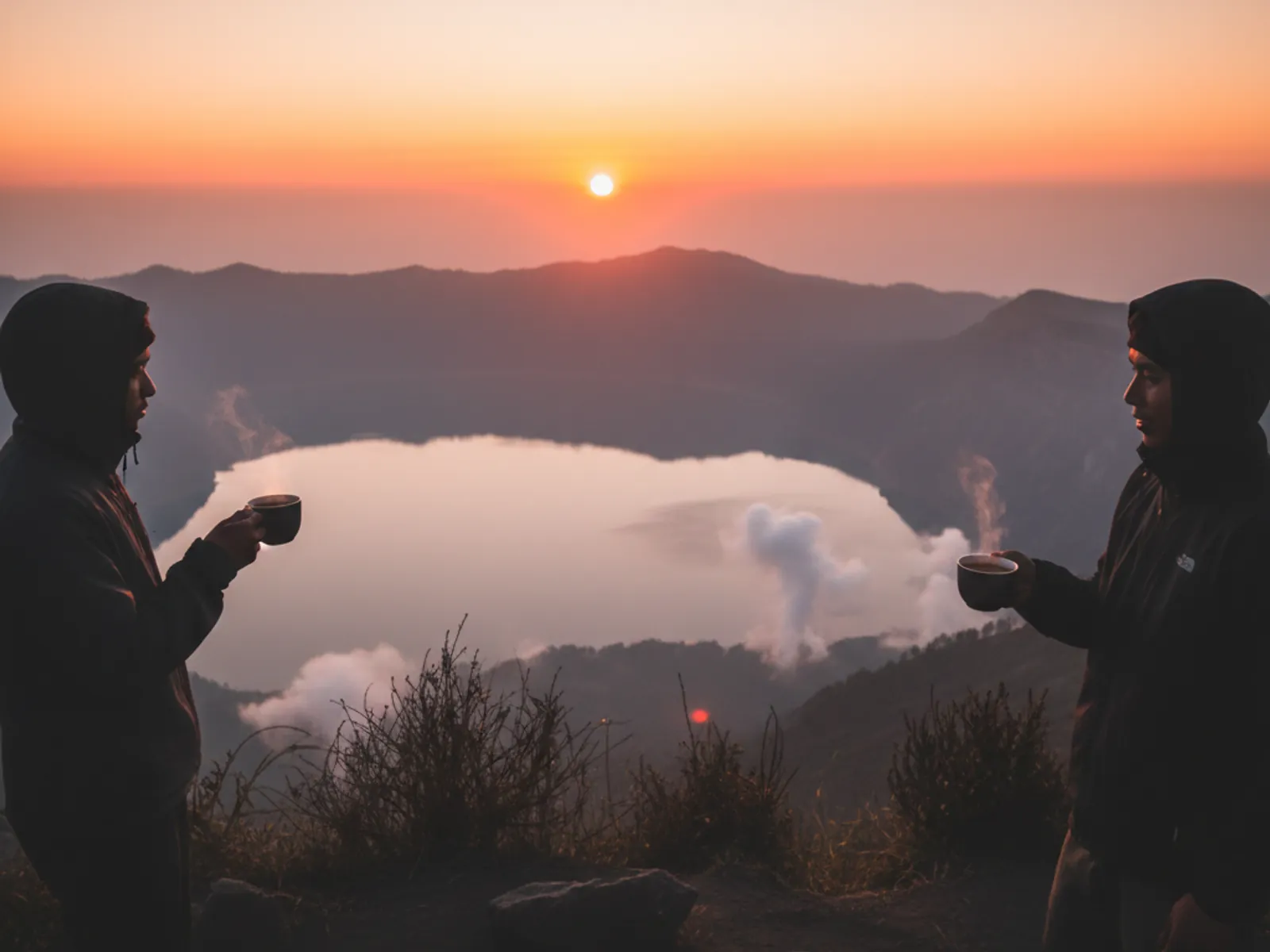
The most popular cycling tour in Bali, operating daily from dozens of operators. Start at 1,400–1,500 metres near Kintamani with views of Batur volcano and Lake Batur, descend through Penglipuran traditional village, rice terrace corridors, coffee and chocolate plantations, and a traditional weaving workshop. Finish with lunch at a family warung near Ubud. Total descent: approximately 1,400 metres over 24km.
Ubud countryside loop — flat rice terrace cycling
A flat to gently rolling route through the rice paddy lanes north and east of Ubud — through Campuan Ridge, Tegallalang and Payangan. This is the format for visitors who want to pedal rather than freewheel. Approximately 20–25km with stops. Excellent for photography. Best in the early morning before heat builds.
Sidemen Valley — east Bali bucolic scenery
The Sidemen Valley in east Bali is arguably the most scenic agricultural landscape on the island — terraced rice fields ascending toward Agung, traditional weaving villages and almost zero tourist infrastructure. Cycling tours here are quieter, more authentically rural and best suited to those who want to escape the Ubud tourist circuit.
Canggu beach roads — flat coastal route
A flat morning ride through the Canggu and Pererenan coastal lanes, rice fields and Balinese village paths. Best combined with a surf-watch stop and breakfast at a local warung. Suitable for families with children and anyone who prefers flat terrain.
Pricing
| Tour type | IDR | USD equiv. | Includes |
|---|---|---|---|
| Kintamani downhill (group) | Rp 350,000 – 550,000 | $22 – $34 | Transfer up, bike, helmet, breakfast, guide |
| Ubud countryside loop | Rp 350,000 – 500,000 | $22 – $31 | Bike, guide, water, snack |
| Sidemen Valley tour | Rp 400,000 – 600,000 | $25 – $38 | Bike, guide, lunch |
| Private cycling tour (1–2 pax) | Rp 700,000 – 1,100,000 | $44 – $69 | Exclusive guide, flexible route |
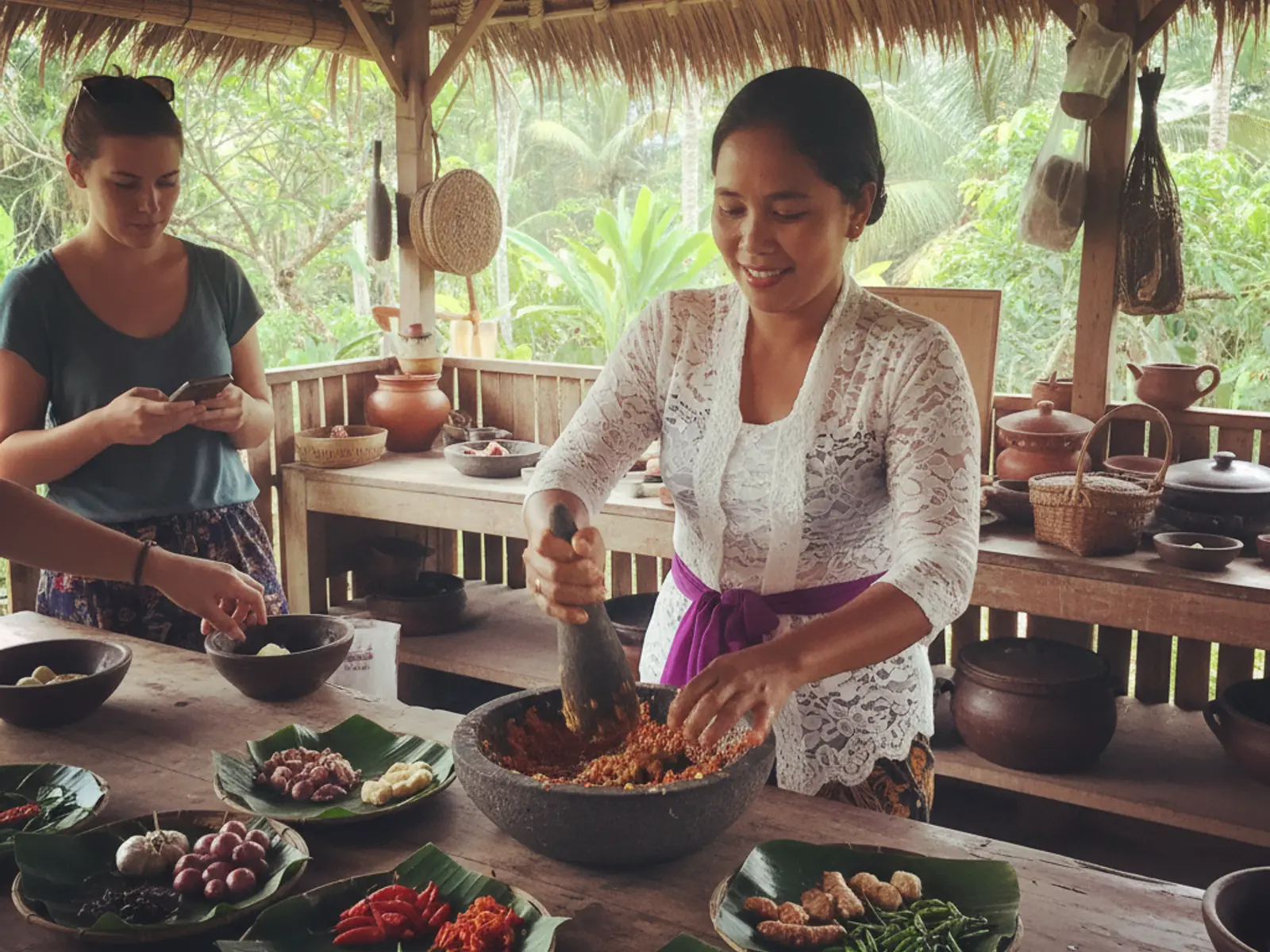
| Cycling + cooking class combo | Rp 600,000 – 900,000 | $38 – $56 | Half-day ride + 4-hour cooking |
What is included in a standard downhill tour
- ✓Transfer from your hotel up to the Kintamani starting point (1.5–2 hours)
- ✓Mountain bike with helmet and basic tools
- ✓Balinese breakfast at a local warung (nasi goreng, fresh fruit, tea/coffee)
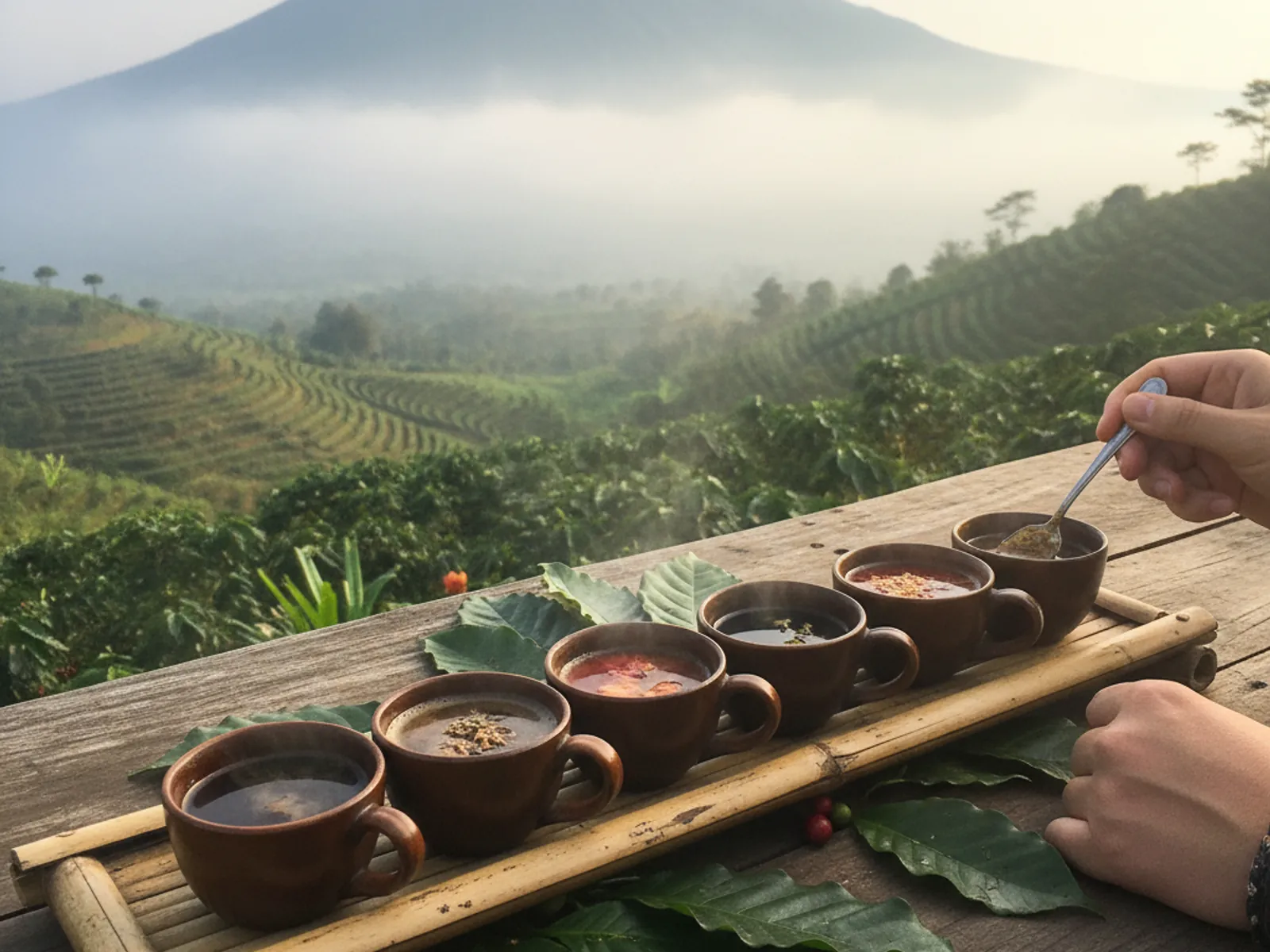
- ✓Cultural stops at Penglipuran village, a coffee plantation, weaving workshop
- ✓Local guide who speaks English
- ✓Lunch at a local family restaurant
- ✓Transfer back to your hotel or drop-off at Ubud
What to bring
- →Comfortable cycling shorts or lightweight trousers (avoid jeans)
- →Closed shoes with grip — trainers or sandals with ankle strap
- →Light jacket for the early morning at 1,500 metres (can be cold at 7am)
- →Sunscreen
- →Camera or phone mount for handlebars
- →Small backpack or handlebar bag for water and snacks
Best season and time of day
The dry season (May–October) offers the best roads and clearest views from the Kintamani start point. In the wet season, mornings often start clear before afternoon rain arrives — cycling tours are typically finished by 1pm–2pm, before the rain. The Kintamani route can be done year-round; roads become muddy at stops but the cycling itself is manageable.
All cycling tours depart early morning — typically 7am–8am pick-up. This is essential for the Kintamani route to beat the midday heat and traffic building on the descent through Ubud. Morning light is also spectacular on the rice terraces from approximately 8am–10am.
Safety considerations
Traffic: The Kintamani descent route uses a combination of back roads and occasional stretches of the main Ubud–Kintamani road. The guide leads the group and stops at road crossings. Attention is required on the main road sections — traffic can be fast.
Brake check: Always check your brakes before starting the descent. On a 1,400-metre descent, a brake failure is serious. Good operators check all brakes at the start point.
Children: Downhill tours are suitable for children who can ride a bike independently (usually 8–10+ years). Tandem or tag-along options are available at some operators for younger children.
Frequently asked questions
Do I need to be fit to do the Kintamani downhill cycle?
Very little fitness is required. The route is essentially all downhill — you mostly steer and brake. There are a few flat sections where light pedalling is needed. Children and elderly participants manage it comfortably.
How much uphill is involved in the downhill tour?
Minimal — the occasional flat road requires light pedalling but there is no meaningful uphill. The entire point of the tour is a 1,400-metre elevation drop over 24km.
What happens if it rains on the cycling tour?
Light rain is common on morning tours year-round. Operators continue in light rain. In heavy downpours, the route may be shortened or shelter found at a cultural stop. Ponchos are usually available at base.
Is the downhill cycling suitable for non-cyclists?
Yes. The most basic cycling skill required is the ability to balance, steer and use brakes. The pace is slow and groups wait at all junctions. People who have not ridden a bike for years manage fine.
Can I do both Kintamani cycling and Batur hiking on the same trip?
Yes — but on different days. The Batur hike departs at 2am, the cycling tour at 7am. Do them on separate days. Most visitors enjoy pairing them with a day of rest or Ubud sightseeing between.
What is Penglipuran village and why is it a stop on cycling tours?
Penglipuran is one of the best-preserved traditional Balinese villages in Bali — all bamboo-thatched houses built in a single linear layout with a communal temple at each end. Entry fee Rp 30,000. It is a genuine living village, not a tourism reconstruction.
Ready to book or have questions?
WhatsApp us directly — free trip planning help, real reply in about 10 minutes.
Message +62 882-4569-741