Fishing tours in Bali — the basics
Bali is positioned in the Indian Ocean between two major migratory tuna grounds, making offshore sport fishing genuinely productive rather than a tourist gimmick. The deep water starts within 30–40 minutes of the southern coast, and the Lombok Strait between Bali and Lombok is a natural funnel for large pelagic fish including yellowfin tuna, dogtooth tuna, giant trevally, wahoo, mahi-mahi (dolphinfish) and marlin.
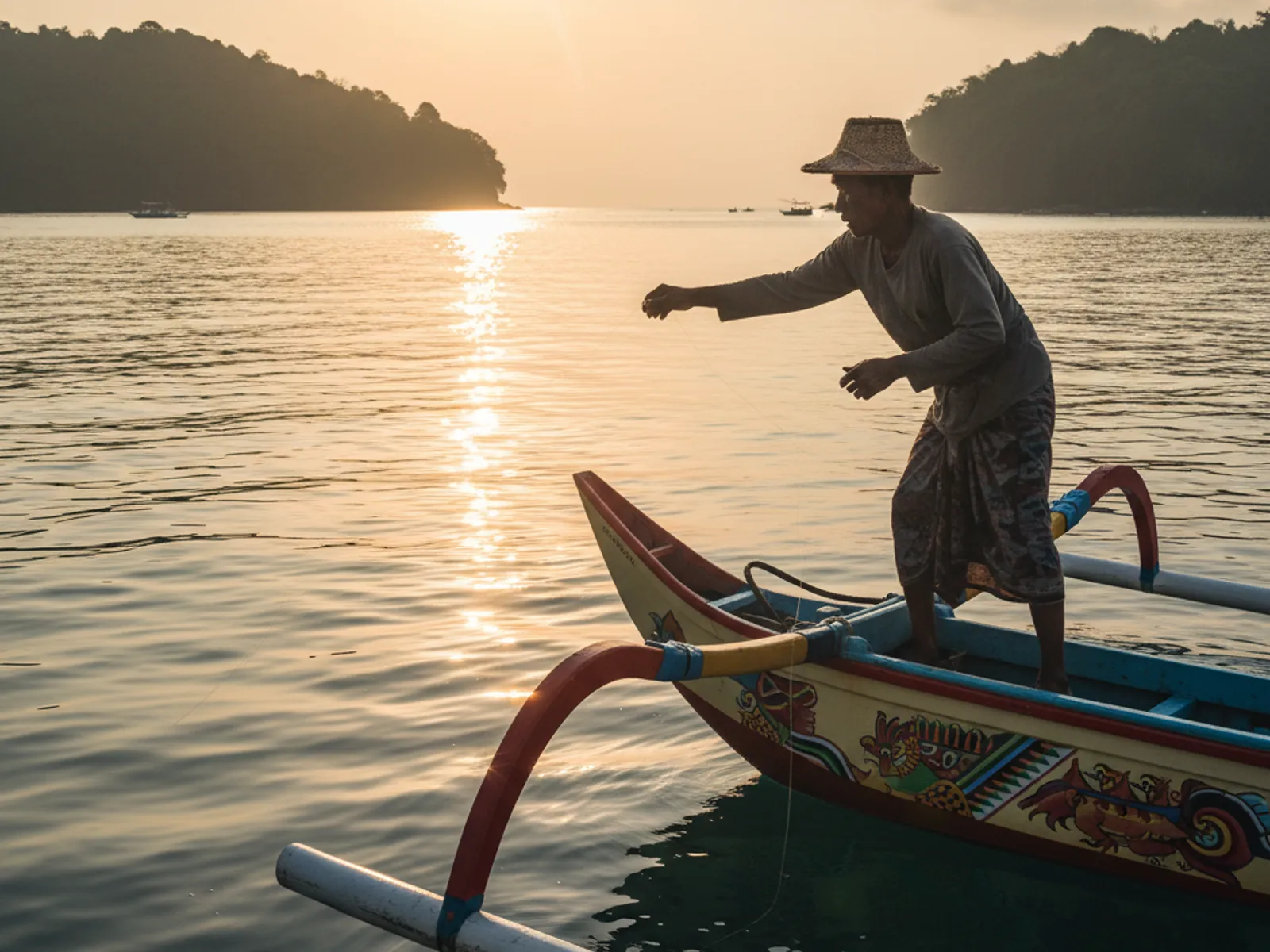
The main departure harbour is Benoa (south of Denpasar) where a fleet of proper sport fishing vessels operates. Boats range from local wooden jukung boats suitable for reef fishing inshore to purpose-rigged fibreglass sport fishing boats of 25–40 feet with downriggers, fighting chairs and live bait tanks for offshore game fishing.
No fishing experience is required. The boat captain and crew handle all bait preparation, tackle rigging and fish fighting assistance. Guests control the rod during the fight. Most offshore trips use trolling as the primary technique — lures and rigged baits are deployed behind the moving boat to target pelagics. For reef fishing, bottom fishing with cut bait or jigging with metal lures is standard.
Bali fishing boats are almost always booked on a "full boat" basis — you pay for the entire vessel rather than per person. For groups of 3–6, this works out to a very reasonable per-person cost. Shared trips are occasionally available but not the norm.
Fishing trip types
Offshore sport fishing — trolling for pelagics
The primary format for game fishing from Benoa. Boats troll 6–8 lines at 6–8 knots over deep water grounds 5–25 nautical miles offshore. Target species include yellowfin tuna, dogtooth tuna, wahoo, mahi-mahi, sailfish and black marlin. This is catch-and-release for the large species and catch-and-keep for table fish like tuna and mahi-mahi.
Reef and bottom fishing — inshore and nearshore
Fishing inside the reef and over nearshore structure targeting red snapper, grouper, emperor fish, amberjack and juvenile giant trevally. Less dramatic than offshore trolling but more accessible for families with children and a good option when offshore conditions are rough.
Night jigging — Amed and east coast
Vertical jigging with heavy metal lures from small boats over the steep-dropping east coast reefs after dark. Targets dogtooth tuna, amberjack and GT. A niche but very effective technique popular with sport fishing enthusiasts. Most accessible from Amed and Padang Bai.
Target species and seasons
| Species | Best season | Typical weight |
|---|---|---|
| Yellowfin tuna | March–November | 10–80kg |
| Dogtooth tuna | April–October | 15–50kg |
| Giant trevally (GT) | April–October | 5–30kg |
| Wahoo | May–September | 10–35kg |
| Mahi-mahi (dolphinfish) | Year-round, peak March–July | 5–20kg |
| Sailfish | May–October | 30–80kg |
| Black marlin | July–October | 100–300kg |
| Red snapper / grouper (reef) | Year-round | 1–5kg |
Pricing (full boat)
| Trip type | IDR (full boat) | USD equiv. | Duration |
|---|---|---|---|
| Half-day inshore fishing | Rp 2,000,000 – 3,500,000 | $125 – $219 | 4 hours |
| Full-day offshore trolling | Rp 4,000,000 – 6,500,000 | $250 – $406 | 8 hours |
| Night jigging (Amed) | Rp 1,500,000 – 2,500,000 | $94 – $156 | 4–5 hours after dark |
| Premium sport fishing boat | Rp 7,000,000 – 12,000,000 | $438 – $750 | Full day, full tackle |
Boat capacity is typically 3–6 guests. Divide the total boat cost by your group size for the per-person equivalent. A full-day offshore trip for 4 people at Rp 5,000,000 works out to Rp 1,250,000 ($78) per person — comparable to other premium Bali activities.
What is included
- ✓All fishing tackle, rods, reels, lures and bait
- ✓Life jackets and safety equipment
- ✓Captain and mate to handle rigging, bait and navigation
- ✓Lunch box, water and soft drinks
- ✓Fish cleaning and bagging of catch at the end
- ✓Transfer from Benoa harbour area (some operators)
What to bring
- →Polarised sunglasses (essential for offshore glare)
- →SPF 50+ sunscreen and lip balm — offshore UV is intense
- →Light rain jacket (offshore weather can change)
- →Anti-seasickness medication (take 1 hour before departure)
- →Non-marking rubber-soled shoes for the boat deck
- →Camera with telephoto or waterproof case
Safety considerations
Seasickness: Offshore conditions are more exposed than inshore reef fishing. Swell of 1.5–2.5 metres is common in the Lombok Strait. If you are prone to motion sickness, take medication the night before and again 1 hour before departure.
Sun exposure: Being stationary on a boat in full sun for 8 hours is one of the fastest ways to get a severe sunburn. Cover up, reapply sunscreen every 2 hours, and consider a UV-blocking long-sleeved fishing shirt.
Hook safety: Large offshore lures carry triple hooks. Let the mate handle all lure changes and rigging. Do not handle fishing tackle without crew guidance — the hooks are designed to penetrate deeply and quickly.
Frequently asked questions
Do I need any fishing experience to book a trip?
No. The crew handles all the technical work. Guests control the rod during the actual fish fight, which the captain will coach you through. First-timers catch large fish regularly on Bali trips.
Can I keep the fish I catch?
Yes for table species (tuna, mahi-mahi, reef fish). Large marlin and sailfish are typically catch-and-release. The crew will prepare your fish for travel if you want to take it back to your villa to cook, or some operators have relationships with local restaurants who will prepare it for you.
What is the best month to catch large yellowfin tuna near Bali?
April to September is the strongest run. Peak months are June and July when schools of 15–50kg yellowfin are regularly caught within 10 nautical miles of Benoa.
Is marlin fishing catch and release in Bali?
Reputable operators practice catch-and-release for billfish (marlin, sailfish). This is not a legal requirement in Indonesia but an ethical standard that the serious fishing community follows.
Can children fish on a Bali fishing trip?
Yes. Children 8+ can fish inshore and enjoy the experience. For offshore trolling trips, a minimum age of 10–12 is practical due to the physical demand of fighting a large fish and the longer boat time.
How do I get to Benoa harbour from Canggu or Ubud?
Approximately 40–50 minutes from Canggu or 60–70 minutes from Ubud by car. Most operators meet you at the harbour entrance. Grab or a private car is the standard transfer option.
Ready to book or have questions?
WhatsApp us directly — free trip planning help, real reply in about 10 minutes.
Message +62 882-4569-741