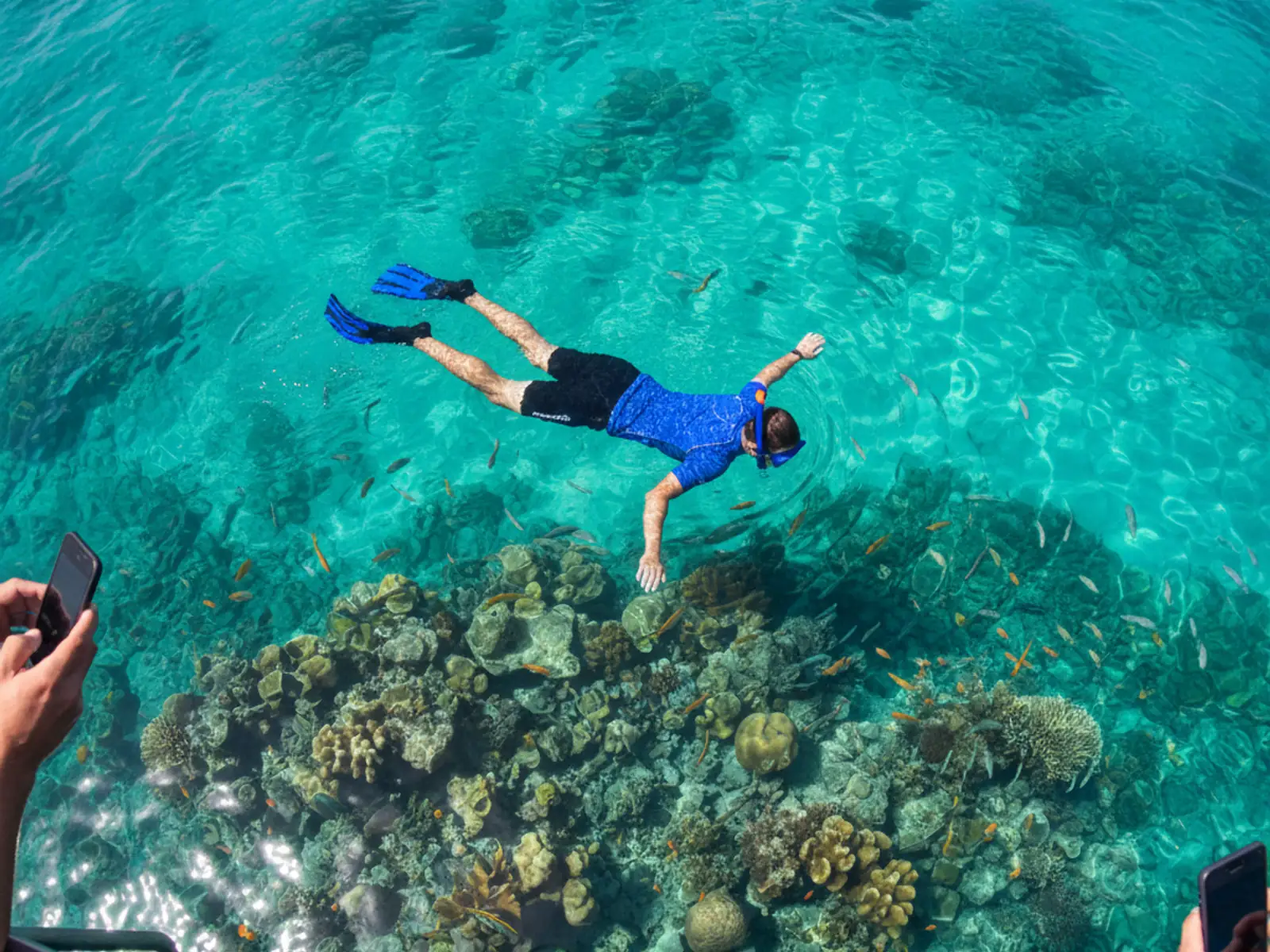
Snorkeling in Bali — what to expect
Snorkeling in Bali requires no certification, no training and no previous experience — a mask, fins and a snorkel are all you need. The island is surrounded by water ranging from crystal-clear reef gardens to shallow fish nurseries, and the best snorkeling can be reached within 30 minutes by boat from several departure points.
Water temperature ranges from 26–29°C at most sites, which means no wetsuit for most people. The marine life diversity is extraordinary — even at the most accessible sites you will encounter parrotfish, clownfish in anemones, angelfish, triggerfish, sea turtles and, at some sites, reef sharks and manta rays.
Guided snorkeling tours typically visit two to three spots per trip and last two to four hours. Equipment is always included. Costs range from Rp 350,000 ($22) for a shared boat tour from Padang Bai to Rp 850,000 ($53) for a private trip to Menjangan Island in northwest Bali. Prices do not include national park entry fees where applicable (Menjangan: Rp 250,000).
The best snorkeling requires either calm seas or boat access — not all Bali beaches are good for snorkeling from shore. The wave-exposed west coast (Canggu, Kuta, Seminyak) has very limited snorkeling. Head to the calmer east coast (Blue Lagoon, Amed) or take a boat to the offshore islands.
Best snorkeling spots in Bali
Blue Lagoon — Padang Bai (best for beginners)
The most accessible excellent snorkeling on the island. A calm, sheltered bay with clear water, excellent visibility (15–20m), abundant reef fish and regular sea turtle sightings. 10 minutes by boat from Padang Bai harbour. Shared tours from Rp 350,000 include transport to 2–3 sites. The lagoon is only 3–8 metres deep — perfect for surface snorkeling.
Menjangan Island — West Bali National Park (best coral)
Part of a protected national park, Menjangan has the best-preserved hard coral walls in Bali. The reef wall drops to 40+ metres but the top of the wall is at 3–5 metres and is perfect for snorkeling. Visibility often exceeds 25 metres. Requires a Rp 250,000 park entry fee plus a 3-hour drive from Canggu — best done as an overnight trip from Pemuteran.
Nusa Lembongan — Mushroom Bay and Mangroves (sea turtles)
Nusa Lembongan is reachable from Sanur by fast boat (35 minutes). Snorkeling around the northern reef walls consistently produces sea turtle encounters and schooling fish. The mangrove channel is unique — paddling in a traditional wooden boat through the roots looking for reef fish. Many one-day island tours from Bali include snorkeling stops.
Amed — Japanese Wreck and Coral Gardens (shore snorkeling)
The Japanese fishing boat wreck in Amed sits in 2–12 metres of water and can be snorkeled directly from the beach — no boat needed. The bow is clearly visible from the surface. Lipah Bay and Selang point also have excellent shore-access coral gardens with outstanding macro life (pygmy seahorses, nudibranch).
Nusa Penida — Manta Point (experience required)
Oceanic manta rays with 3–4 metre wingspans circle cleaning stations at Manta Point throughout the morning. Snorkeling with mantas is one of Bali's signature wildlife experiences. The site is exposed to open-ocean swells — seas need to be calm, and non-swimmers or nervous snorkelers are not suited here. A life jacket is available from any operator.
Pricing
| Trip | IDR | USD equiv. | Notes |
|---|---|---|---|
| Blue Lagoon shared tour | Rp 350,000 – 500,000 | $22 – $31 | Includes equipment, 2 sites |
| Nusa Lembongan day trip | Rp 550,000 – 850,000 | $34 – $53 | Fast boat + snorkel stop |
| Menjangan day trip | Rp 900,000 – 1,400,000 | $56 – $88 | Includes park fee, guide, boat |
| Manta Point (Nusa Penida) | Rp 500,000 – 900,000 | $31 – $56 | Group boat trip, 2 sites |
| Equipment hire (own trip) | Rp 50,000 – 100,000/day | $3 – $6 | Mask, snorkel, fins |
What to bring
- →Swimsuit or boardshorts
- →Reef-safe sunscreen (non-nano zinc oxide)
- →Rash guard or wetsuit top — sun and jellyfish protection
- →Underwater camera or GoPro (optional but recommended)
- →Towel and change of clothes
- →Anti-seasickness tablets if you are prone (take 1 hour before departure)
- →Cash in IDR for national park fees and tips
Best season
April to October offers the clearest water and calmest seas at the majority of Bali snorkeling sites. Visibility at Blue Lagoon peaks at 20–25 metres in August. Manta rays at Nusa Penida are present year-round but most reliably June–October. The wet season (November–March) still has good snorkeling at calm-water sites like Amed and Padang Bai, but Nusa Penida and Menjangan crossings can be rough.
Safety considerations
Currents: Nusa Penida has strong open-ocean currents. Always stay with your guide. If you are not a confident swimmer, tell your boat captain before entering the water.
Sea urchins: Many Bali reefs have black sea urchins in shallow areas. Wear fins and do not stand on the reef. If stung, remove spines carefully and apply vinegar.
Sunburn: You float face-down for hours with your back exposed to direct equatorial sun. Wear a full rash guard, not just sunscreen. Sunscreen alone in open water does not provide sufficient protection.
Coral protection: Never stand on or touch coral. Even gentle contact kills coral polyps. This is an ecological and, at national park sites, a legal issue.
Common scams and things to avoid
- Jukung fishermen offering "private snorkel tours": Many local fishermen offer boat rides at the beach for Rp 100,000–150,000. They often have no snorkel gear, no guide certification and no first aid kit. Use registered tour operators.
- Overcrowded Manta Point tours: In peak season (July–August) some Manta Point tours send 15–20 people into the water simultaneously, which disturbs the mantas and produces a poor experience. Choose operators with group sizes under 8.
- Equipment in poor condition: Always test your mask for seal quality before entering the water. Cracked silicone skirts and damaged buckles are a common complaint on budget tours.
Frequently asked questions
Can non-swimmers snorkel safely in Bali?
Yes, with a life jacket. Reputable operators provide buoyancy aids on request. Stick to shallow, calm sites like Blue Lagoon or Amed. Avoid Nusa Penida if you cannot swim — the currents there require strong swimming ability.
Is it possible to snorkel with mantas without scuba diving?
Yes. Manta Point at Nusa Penida is specifically a snorkel site — the mantas circle at 5–15 metres. You do not need scuba certification. The experience at the surface can be just as impressive.
How do I get to Blue Lagoon (Padang Bai) from Ubud?
By scooter or private car: about 45 minutes from Ubud. Many dive and snorkel operators run pick-up from Ubud hotels at 7am–8am for day trips to Blue Lagoon.
Can I snorkel directly from the beach in Amed?
Yes. The Japanese wreck at Amed is 30 metres from shore and can be snorkeled without a boat. The Lipah and Selang sites also have good shore-access snorkeling. Simply rent gear from any guesthouse on the beachfront.
What fish will I see?
At most sites: moorish idols, parrotfish, clownfish in anemones (Nemo fish), surgeonfish, triggerfish, butterflyfish, and at sites like Blue Lagoon and Amed, hawksbill sea turtles. At Manta Point: oceanic manta rays. At Menjangan: nudibranchs and macro life alongside large reef fish.
How far in advance should I book a snorkeling tour?
For popular day-trip combinations (Nusa Lembongan, Menjangan), book 1–2 days ahead. For Manta Point in July–October, book 3–5 days ahead. Blue Lagoon tours often accept same-day bookings.
Ready to book or have questions?
WhatsApp us directly — free trip planning help, real reply in about 10 minutes.
Message +62 882-4569-741