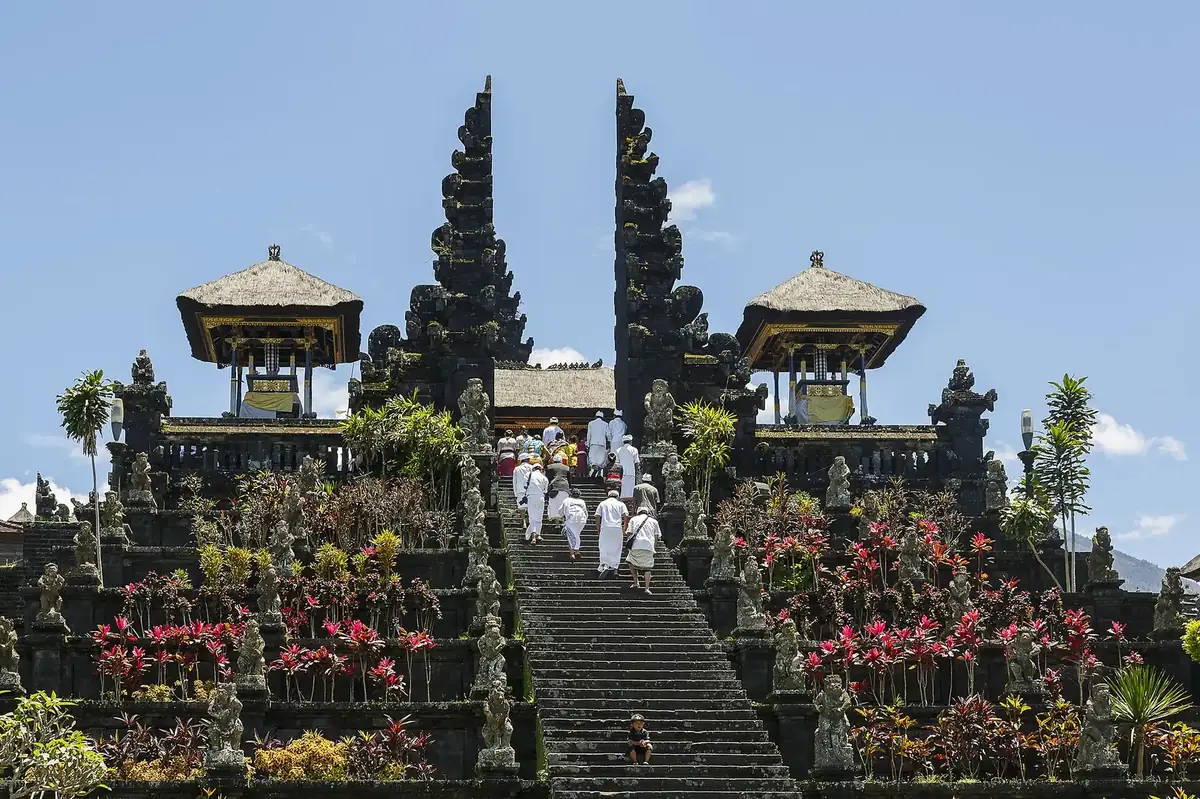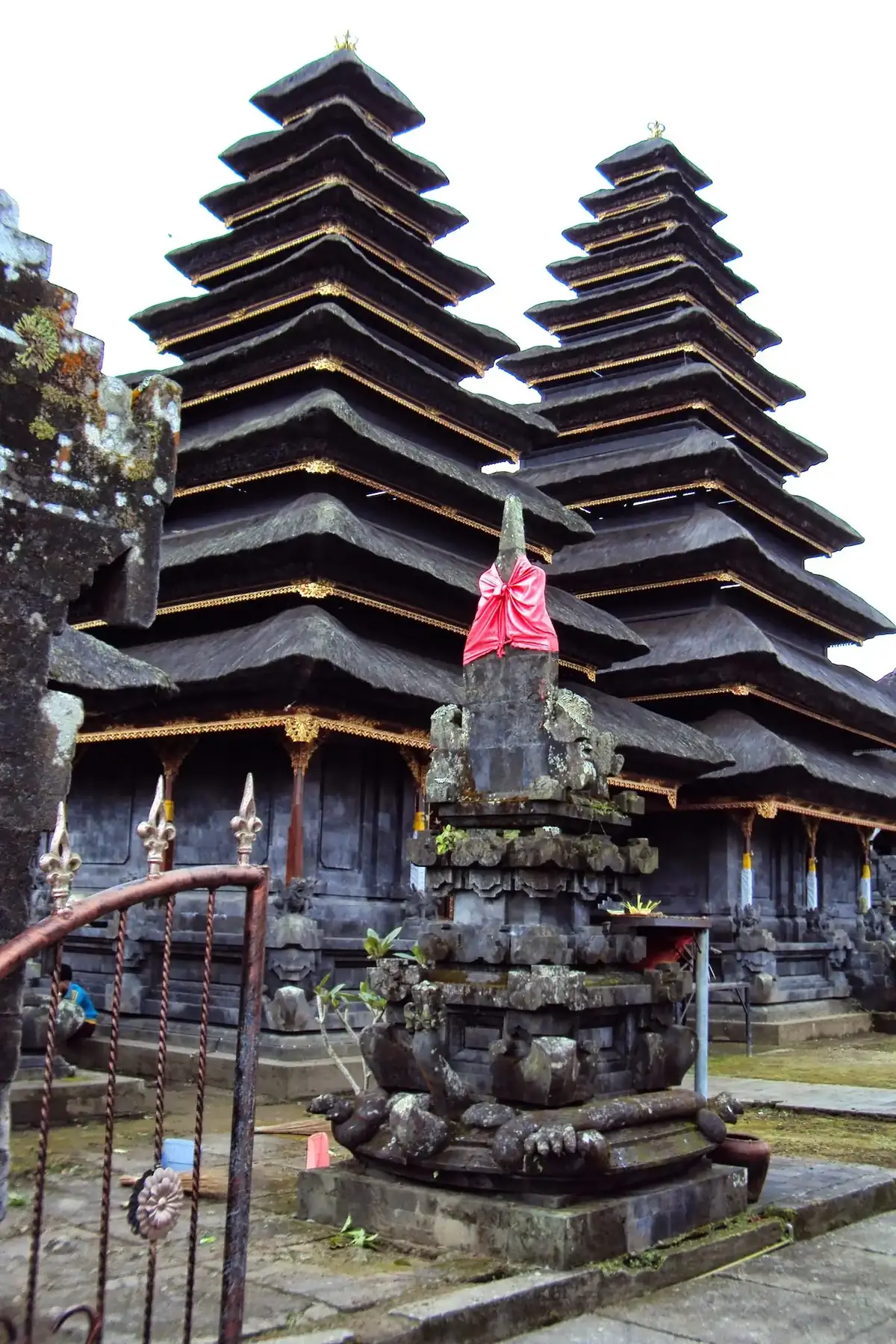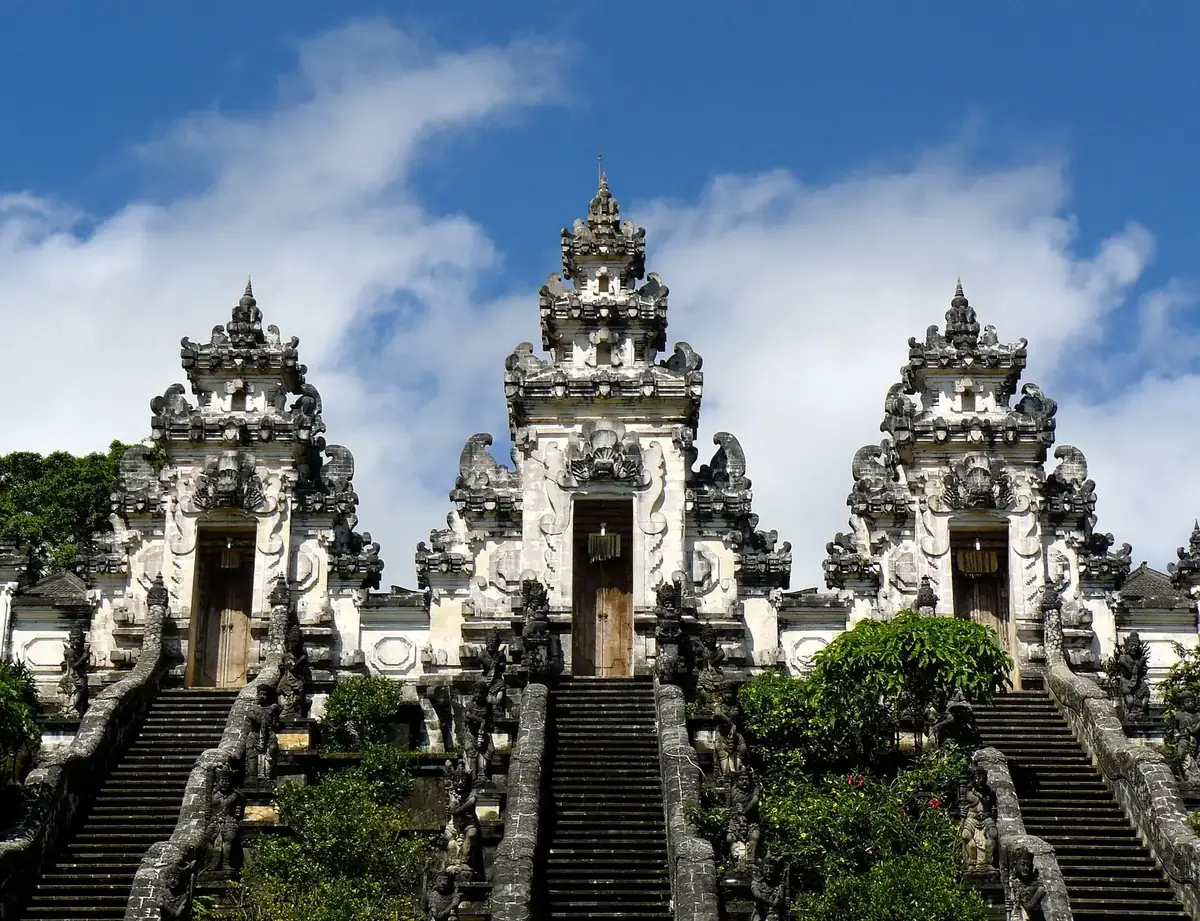
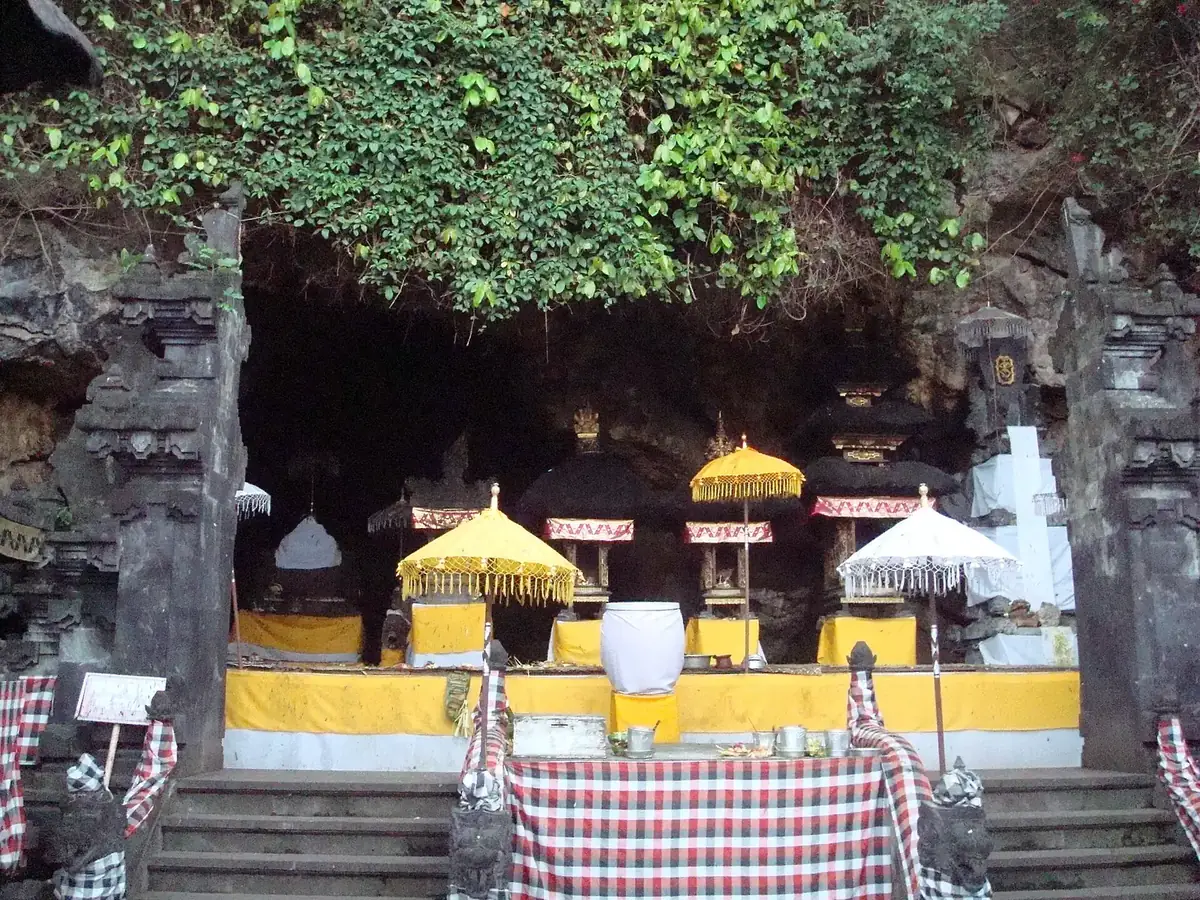
Pura Goa Lawah (Bat Cave Temple) is built around a natural sea-cliff cave on the south coast of Klungkung Regency, directly on the highway between Kusamba and Padangbai. The cave is densely inhabited by thousands of fruit bats (lawah means bat in Balinese), which hang from the cave ceiling and walls in visible clusters. According to Balinese tradition, the cave extends deep underground — some beliefs hold that it connects to Pura Besakih on Mt Agung, 35 km to the north. The temple is one of the Sad Kahyangan Jagad and remains an active and important pilgrimage site.
History & Significance
Pura Goa Lawah is believed to have been established in the 11th century by Mpu Kuturan, the Javanese-Balinese priest credited with formalising the Kahyangan Tiga temple system in Bali. The temple guards the eastern sea approach to Bali as one of the directional guardian temples. The bats are considered sacred — in Balinese Hindu tradition, their presence in the cave and their contribution to the cave ecosystem (through guano supporting rare plants) is seen as divine provision.
The temple is active and important in Balinese religious life. Major cremation processions from the nearby Klungkung district often stop at Goa Lawah as part of the ritual purification sequence before the ashes are taken to sea. The Kusamba coast in front of the temple is one of the few remaining traditional salt-making beaches in Bali, where you can still see black-sand salt pans operated by local salt farmers.
Opening Hours & Entrance Fee
08:00–18:00 daily
IDR 30,000 per adult (check on arrival, prices change)
Note: prices change without notice — always verify on arrival.
How to Get There
From Ubud: 40 km east on the main road through Klungkung (Semarapura), then south toward Padangbai. About 60–75 minutes by car. From Canggu: 70 km, allow 90–110 minutes. The temple is directly on the main coastal highway — parking is available roadside. Most visitors include Goa Lawah on an east Bali route combining Besakih (35 km north) or Padangbai (12 km east) and Tirta Gangga (50 km north).
Dress Code & Etiquette
Sarong and sash required. Available at the entrance. The temple itself is active and sacred — dress and behave respectfully. The cave area is close to the shrines; non-Hindus view from the outer courtyard.
What to See: Highlights
- Thousands of bats visible in the cave entrance, particularly active around dusk
- The dramatic temple gates built around and into the cave face
- The sound and smell of the bat colony — genuinely wild and striking
- The sea backdrop — the temple sits directly above the beach
- Active pilgrimage ceremonies — cremation processions sometimes pass through
- Traditional salt production on the Kusamba black-sand beach (visible from the car park)
Best Time to Visit
Late afternoon (15:00–17:00) is when the bats are most active and visible at the cave entrance. Morning visits are calmer. Avoid midday on major Balinese ceremonial days when pilgrimage crowds can be intense. The site is on a main highway — traffic noise is constant.
Common Scams & What to Watch For
Modest tourist infrastructure — entrance fee is collected at a simple booth and is clearly priced. Some vendors sell offerings and flowers outside. Sarong rental at the entrance is the standard practice. No significant scam activity reported.
Nearby Attractions
Kusamba black-sand beach and salt farms (adjacent), Padangbai ferry port and dive sites (12 km east), Besakih Mother Temple (35 km north), Klungkung Palace (Kertha Gosa) in Semarapura (15 km west).
Frequently Asked Questions
Are the bats dangerous?
Does the cave really connect to Besakih?
Is Goa Lawah worth stopping at?
Can I enter the bat cave?
What are the salt farms at Kusamba?
What time are the bats most active?
Planning a visit to Goa Lawah?
Ask us anything — best day, transport from your accommodation, combining with other temples, guided tours. Free WhatsApp help, real reply in about 10 minutes.
Message us on WhatsApp