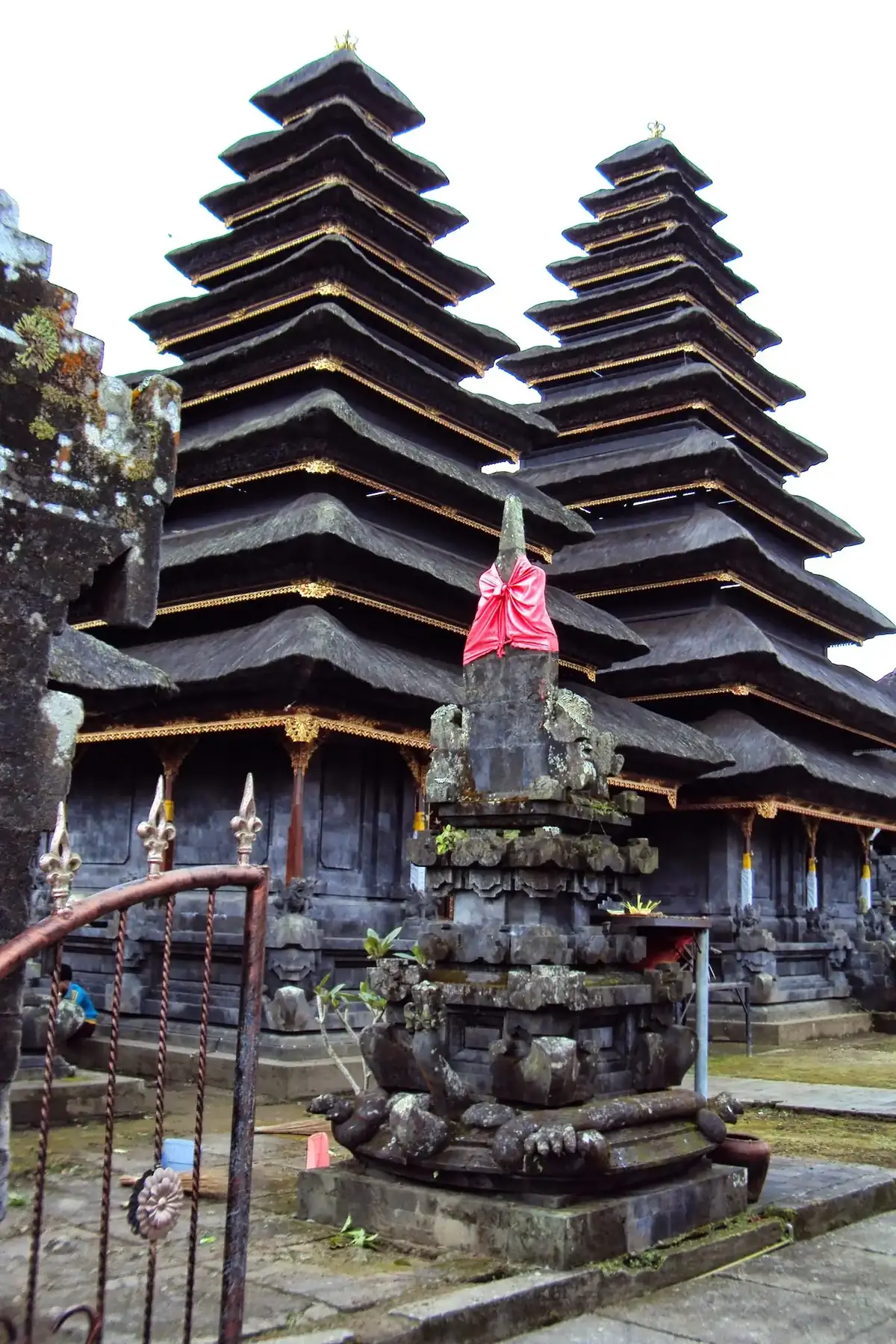
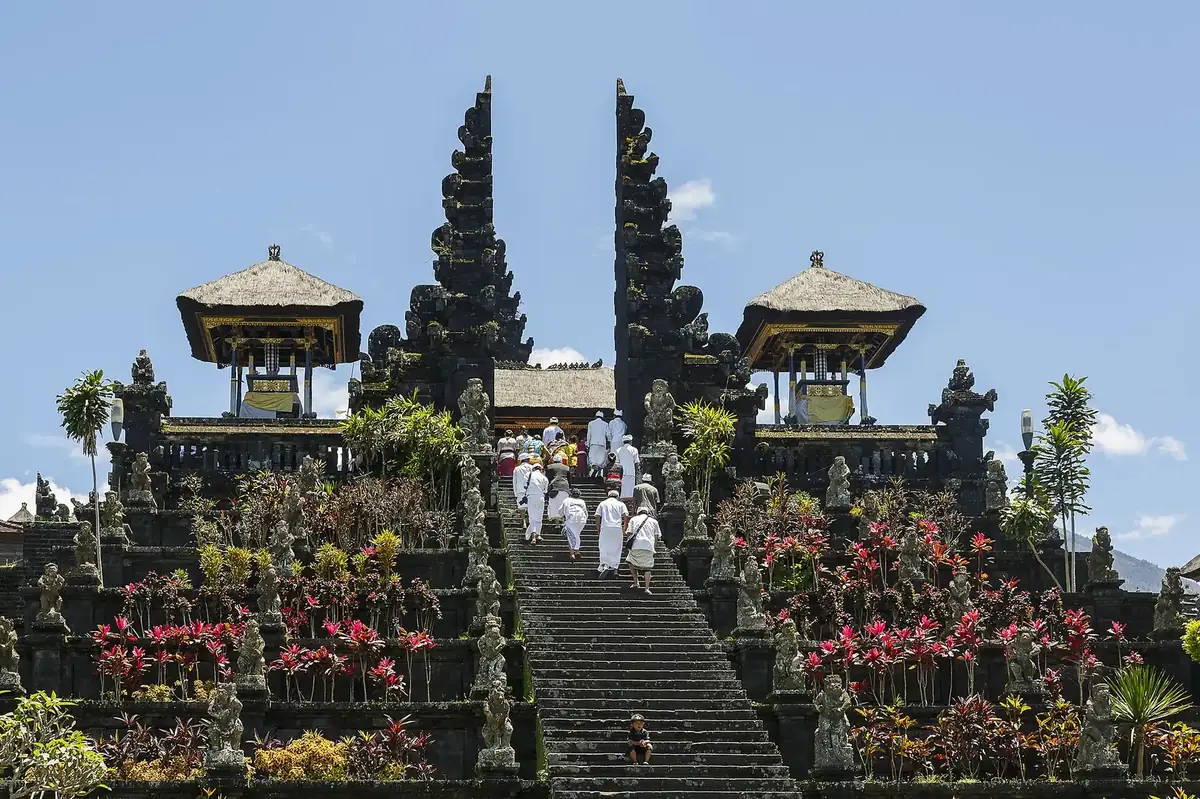
Pura Besakih is the largest, holiest and most architecturally complex temple in Bali. It sits at approximately 950 metres elevation on the southwest slopes of Mount Agung, Bali's highest and most sacred volcano. The complex is not a single temple but a confederation of 23 related temples spread across a vast terraced site. At its centre stands Pura Penataran Agung, the main shrine. Besakih is the spiritual centre of the Balinese Hindu religion and is often called the "mother temple" (pura induk) of Bali.
History & Significance
The origins of Pura Besakih stretch back at least to the 10th century, though some elements of the site may have been in use as early as the 8th century. The complex was developed over centuries by successive Balinese kingdoms, with major expansions under the Gelgel dynasty in the 15th and 16th centuries. The three main towers of Pura Penataran Agung represent the Hindu Trimurti: Brahma (the creator), Vishnu (the preserver) and Shiva (the destroyer). Mt Agung, which looms directly above the complex, is considered the abode of the gods and the spiritual navel of Bali.
In 1963, Mt Agung erupted for the first time in recorded history. Lava flows stopped just short of the complex in what many Balinese interpreted as a divine sign. The mountain erupted again in 2017–2019, causing evacuations from surrounding villages. Pura Besakih itself remained undamaged in both events. A major government-funded renovation and visitor management improvement was completed around 2023–2024, addressing the longstanding complaints about aggressive unofficial guides and fake donation collectors.
Opening Hours & Entrance Fee
08:00–17:00 daily; inner areas restricted during ceremonies
IDR 60,000 per adult (check on arrival, prices change)
Note: prices change without notice — always verify on arrival.
How to Get There
From Ubud: 50 km northeast, approximately 75–90 minutes by car. Take the road through Klungkung (Semarapura) and north through Rendang. From Canggu: allow 2 hours. No reliable public transport. A private driver for a day trip from Ubud including waiting time costs approximately IDR 600,000–800,000. Besakih is best combined with an east Bali route: Tirta Gangga, Sidemen valley, or Klungkung palace on the same day.
Dress Code & Etiquette
Sarong and sash are mandatory and are available to hire at the entrance. Long trousers or skirts preferred. As a major sacred site, the dress code is strictly enforced. Menstruating women are asked not to enter. Photography inside some of the inner shrines may be restricted during ceremonies — follow guidance from temple staff.
What to See: Highlights
- Pura Penataran Agung — the main terraced shrine complex with its three large meru towers
- The long ceremonial stairway approach with views back across the Karangasem plains
- Pura Batu Madeg, Pura Kiduling Kreteg, and the 20+ subsidiary temples spread across the hillside
- Views of Mt Agung (3,031m) directly above the complex on clear mornings
- The scale and visual grandeur of the entire site — nothing else in Bali compares
- Active temple ceremonies (odalan) which happen throughout the year across different shrines
Best Time to Visit
Early morning (08:00–10:00) for the best views of Mt Agung before cloud cover builds. The mountain is typically clear before 10:00 and cloud-covered by midday. Avoid visiting during major odalan (temple festivals) if you want to explore freely — the complex can be extremely crowded and access to some areas restricted. Check the Balinese calendar (pawukon) for upcoming major ceremonies if timing matters.
Common Scams & What to Watch For
Besakih was historically notorious for aggressive scams including fake guides who would claim your entry ticket did not include certain areas and demand additional fees, and fake donation collectors near shrines. Post-2023 management reforms have reduced but not eliminated this. Only use official guides hired at the designated guide desk at the main entrance. Your admission ticket covers the entire publicly accessible complex. Ignore anyone who tells you that you need to pay extra to enter a specific shrine. Do not hand money to anyone claiming to be collecting temple donations unless at an official reception counter.
Nearby Attractions
Sidemen Valley (30 km south, excellent rice terraces), Tirta Gangga royal water garden (35 km east), Pura Goa Lawah bat cave temple (35 km south on the coast), Klungkung Palace (Kertha Gosa) in Semarapura (30 km south).
Frequently Asked Questions
Can tourists enter Pura Besakih?
Is Pura Besakih worth the trip from Ubud?
Are the scams at Besakih really gone?
How long do you need at Besakih?
What is the relationship between Besakih and Mt Agung?
Can you see Mt Agung from Besakih?
Planning a visit to Besakih?
Ask us anything — best day, transport from your accommodation, combining with other temples, guided tours. Free WhatsApp help, real reply in about 10 minutes.
Message us on WhatsApp