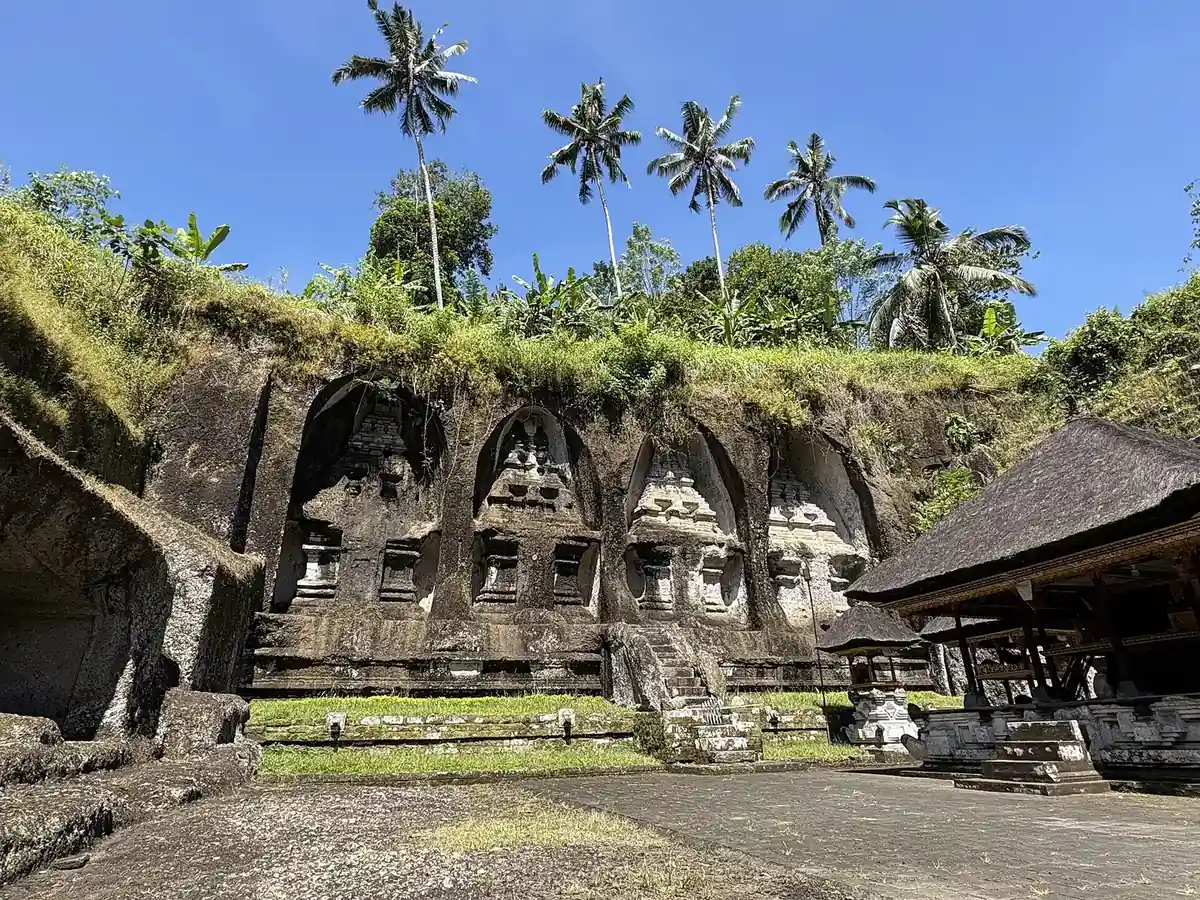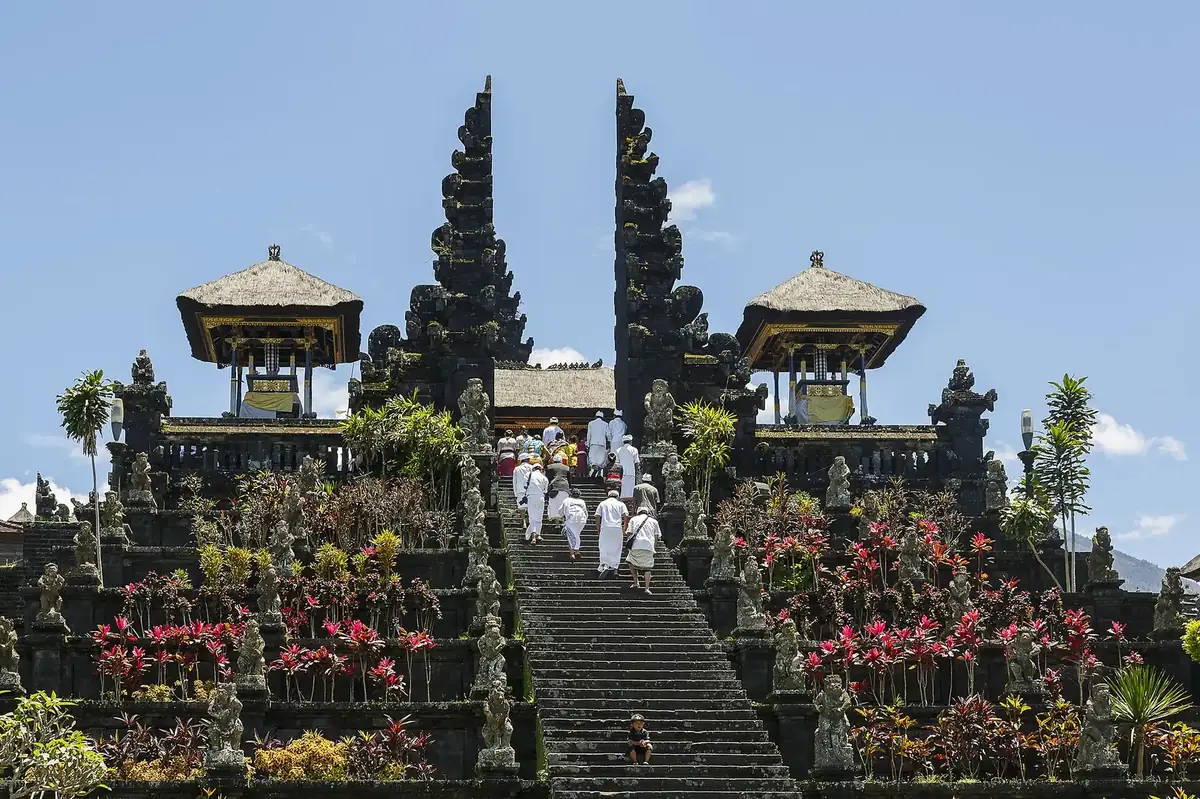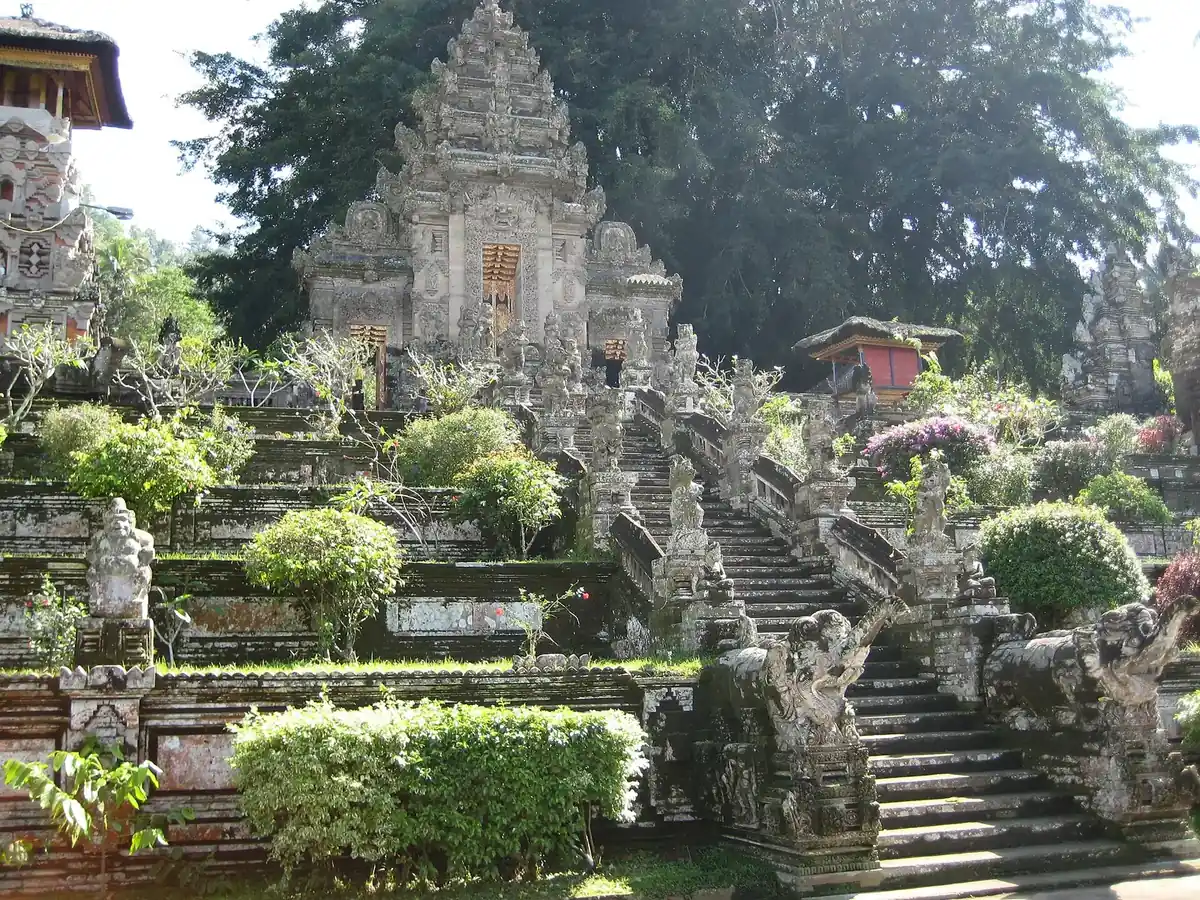
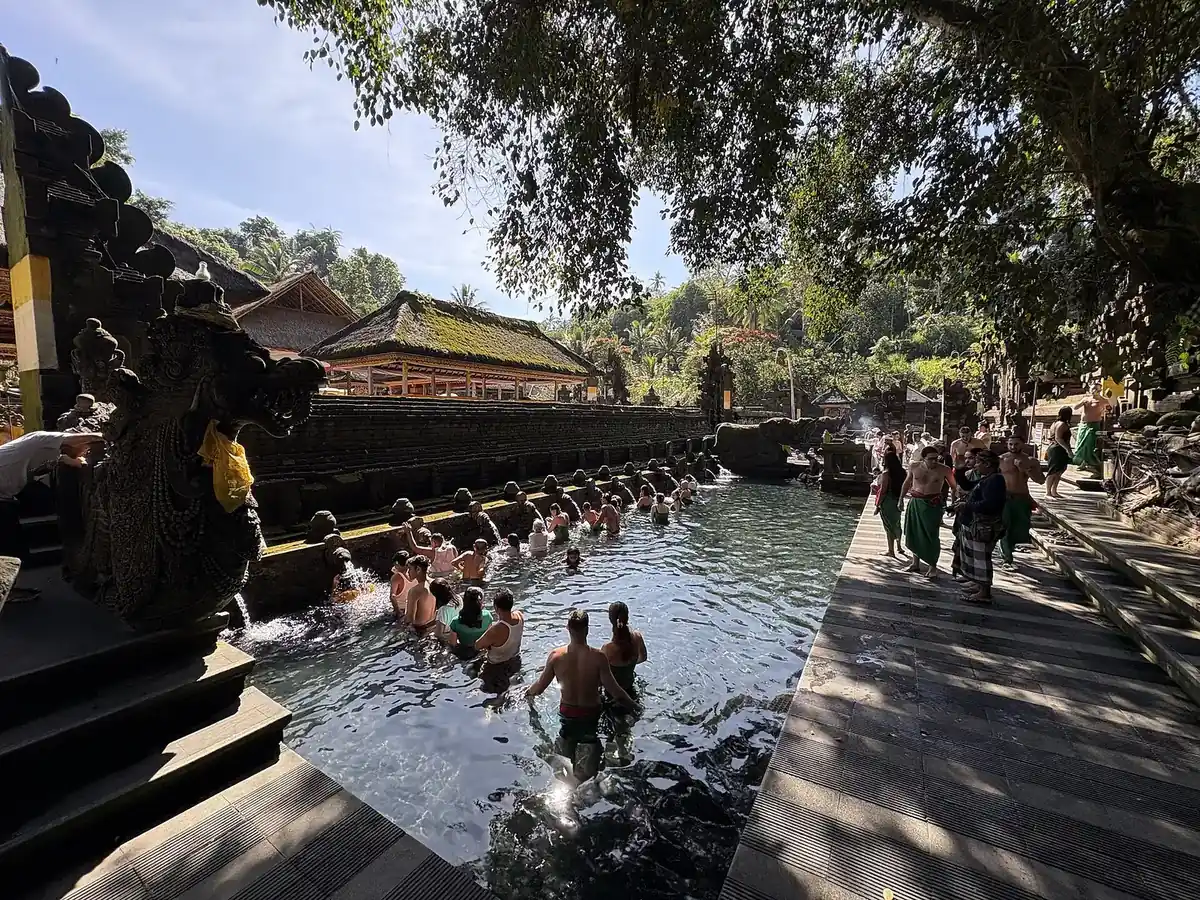
Pura Tirta Empul (Holy Water Temple of the Spring) is built around a natural freshwater spring in Tampaksiring village, about 15 km north of Ubud. The spring emerges from the ground through a series of stone spouts arranged in a large rectangular purification pool (petirtaan). Balinese Hindus come here for melukat — a ritual purification bathing ceremony believed to cleanse the body and spirit of negative energies. Tourists are welcome to participate if they observe the correct dress and behaviour protocol.
History & Significance
Tirta Empul was founded in 962 AD during the reign of the Warmadewa dynasty. According to Balinese tradition, the spring was created by the god Indra, who pierced the ground to create holy water (tirta) to revive his soldiers who had been poisoned by the demon king Mayadanawa. The spring has flowed continuously since the temple's founding. The temple complex sits next to a river gorge; across the gorge is a Dutch-era colonial palace built in 1954 as a rest house for President Sukarno.
The inscriptions found at the site confirm the 10th-century dating. The temple is considered one of the most important water temples in Bali and is connected to a network of agricultural irrigation temples (subak) that manage rice field water distribution across the region. The subak system of Bali was inscribed on UNESCO's World Heritage List in 2012 as a "cultural landscape" — Tirta Empul is part of that living tradition.
Opening Hours & Entrance Fee
09:00–17:00 daily; purification pool open to participants from 09:00
IDR 50,000 per adult (check on arrival, prices change)
Note: prices change without notice — always verify on arrival.
How to Get There
From Ubud: 15 km north, about 25–30 minutes by car or scooter. Take Jalan Raya Tampaksiring north through Tegallalang. Grab car from Ubud centre approximately IDR 70,000–90,000 one way. From Canggu: 50 km, allow 75–90 minutes. Most visitors combine Tirta Empul with Gunung Kawi (2 km away) and Tegallalang Rice Terrace (7 km south, on the way back to Ubud) as a half-day north-Ubud loop.
Dress Code & Etiquette
Sarong and sash are mandatory. They are available to hire at the entrance. For the purification pools, you will be wading in waist-deep water — wear or bring a change of clothes or a swimsuit under your sarong. Waterproof bags or lockers (available near the pool) are recommended for valuables. Do not enter the pools with open wounds or during menstruation — signs at the entrance explain this requirement as a matter of respect and water purity.
What to See: Highlights
- The main purification pool with its 30 stone spouts — participate in the melukat ritual (see dress code section)
- The inner temple with its meru shrines — non-Hindus cannot enter but can view from the outer courtyard
- The clear spring-fed pools with visible bubbling source water
- Sukarno's Presidential Palace (Istana Tampaksiring) visible on the hill above — no public access but visible from the temple
- The secondary pools and fish ponds in the outer complex
- The approach walkway lined with traditional Balinese stone carvings
Best Time to Visit
Mornings (09:00–11:00) are best — fewer visitors, calmer atmosphere for the ritual pools. The pools get crowded with tour groups from around 11:00 onward. Avoid weekends if you want a quieter experience. Ceremonies (odalan) happen periodically and while beautiful to observe, they restrict access to some areas.
Common Scams & What to Watch For
Unofficial guides near the entrance may offer to "explain the ritual" for a fee. The temple provides English-language information boards explaining the melukat process — no paid guide is required. The sarong rental at the official booth is clearly priced. After your visit, as you exit, you will pass through a long gauntlet of souvenir stalls — prices here are negotiable and inflated for tourists.
Nearby Attractions
Gunung Kawi Sebatu (2 km north), Tegallalang Rice Terrace (7 km south on the Ubud road), Kehen Temple in Bangli (20 km east), Ubud Monkey Forest (15 km south in central Ubud).
Frequently Asked Questions
Can tourists actually do the purification ritual at Tirta Empul?
What should I wear for the water ritual?
Is the water in the pools clean?
How long does the visit take?
Can I visit Tirta Empul and Gunung Kawi in one morning?
Is photography allowed in the purification pools?
Planning a visit to Tirta Empul?
Ask us anything — best day, transport from your accommodation, combining with other temples, guided tours. Free WhatsApp help, real reply in about 10 minutes.
Message us on WhatsApp