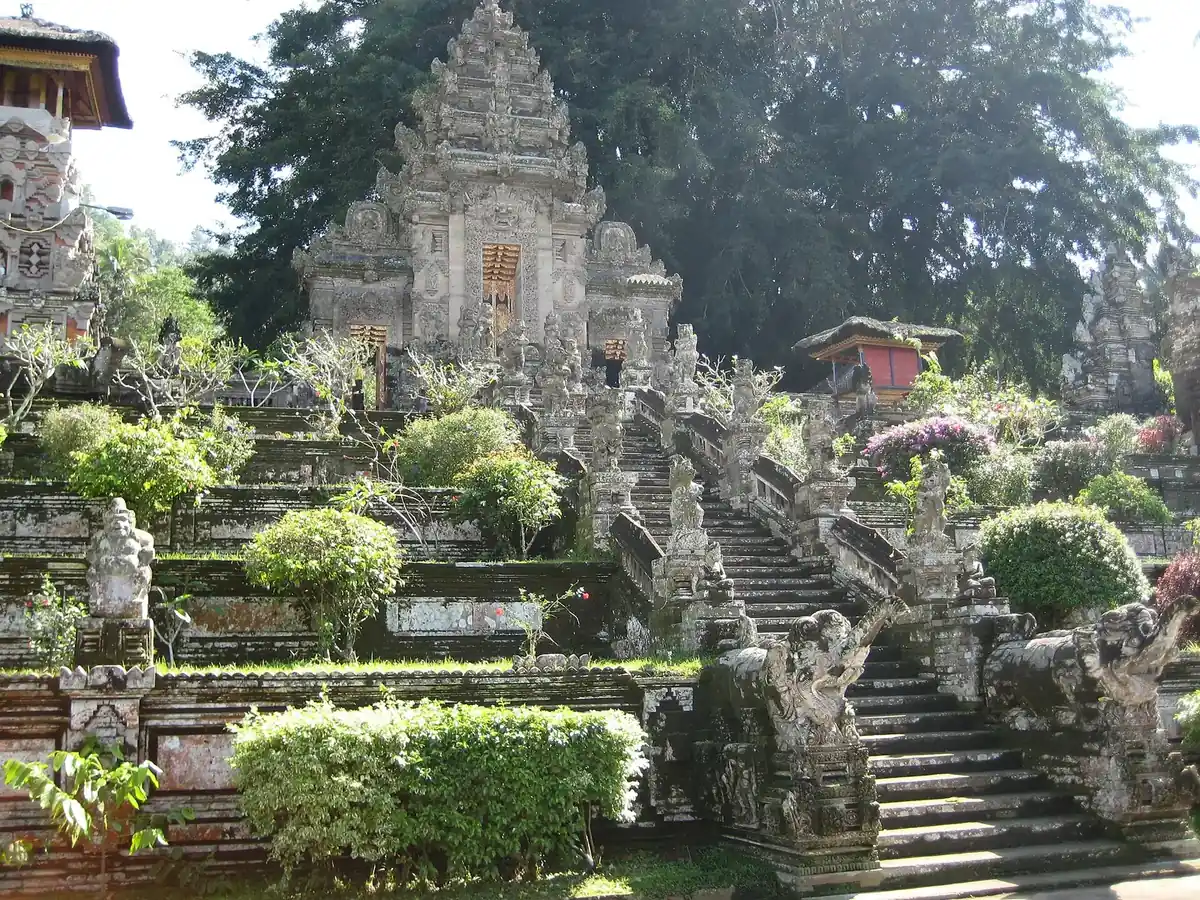
Pura Kehen is the state temple of Bangli Regency and one of the most architecturally impressive temples in central Bali. It is built on a forested hillside in a series of ascending terraces, with a magnificent split gate (candi bentar) at the base and an 11-tiered meru tower at the summit. The outer walls are decorated with Chinese porcelain plates and dishes, embedded centuries ago as offerings. The temple contains a copper inscription (prasasti) dated to 1204 AD, making it one of the historically documented ancient temples in Bali.
History & Significance
Pura Kehen was established at least by the 11th–12th century — the copper inscription of 1204 references temple activities at this site. The temple served as the state temple (pura agung) of successive Bangli royal houses. The unique decorative feature of Chinese porcelain embedded in the temple walls reflects Bali's historical maritime trade connections with China. The porcelain pieces were likely brought as trade goods or gifts from Chinese merchants and incorporated as a form of permanent offering.
Bangli Regency sits in the highlands of central Bali, above the tourist circuit but within easy reach of Ubud. Pura Kehen is the most significant monument in the regency and, despite being on the Indonesian national heritage list, receives relatively few foreign visitors. The terraced approach through dense tropical trees creates a naturally dramatic entry sequence unlike many flat-plain temples.
Opening Hours & Entrance Fee
08:00–17:00 daily
IDR 15,000 per adult (check on arrival, prices change)
Note: prices change without notice — always verify on arrival.
How to Get There
From Ubud: 20 km northeast through Tampaksiring or via the main road to Bangli town. About 35–45 minutes by car. Grab car from Ubud approximately IDR 100,000–130,000. From Canggu: 55 km, 80–100 minutes. Bangli town itself has little else of major tourist interest, but Pura Kehen combines well with Tirta Empul (20 km west) and the Kintamani volcano viewpoint (15 km north).
Dress Code & Etiquette
Sarong and sash required. Available at the entrance. Wear shoes suitable for climbing steep stone steps — the approach staircase is long and some steps are worn smooth.
What to See: Highlights
- The dramatic stone staircase ascending through dense trees to the temple summit
- Chinese porcelain plates and bowls embedded in the outer courtyard walls — look closely
- The 11-tiered meru tower in the inner courtyard
- The large banyan tree (waringin) in the first courtyard — considered sacred in Balinese tradition
- The copper inscription of 1204 AD (displayed in a pavilion)
- Panoramic views from the upper terraces across the Bangli highlands
Best Time to Visit
Mornings are best for cool temperature and fewer visitors. The temple is rarely crowded by south Bali standards. The forested setting keeps the complex cool even in hot season.
Common Scams & What to Watch For
Very low tourist traffic means minimal scam activity. The entrance fee is clearly posted. No aggressive guides or donation pressure reported. A straightforward visit.
Nearby Attractions
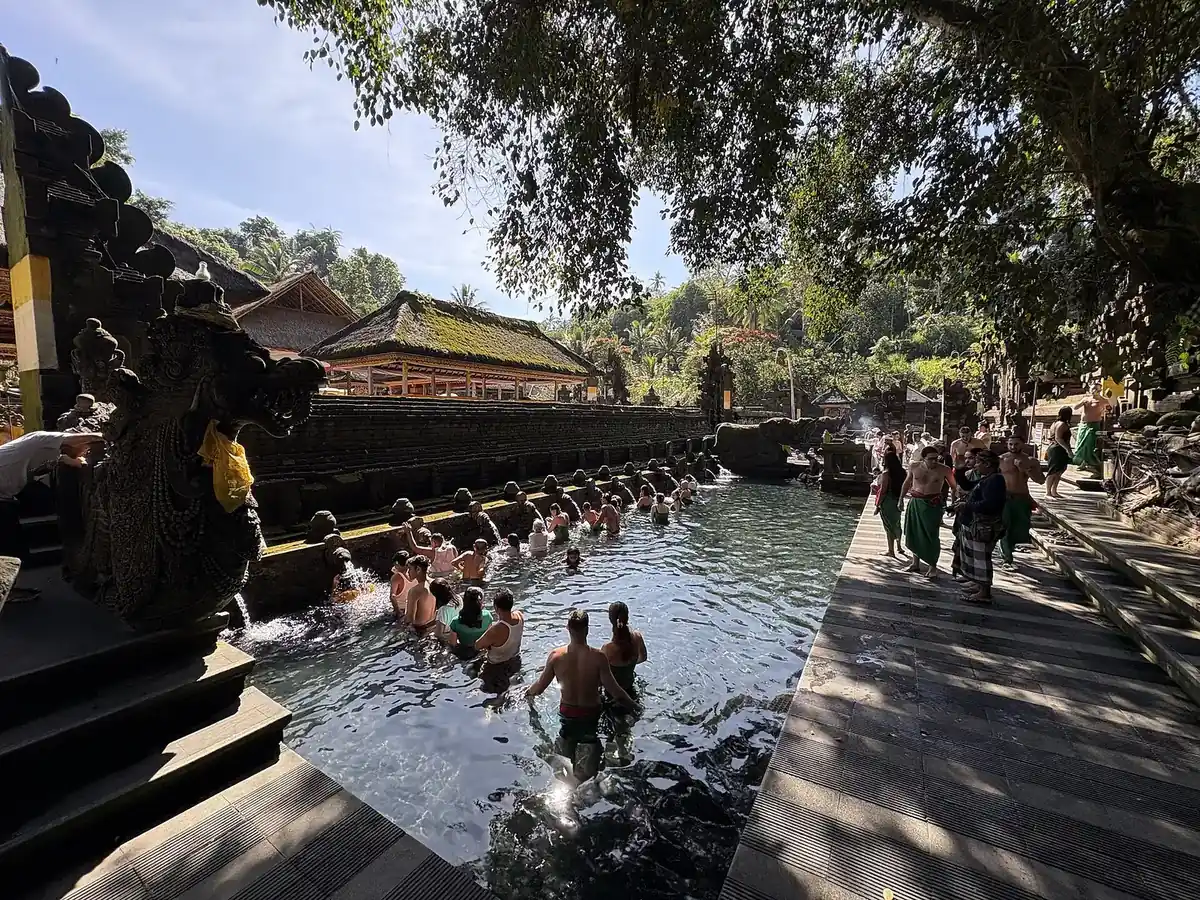
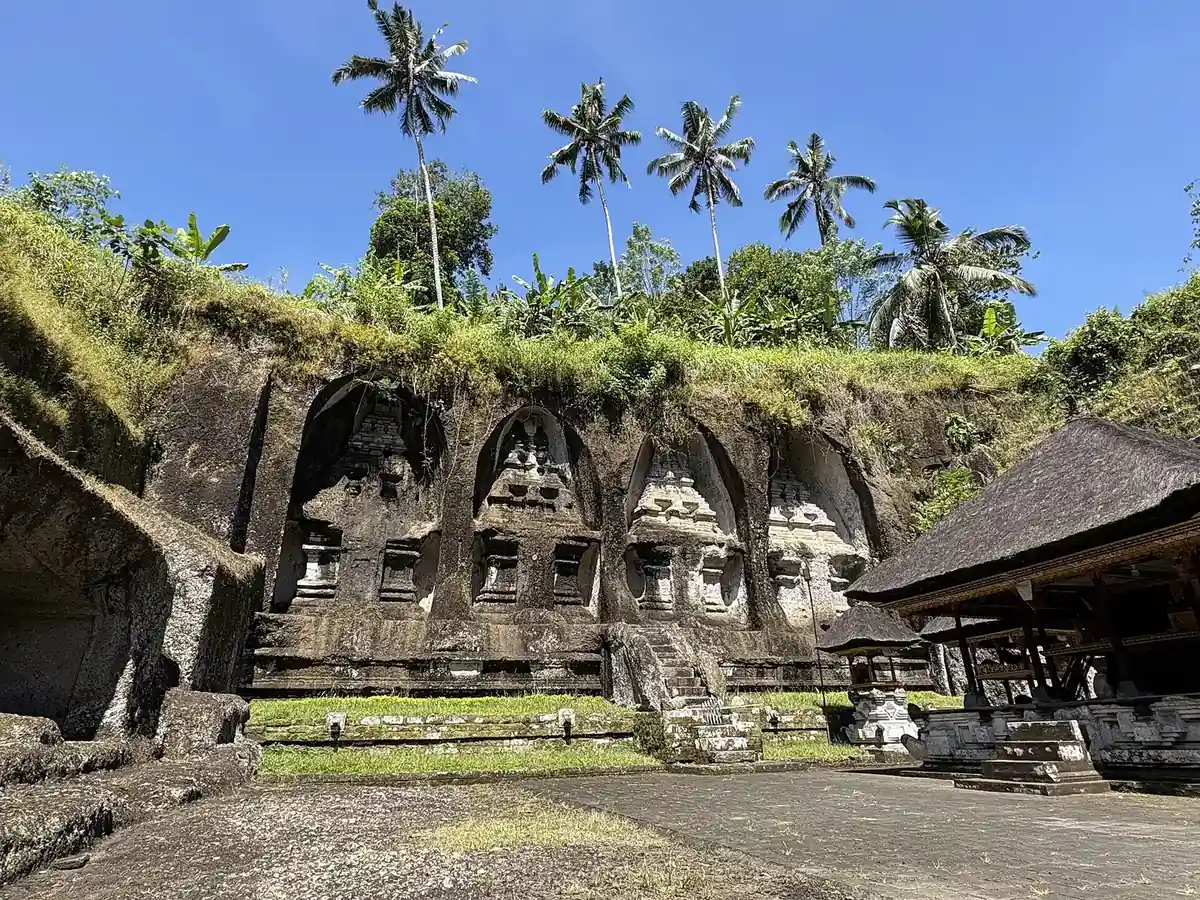
Kintamani volcano viewpoint and Lake Batur (15 km north), Tirta Empul (20 km west), Gunung Kawi royal tomb complex (20 km west), Ubud (20 km southwest).
Frequently Asked Questions
Why is there Chinese porcelain on the temple walls?
How old is Pura Kehen?
Is Pura Kehen worth the detour from Ubud?
Can you combine Pura Kehen with Kintamani?
How long do you need at Pura Kehen?
Is the copper inscription on display?
Planning a visit to Pura Kehen?
Ask us anything — best day, transport from your accommodation, combining with other temples, guided tours. Free WhatsApp help, real reply in about 10 minutes.
Message us on WhatsApp