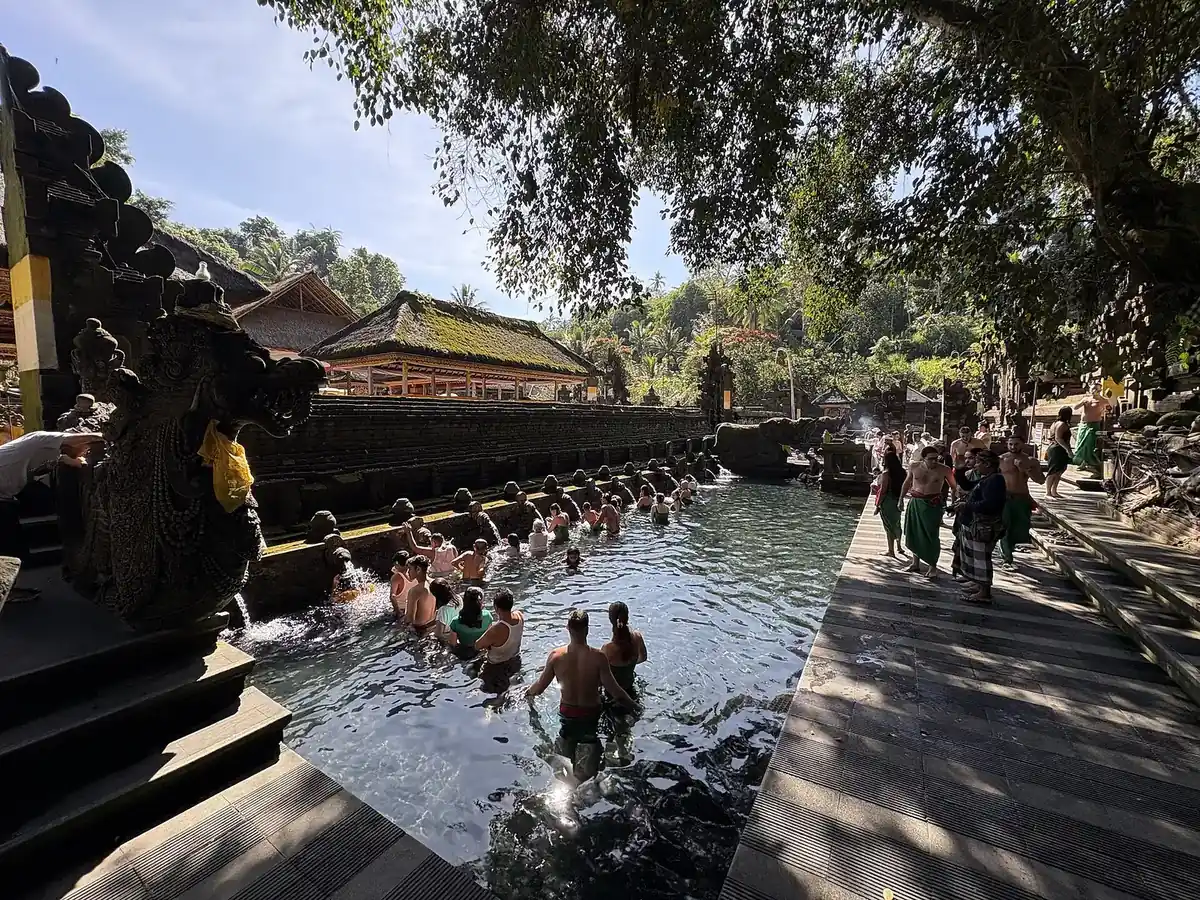
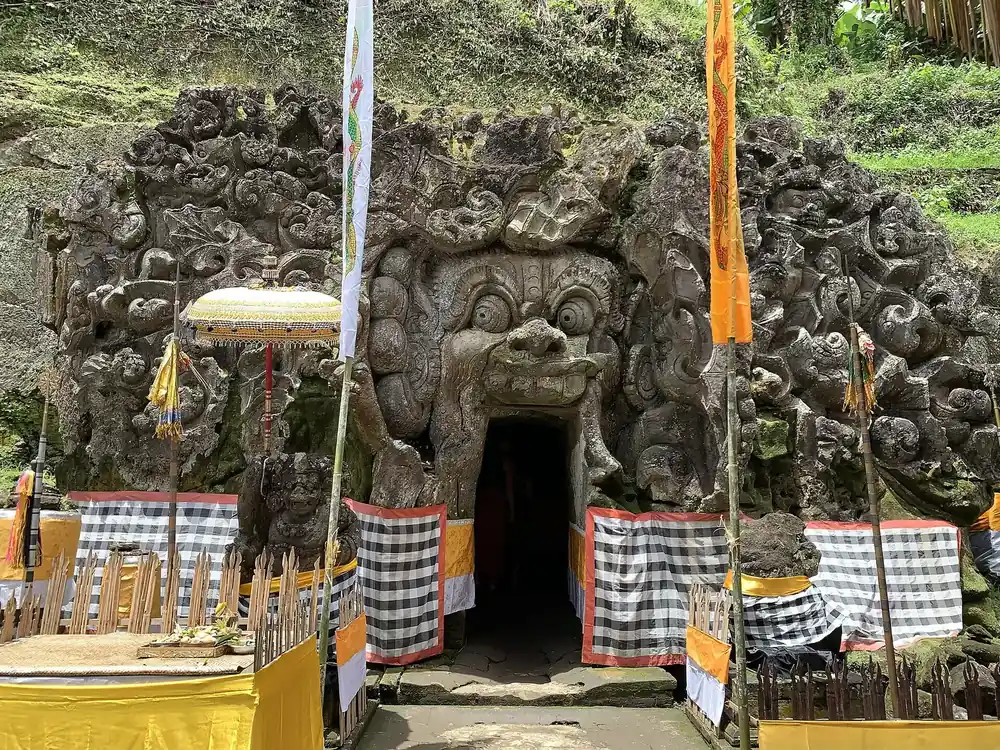
Goa Gajah (Elephant Cave) is a rock-cut cave sanctuary carved directly into a hillside in Bedulu village, about 6 km east of Ubud. The entrance to the cave is a dramatically carved stone face — a gaping demon mouth (the bhoma face, a protective spirit in Balinese Hinduism) surrounded by carved vines, animals and figures. Inside the cave is a T-shaped chamber with a stone Ganesha figure and three stone lingas (phallic symbols of Shiva). Outside are two bathing pools with water-spouting figures discovered in 1954. The complex represents a rare fusion of Hindu and Buddhist elements.
History & Significance
Goa Gajah dates to approximately the 9th–11th century, making it one of the oldest Hindu-Buddhist monuments in Bali. Dutch archaeologist W.O.J. Nieuwenkamp described the site in 1923. The bathing pools were buried under metres of earth and only excavated in 1954. The site was likely used as a hermitage and meditation space for priests and monks rather than as a public temple. The name "Elephant Cave" may derive from a misidentification of the carved bhoma face as an elephant, or from the Ganesha figure inside.
The site reflects the period before Balinese Hinduism fully separated from its syncretic Hindu-Buddhist roots. Buddhist relics and niches were found near the cave, and the style of the carving shows influence from central Javanese temple traditions. Today the site functions as an active Balinese Hindu temple (pura). Visitors enter through the demon mouth into a cave that, while small, is genuinely atmospheric.
Opening Hours & Entrance Fee
08:00–18:00 daily
IDR 50,000 per adult (check on arrival, prices change)
Note: prices change without notice — always verify on arrival.
How to Get There
From Ubud centre: 6 km east on Jalan Raya Goa Gajah. By scooter about 15 minutes. Grab car from Ubud IDR 40,000–60,000 one way. From Canggu: 42 km, allow 60–75 minutes. The site is directly on the main road from Ubud to Klungkung, making it easy to combine with other east Bali destinations. Ample parking (IDR 2,000 for motorbikes).
Dress Code & Etiquette
Sarong and sash are required. Available for loan at the entrance at no extra charge (or small rental fee). The cave interior is dimly lit and cool. Descend the stone steps to the gorge carefully — they can be slippery after rain.
What to See: Highlights
- The carved bhoma demon-face entrance — one of the most striking examples of Balinese stone carving
- The T-shaped cave interior with the Ganesha shrine and the three stone lingas
- The 1954-excavated bathing pools with six female figures holding overflowing water vessels
- The river gorge below the complex — a short walk down stone steps through tropical forest
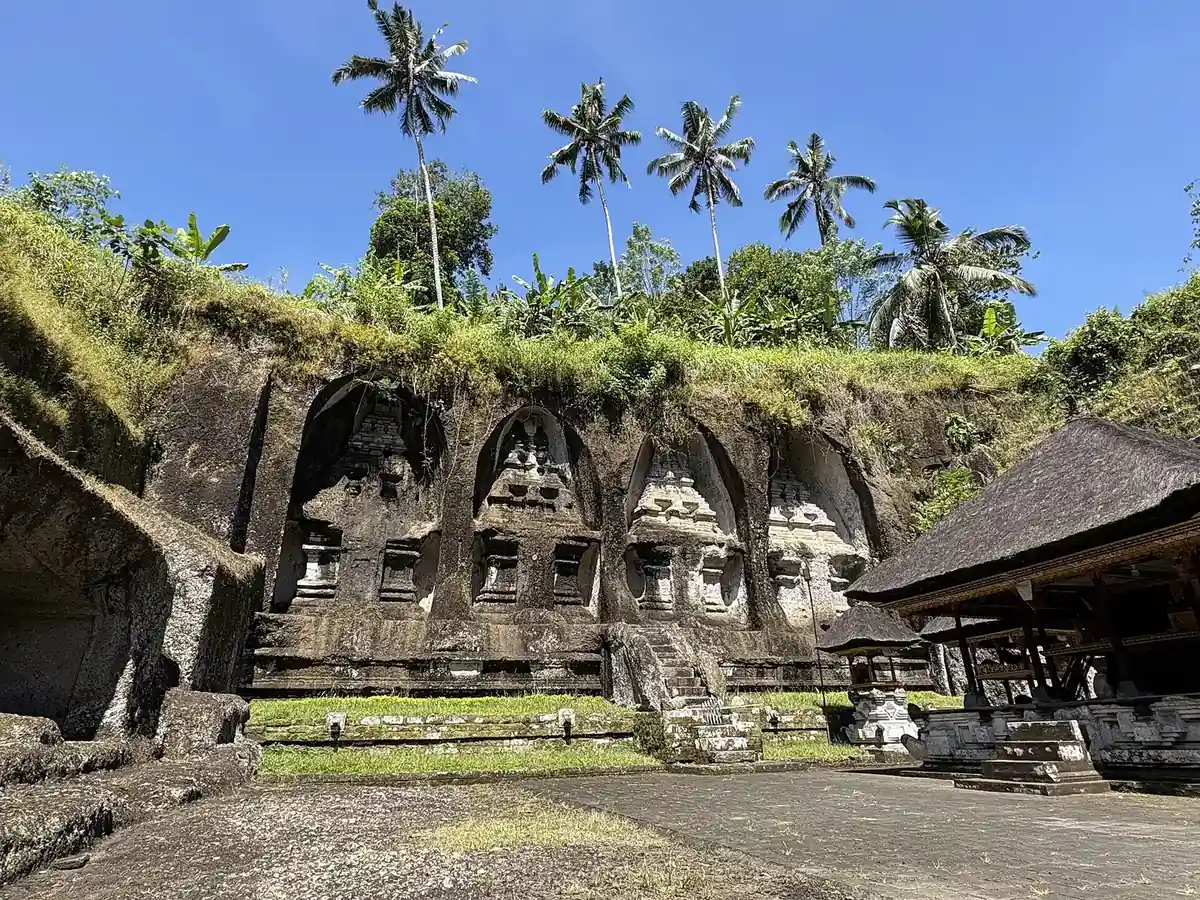
- Buddhist rock-cut niches and stupas on the gorge path
- The peaceful koi pond in the outer courtyard
Best Time to Visit
Early morning (08:00–10:00) is best — the site is small and can feel crowded with tour groups from around 10:30. Morning light also catches the carved entrance facade well. Afternoon visits after 15:00 are quieter. The site takes 1–1.5 hours and is best combined with another nearby temple.
Common Scams & What to Watch For
Touts may offer to act as guides at the entrance. The cave and bathing pools are well-signed in English — no guide is needed. On exit, you walk through a dense row of souvenir stalls — prices are negotiable. The walk down to the gorge is included in your admission; do not pay extra if anyone tells you otherwise.
Nearby Attractions
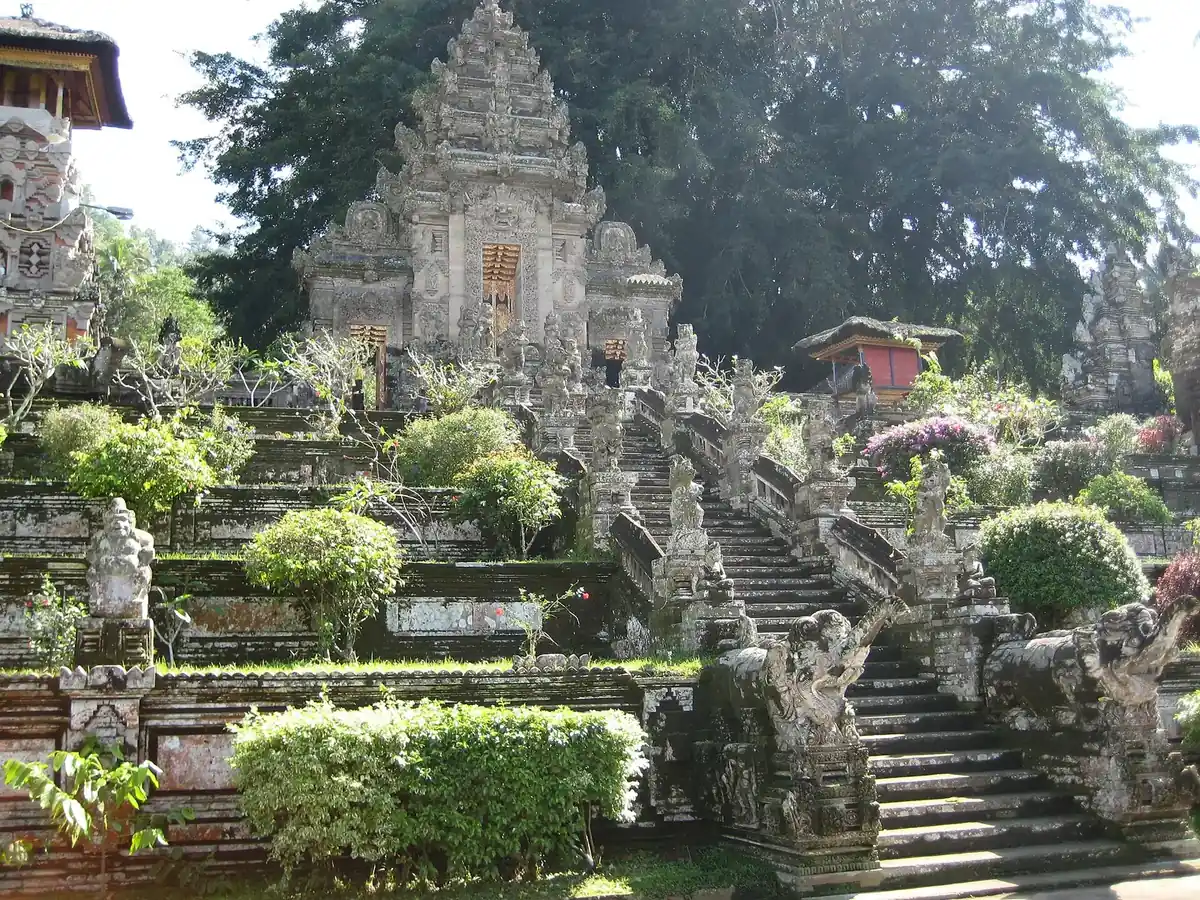
Yeh Pulu rock reliefs (1 km east — rarely visited, worth a stop), Pura Penataran Sasih in Pejeng (3 km north, houses the Moon of Pejeng bronze drum), Ubud Monkey Forest (6 km west), Pura Kehen in Bangli (15 km north).
Frequently Asked Questions
Why is it called the Elephant Cave?
Can you go inside the cave?
Is Goa Gajah worth a stop from Ubud?
Are there Buddhist elements at Goa Gajah?
Is the gorge walk included?
Can I combine Goa Gajah with Tirta Empul?
Planning a visit to Goa Gajah?
Ask us anything — best day, transport from your accommodation, combining with other temples, guided tours. Free WhatsApp help, real reply in about 10 minutes.
Message us on WhatsApp