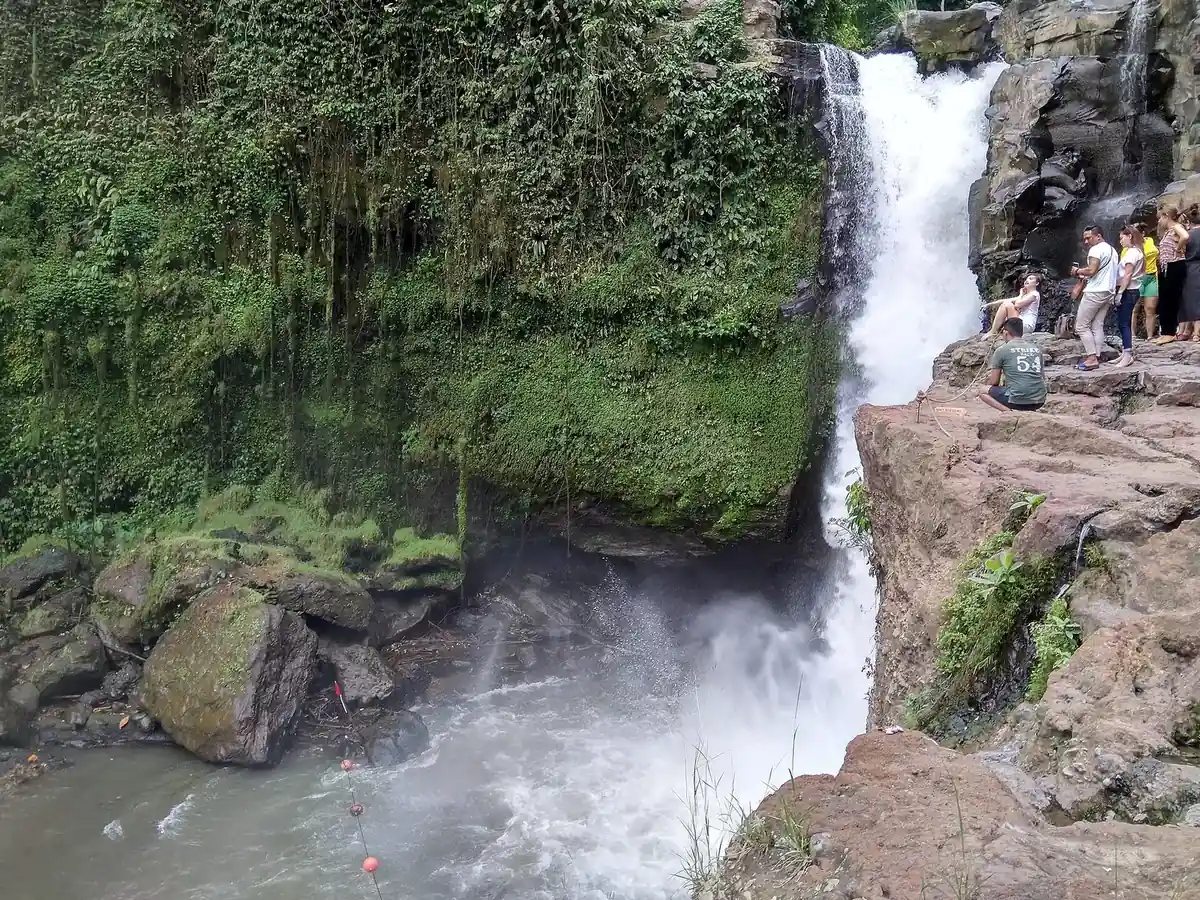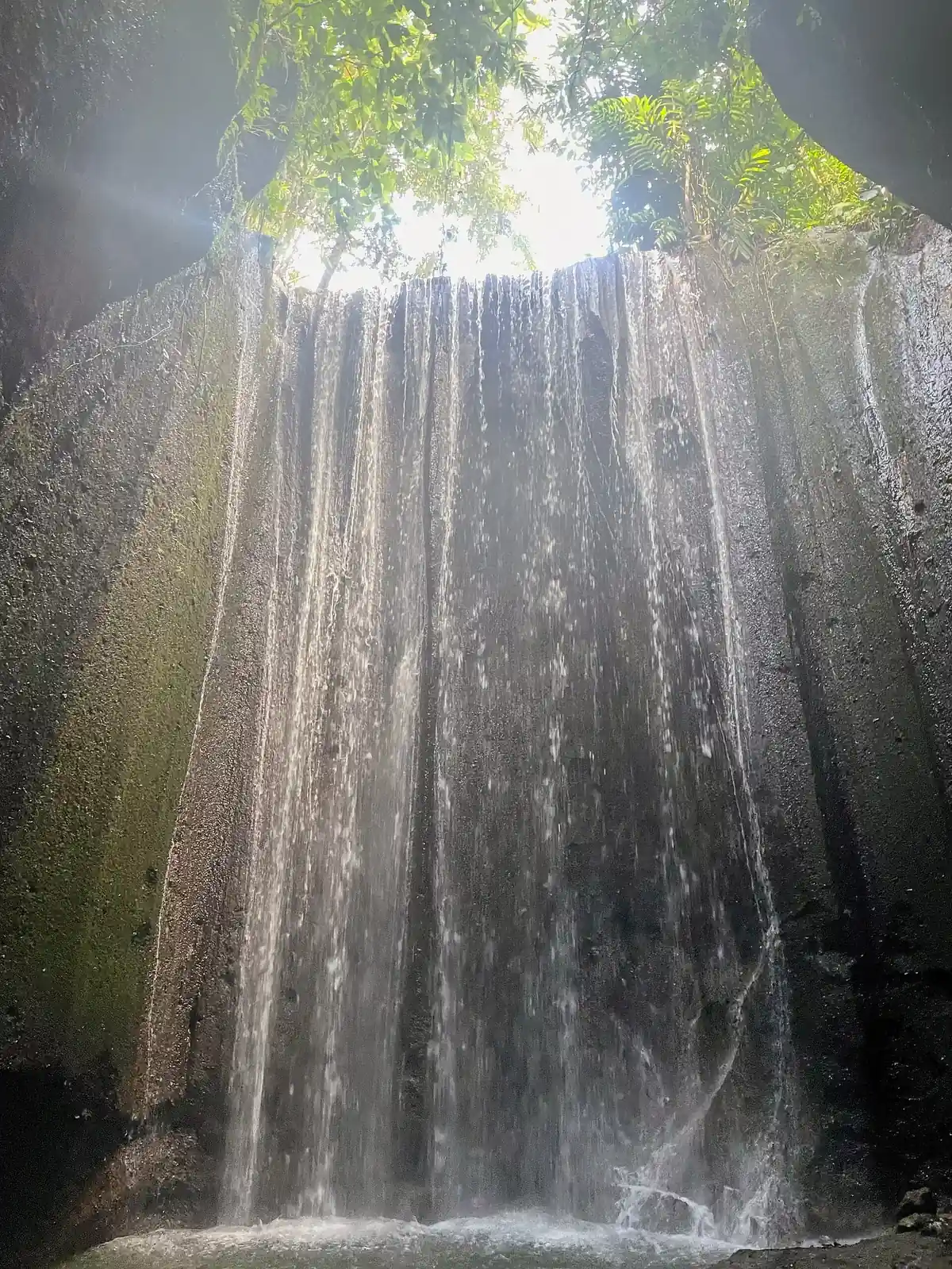

Nungnung Waterfall is the most physically demanding waterfall day trip from Ubud or Denpasar — 500 concrete steps descend through central Bali jungle to the base of a 50-metre single-drop fall that soaks you with permanent mist before you are anywhere near the water. It is not a swimming spot and not a gentle stroll. Nungnung rewards visitors who treat it as an athletic excursion: the scale of the fall at close range, the roar, and the spray-drenched air make it one of the most visceral natural experiences accessible in Bali.
About Nungnung Waterfall
The waterfall sits in Nungnung village in Badung Regency, in the cool volcanic highlands between Ubud and the central mountain range. The river is part of the Ayung headwaters — the same Ayung that flows through Ubud and is used for white-water rafting 20 kilometres downstream. At this altitude (approximately 700–800 metres above sea level) the air is cooler and damper than the coast.
The 500-step concrete staircase is well-maintained but narrow and very steep in the lower sections. Handrails exist for most of the descent. The base viewing area is about 10–15 metres from the foot of the fall — close enough that conversation is impossible and everything gets wet. There are no facilities at the base. A small parking area and a warung at the top serve drinks. The surrounding area is rice terrace farmland and quiet village — expect no tourist infrastructure beyond the basic entrance.
Difficulty & Trail
Approximately 500 steps down to the base, steep with some sections uneven. The descent takes 20–30 minutes at a careful pace. The ascent back up is genuinely tiring — 25–40 minutes and cardiovascular. In wet conditions the steps can be very slippery. Not recommended for visitors with knee or hip problems.
Entrance Fee
Best Time to Visit
Can You Swim Here?
How to Get There
23 km, approximately 45–60 minutes via Jl. Raya Petang.
30 km, approximately 55–65 minutes.
25 km, approximately 50–60 minutes via Petang.
The most convenient way to reach any Bali waterfall is by private driver or scooter. If you need help booking a reliable driver, message us on WhatsApp.
What to Bring
- Waterproof bag or dry bag for all electronics — the mist soaks gear near the base
- Shoes or closed sandals with grip — the steps are steep and can be extremely slippery
- Extra dry shirt for the drive back
- At least 1.5 litres water — the climb back up is sweaty
- Snack for post-climb energy
- Rain poncho or accept getting soaked
Combine With Nearby Attractions
Sidan temple and Pura Dalem cemetery temple (15 min south) — rarely visited traditional temple en route back to Denpasar/Ubud
Petang night market (20 min south) — local food market if arriving in the evening
Ubud rice terraces and Tegallalang (30 min east) — combine as a morning-afternoon highland day
Photography Tips
The full height of the fall is only visible from about 30–40 metres away — use a wide-angle lens to capture it all.
The mist creates natural softbox diffusion — light is even and soft near the base, good for portraits.
Keep your lens dry: bring a microfibre cloth and a rain sleeve. The spray is constant and relentless.
Slower shutter speed is effective but a tripod in the mist zone is problematic — use a rock or tree trunk to stabilise.
The staircase itself makes a strong graphic element — shoot looking up the steps from below with the jungle framing.
Scams & Guide Pressure
Frequently Asked Questions
Is Nungnung Waterfall worth the 500 steps?
Can you swim at Nungnung?
How long does Nungnung take?
What should I wear for Nungnung?
Is Nungnung suitable for older visitors or children?
What is the best season for Nungnung?
Planning to visit Nungnung?
Get a personalised itinerary, driver recommendation, or quick question answered. Free WhatsApp help — real reply in about 10 minutes.
Message us on WhatsApp