
This question comes up constantly from travelers heading to Bali: “I want to bring a small bag of my own roasted seed-and-nut powder as a dietary supplement — am I allowed to, and do I have to declare it?” The short answer is yes to both: you can almost always bring small, processed, personal-use food items, and you must declare them. Indonesia takes agricultural imports seriously to protect Bali’s ecosystem and farms, but the system is straightforward once you understand it. This guide walks through exactly what is allowed, what is restricted, how to fill in the mandatory Electronic Customs Declaration (e-CD), and how to clear the airport without stress.
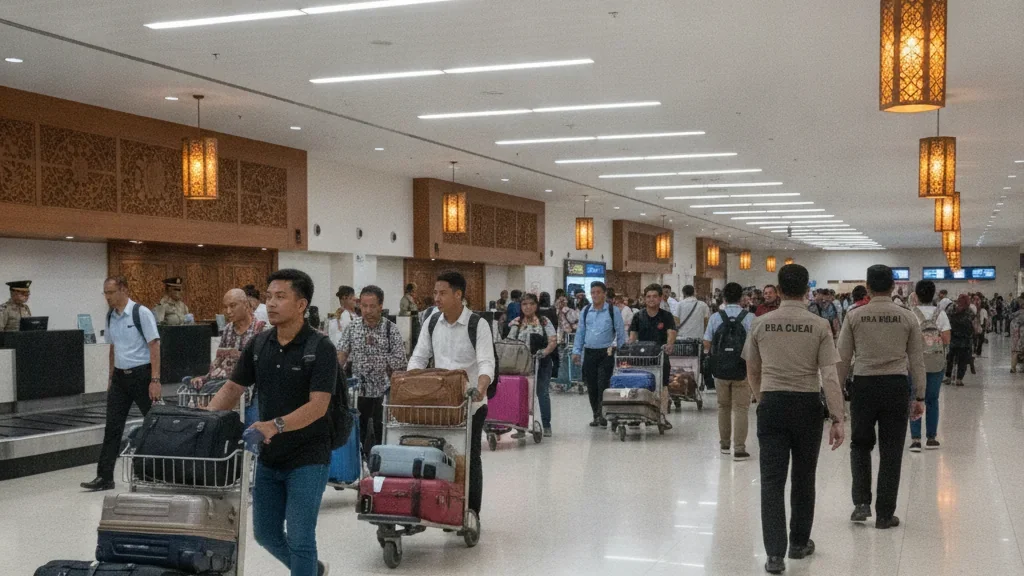
The short answer: yes, declare it
Indonesian customs (Bea Cukai) and the quarantine authority (Karantina) require travelers to declare animals, plants, seeds and food products on arrival — there is no “too small to mention” threshold for these categories. The good news is that declaring is fast, free, and the thing that protects you.
- Processed, roasted or ground foods in small personal quantities are generally permitted, provided you declare them honestly.
- The declaration is a single “Yes” on the e-CD question about bringing animal, plant, seed or food products.
- If something turns out not to be allowed, the standard outcome is that you surrender that item — not a fine. Penalties are aimed at people who hide goods.
- The customs officer always has the final say, but small amounts of processed dietary powder almost always pass without issue.
Why Bali is strict on food and plants
Bali is an island agricultural economy. Its rice terraces, coffee, fruit and spice farms are vulnerable to pests, fungi, bacteria and plant diseases that can arrive on a single piece of fruit, a handful of raw seeds, or a clump of soil on a hiking boot. Indonesia’s quarantine laws — enforced alongside customs — exist to stop a foreign pest from establishing itself and devastating local crops. That is why raw, living or plantable material (seeds that could germinate, live plants, fresh produce, soil) is treated far more cautiously than processed material (roasted, ground, cooked, sealed and shelf-stable food).
Understanding this distinction is the key to the whole topic. A bag of raw sunflower seeds is, in principle, plantable and is treated as agricultural risk. The same seeds, roasted and ground into a powder, can no longer germinate and are treated as a processed food. Making that difference obvious to the officer — in your packaging and your words — is what makes clearance smooth.

What you can and cannot bring: category by category
Here is a practical overview. Treat “Allowed” as “allowed for personal use in reasonable quantity, when declared” — commercial volumes change everything.
| Category | Status | Notes |
|---|---|---|
| Processed / packaged food (sealed snacks, biscuits, chocolate, instant noodles) | Allowed | Keep sealed; declare. Small personal quantities are routine. |
| Roasted / ground / powdered foods (seed & nut powder, protein powder, ground spices, coffee) | Allowed | Declare. Clear labelling that it is processed & for personal use speeds clearance. |
| Raw / plantable seeds, live plants, cuttings, bulbs, soil | Restricted | Need a phytosanitary permit arranged in advance. Not for casual tourist carry. |
| Fresh fruit & vegetables | Restricted | Generally not permitted without quarantine clearance; high pest risk. |
| Fresh / raw meat, poultry, fresh dairy | Restricted / prohibited | Animal-disease risk. Avoid bringing; surrender if you have any. |
| Vitamins & over-the-counter supplements | Allowed | Personal quantities; keep in original packaging where possible. |
| Prescription medication | Allowed with care | Original packaging + prescription/doctor’s letter; check controlled substances first. |
| Baby formula & baby food | Allowed | Reasonable personal quantity for your trip; declare. |
| Alcohol & tobacco | Allowed within limits | Strict duty-free caps (see below). Excess is dutiable or surrendered. |
Important
Drugs and narcotics carry extremely severe penalties in Indonesia, including very long prison sentences. This is not the same conversation as food declarations. Never carry recreational drugs, and if you take any controlled prescription medication (strong opioids, ADHD stimulants, certain sleep or psychiatric drugs), check its status with the Indonesian authorities or your embassy before you fly and carry your prescription.
Seeds, nuts & supplement powders: the common scenario
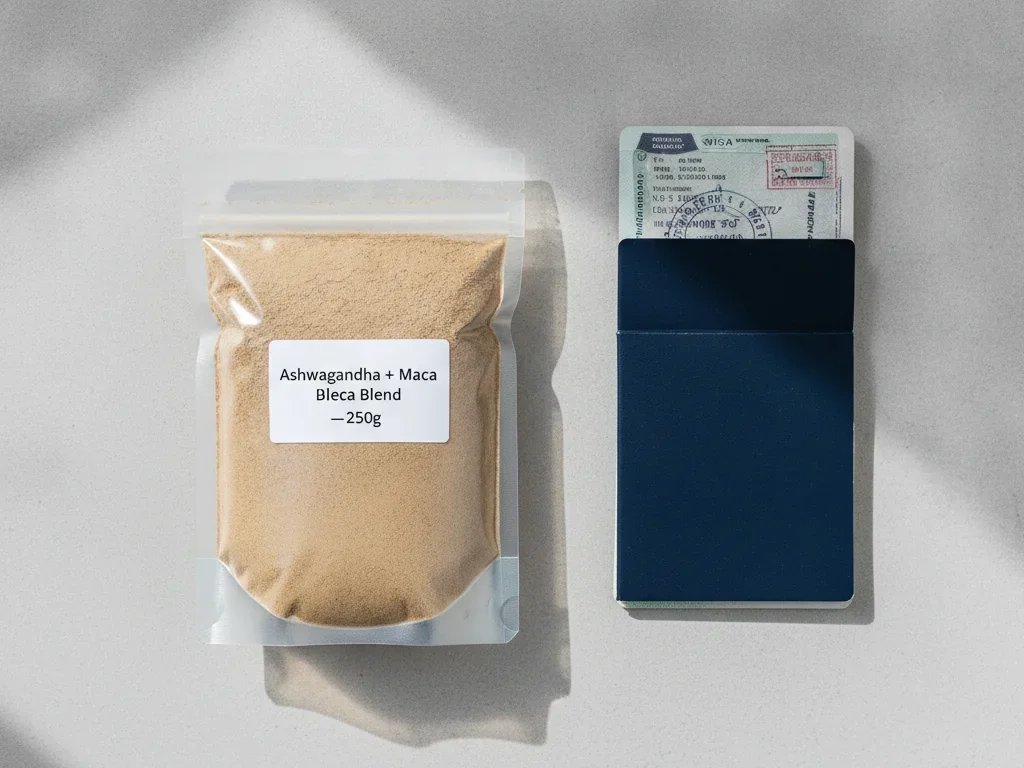
The most frequent version of this question is a traveler bringing a small amount of their own roasted, ground seed-and-nut powder as a daily dietary supplement — the kind of thing you might add to a smoothie. This is a textbook “processed food, personal use” item, and it is normally fine. The whole game is making that obvious to the officer.
- It is processed, not plantable. Because the seeds are roasted and ground, they cannot germinate — so they are food, not agricultural planting material. Emphasise the words “powdered” and “roasted”.
- It is a small, personal quantity. A bag for your own trip is clearly personal use, not commercial import.
- You will declare it. Answering “Yes” on the e-CD and walking the Red Channel is exactly what the system expects.
Tip
Label it in English so an officer can read it in two seconds, for example: “Processed Seed & Nut Powder (Roasted & Ground) — Personal Dietary Supplement”. A clear Ziploc or sealed container plus that one line removes almost all friction. If you have the original product packaging or ingredients list, bring it too.
The e-CD (Electronic Customs Declaration): step by step
Since 2024, Indonesia replaced the old paper customs card with a digital declaration. Every arriving international passenger completes it, and it is how you declare any food, plant or seed items. Here is the process:
- Go to the official site: https://ecd.beacukai.go.id/. Use only this official Bea Cukai domain — avoid third-party sites that charge a “service fee” for what is a free government form.
- You can submit it from up to 3 days (72 hours) before arrival, right up to landing. Doing it the day before, on a stable connection, is the calmest option.
- Enter your passport and flight details, and the number of family members travelling on the same declaration.
- On the goods questions, answer “Yes” to the question about bringing animals, fish, plants, seeds or food products if you are carrying any food, powder, supplement or similar item. Be honest — this is the declaration itself.
- Submit the form. You will receive a QR code.
- Save a screenshot of the QR code to your phone’s photo gallery so you can show it even if the airport network is slow. Officers scan this QR on arrival.
Tip
One e-CD can cover a family travelling together — you don’t need a separate form per person if you’re on the same household group. Fill it in once for the group and keep the single QR code handy.
Duty-free allowances (the other reason to declare)
Customs is not only about agriculture — it also applies duty above personal allowances. As a guide for adult arriving passengers (always confirm current figures, as they are periodically updated):
| Item | Typical duty-free allowance per adult |
|---|---|
| Cigarettes | 200 cigarettes, or 25 cigars, or 100 g of sliced tobacco |
| Alcoholic beverages | 1 litre |
| Personal goods / souvenirs | Up to roughly US$500 in value per passenger |
Go over these and the excess is either dutiable or surrendered. Food powders and personal supplements are not about duty value — for those, the issue is the agricultural/quarantine declaration, not the money.
Red Channel vs Green Channel
After baggage claim, Indonesian airports use the classic two-channel system, now driven by your e-CD QR scan:
- Green Channel — “nothing to declare.” For travelers carrying only personal effects within allowances and no restricted goods.
- Red Channel — “goods to declare.” This is where you go if you are carrying food, plant or seed items, goods over the duty-free allowance, or anything you’re unsure about.
If you have a food or supplement item, your honest e-CD answer routes you to the Red Channel. That is the correct, low-risk path — an officer may look at the item and label, ask a quick question, and let you continue. Choosing the Green Channel while carrying undeclared restricted goods is what creates problems, so when in doubt, take the Red Channel.

Tips for a smooth airport process
- Pack smart. Put any food/powder in a clear, sealed container or Ziploc bag with a plain-English label describing what it is and that it’s for personal use.
- Do the e-CD the day before. Stable Wi-Fi, no rush, and a saved QR-code screenshot.
- Declare and use the Red Channel. Don’t try to be clever — honesty is faster and safer.
- Explain simply and politely. “This is a small processed food item, a roasted & ground seed powder I use as a daily supplement, for personal use.”
- Emphasise “powdered” and “roasted.” It tells the officer the seeds cannot germinate — so it’s food, not plantable agricultural material.
- Keep it small. A trip-sized amount reads as personal; a suitcase full reads as commercial and changes the conversation.
- Stay calm and friendly. The officers deal with this daily; a relaxed, honest traveler with a clearly labelled item is the easy case.
Tip
Worst case for a declared item that turns out not to be allowed: you surrender it for disposal and walk on, with no fine and no penalty. That is the trade you’re making by declaring — you might lose the item, but you never lose your peace of mind. Not declaring a restricted item, by contrast, is what risks penalties.
Frequently asked questions
Do I really have to declare a small bag of supplement powder for personal use?
Yes. Indonesian customs law requires you to declare animal, plant, seed and food products regardless of quantity. Declaring a small, processed, personal-use item is quick and free; the e-CD form has a single yes/no question for it. Declaring honestly is what keeps you out of trouble — the penalties exist for people who hide things, not for people who declare.
What happens if my item is not allowed?
If a declared item is not permitted, the normal outcome is that the officer asks you to surrender it for disposal at the airport. Because you declared it honestly, there is normally no fine and no penalty — you simply do not get to keep that one item. The risk of a fine arises when prohibited goods are found undeclared.
Is the e-CD mandatory for every traveler?
Yes. Since 2024 the Electronic Customs Declaration (e-CD) replaced the old paper customs card for all arriving international passengers in Indonesia, including at Bali (Ngurah Rai). One form covers a family travelling together on the same passport group. You receive a QR code to show on arrival.
When can I fill in the e-CD?
You can submit it online from up to 72 hours (3 days) before you land, right up to the moment you arrive. Many travelers do it during the flight or in the immigration queue using airport Wi-Fi, but doing it the day before with a stable connection is less stressful. Save a screenshot of the QR code in case the network is poor on arrival.
Can I bring vitamins and prescription medication into Bali?
Personal-use vitamins and over-the-counter supplements in reasonable quantities are generally fine. Prescription medication should be in its original packaging and ideally accompanied by a copy of the prescription or a doctor’s letter, especially for controlled substances (strong painkillers, ADHD medication, some sleep aids and psychiatric drugs). Some substances that are legal at home are tightly controlled or banned in Indonesia — check before you fly.
Are raw seeds and fresh fruit allowed?
Raw, plantable seeds, live plants, soil and most fresh fruit and vegetables are restricted because they can carry pests and plant diseases. They typically require a phytosanitary permit arranged in advance and are not something a tourist can bring casually. Processed, roasted, ground or cooked versions are treated very differently from raw, germinating material.
Will declaring slow me down at the airport?
Usually only by a few minutes. If you have a food or plant item, your QR code routes you toward the Red Channel, where an officer may glance at the item and the label, ask a question or two, and wave you through. A clear container with an English label makes this almost instant.
Is this legal advice?
No. This is general travel guidance based on published Indonesian customs (Bea Cukai) and quarantine rules as of 2026. Rules change and the customs officer on duty always has the final say on any individual item. When in doubt about a specific product, declare it and ask — declaring is always the safe choice.
Planning the rest of your arrival? See our Bali visa & e-visa guide, our first-time Bali essentials, the health & vaccines guide, and the money & payments guide to get the practical side of your trip sorted before you land. If you have a specific item you’re unsure about, message us — declaring and asking is always the safe choice.
This article is general travel guidance based on Indonesian customs (Bea Cukai) and quarantine rules current as of 2026, not legal advice. Rules change, and the customs officer on duty always has the final decision on any individual item. When unsure, declare it.
Ready to plan your Bali trip?
Get free, personal advice via WhatsApp. We reply in about 10 minutes.
Message us on WhatsApp